 Save
Save My friend Sarah showed up at my kitchen on a Tuesday evening with a bag of groceries and a craving she couldn't quite name. We ended up creating this bowl together, tossing ingredients around with the kind of freedom that only comes when you're cooking without a strict plan. The sesame aroma that filled my apartment was so good that my neighbor actually knocked on the door to ask what we were making. That night taught me that sometimes the best meals come from happy accidents and good company, not rigid instructions.
I made this for my family after realizing I needed something that could feed four very different palates at once. My dad wanted protein, my sister demanded vegetables, and my niece just wanted something that smelled amazing. When they all came back for seconds, I knew this recipe had earned its place in my regular rotation—it's the kind of dish that makes everyone feel like you actually spent hours in the kitchen.
Ingredients
- Boneless, skinless chicken breast or thighs (500 g / 1 lb), thinly sliced: Thighs are actually more forgiving if you're nervous about drying them out, but breasts work beautifully too if you slice them thin and don't overcook them.
- Dried udon, soba, or rice noodles (250 g / 9 oz): Udon gives you that satisfying chew, soba brings an earthy note, and rice noodles keep things light—pick whichever feels right for your mood.
- Red bell pepper (1), thinly sliced: The sweetness cuts through the savory sauce in just the right way, and the color makes the bowl look genuinely restaurant-worthy.
- Medium carrot (1), julienned: Julienne them thin so they soften slightly in the heat but stay with a little snap underneath.
- Sugar snap peas (100 g / 3.5 oz), trimmed: These stay crisp and add a fresh sweetness that balances the rich sesame oil.
- Spring onions (2), sliced: Save half for garnish—the fresh onion flavor at the end makes the whole bowl taste brighter.
- Low-sodium soy sauce (60 ml / 4 tbsp): Low-sodium lets you taste the actual sauce rather than just salt, which changes everything.
- Brown sugar (2 tbsp): This dissolves into the sauce and creates that glossy, slightly sweet coating that makes people ask for the recipe.
- Toasted sesame oil (1 tbsp): Use the toasted kind—the regular version tastes flat by comparison, and a little goes a long way.
- Rice vinegar (1 tbsp): Just enough to keep the sauce from feeling heavy and to brighten the overall flavor.
- Fresh ginger (2 tsp), grated: There's no substitute for the real thing here—it adds warmth without being spicy.
- Garlic (2 cloves), minced: Fresh garlic makes the sauce taste alive in a way that bottled just can't match.
- Cornstarch (1 tsp), optional: This thickens the sauce so it clings to the noodles instead of pooling at the bottom of the bowl.
- Toasted sesame seeds (2 tbsp): Toast them yourself if you have time—the difference is honestly worth the two minutes.
- Fresh coriander or cilantro, chopped: This is the final touch that makes the bowl feel intentional, so don't skip it even if you think you don't like cilantro.
- Lime wedges, optional: A squeeze of lime right before eating changes the entire profile of the bowl in the best way.
Tired of Takeout? 🥡
Get 10 meals you can make faster than delivery arrives. Seriously.
One email. No spam. Unsubscribe anytime.
Instructions
- Get your noodles going:
- Bring a large pot of water to a rolling boil and cook your noodles according to the package directions—don't overcook them or they'll turn mushy. Drain them right away and rinse under cold water to stop the cooking and keep them from clumping together.
- Mix up your magic sauce:
- In a small bowl, whisk together the soy sauce, brown sugar, sesame oil, rice vinegar, ginger, garlic, and cornstarch if you're using it. Taste it as you go—this is your chance to adjust the balance before everything hits the pan.
- Heat your pan and get ready to cook:
- Set a large nonstick skillet or wok over medium-high heat and let it get genuinely hot for a solid minute. Add just a splash of neutral oil—you want the pan hot enough that the chicken sizzles the second it touches down.
- Cook the chicken until golden:
- Spread the sliced chicken across the pan in a single layer if you can, and let it sit for a minute or two before stirring—this is how you get that golden crust instead of pale, steamed chicken. Once it's browned and cooked through (about 4 to 5 minutes total), transfer it to a clean plate.
- Stir-fry the vegetables until they're tender but still snappy:
- Add a touch more oil to the pan if it looks dry, then add the bell pepper, carrot, and snap peas all at once. Keep them moving for just 2 to 3 minutes—you want them soft enough to bite easily but still with a little resistance, not limp.
- Bring it all back together:
- Return the chicken to the pan, pour in that sauce you made earlier, and toss everything until it's all coated in that glossy, fragrant goodness. Let it bubble gently for 1 to 2 minutes so the flavors really get to know each other and the sauce thickens just slightly.
- Finish with the noodles and spring onions:
- Add the cooked noodles and most of the spring onions (save some for the top), and toss the whole thing together until everything is heated through and the noodles are coated in sauce. This should take just a minute or two—you're not cooking the noodles again, just bringing everything to the same temperature.
- Plate and garnish with joy:
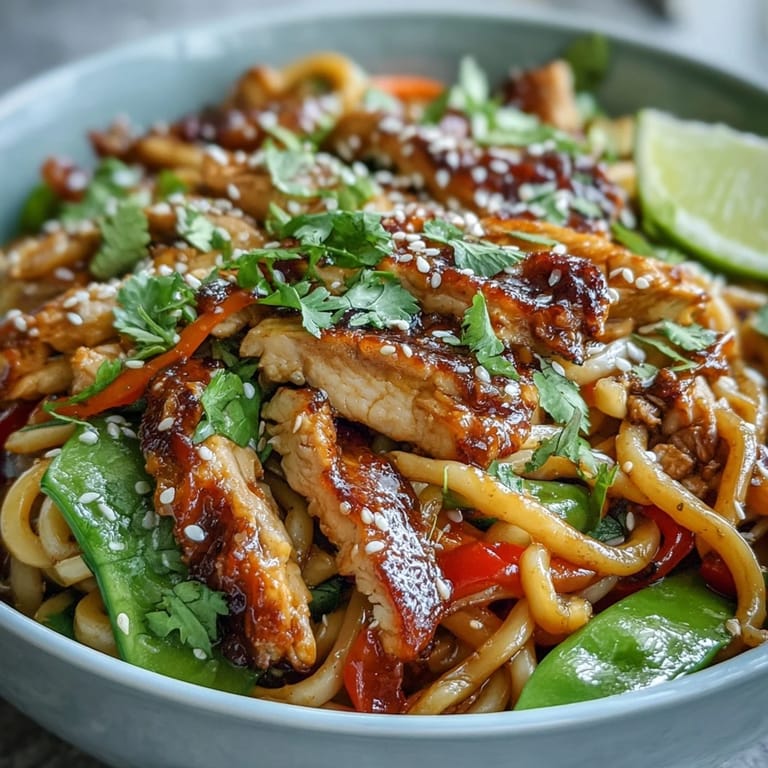
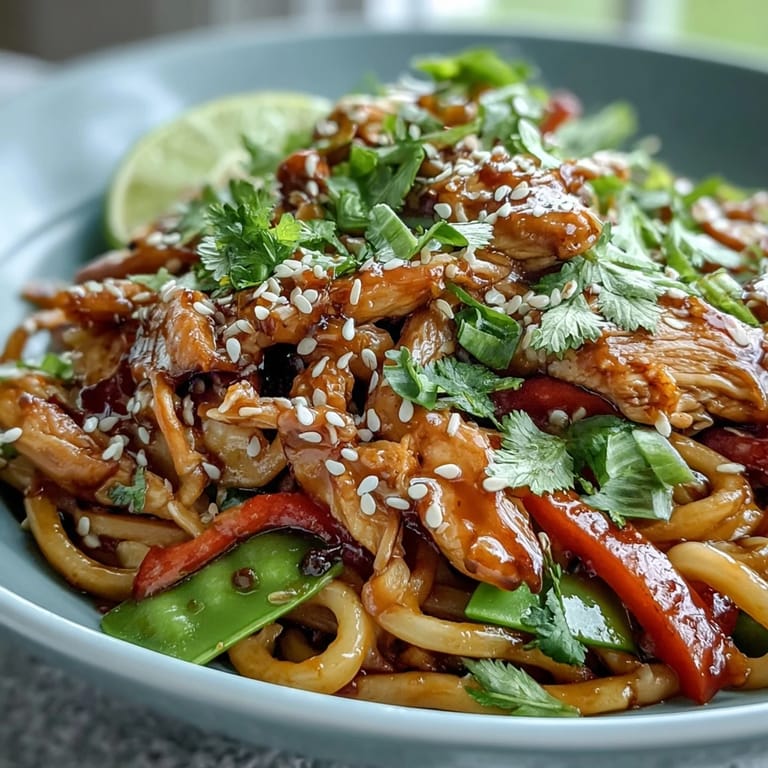
- Divide everything among bowls and top each one with sesame seeds, fresh cilantro, a few of those reserved spring onions, and a lime wedge if you have one. The garnishes aren't just pretty—they're actually important for the final flavor, so don't skip them.
 Save
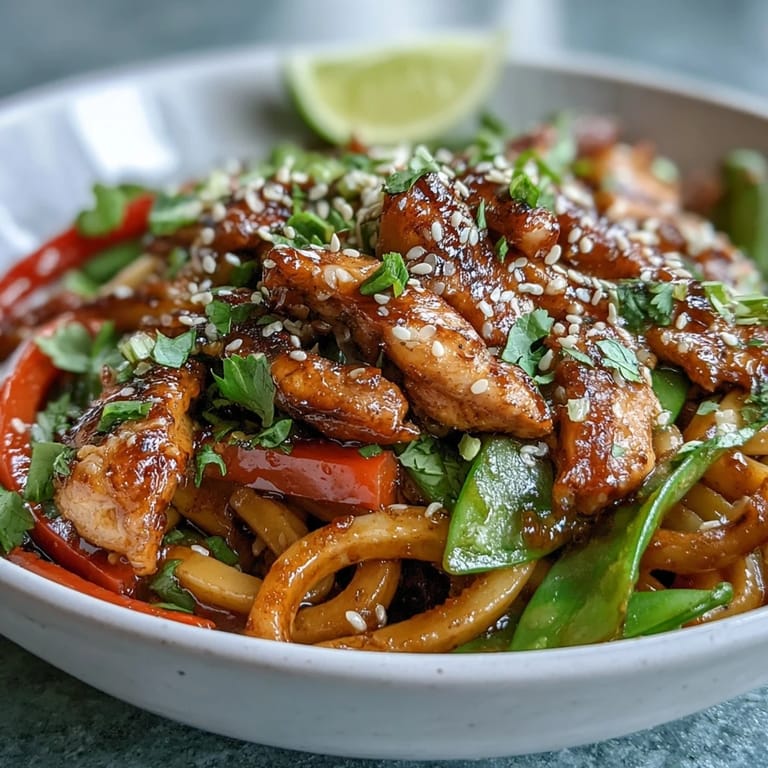
Save What strikes me most about this bowl is how it somehow tastes both comforting and exciting at the same time. My partner made it three days in a row last month because he couldn't stop thinking about it, and honestly, I understand completely.
The Sauce Is Everything
I spent years making okay Asian-inspired noodle bowls before I realized that the sauce is where all the personality lives. This particular sauce works because it's balanced—the brown sugar and soy sauce create that savory-sweet thing that makes your brain happy, the sesame oil adds richness and that toasted nutty flavor, and the ginger and garlic make sure it doesn't taste one-dimensional. That cornstarch might seem optional, but it genuinely matters because it transforms the sauce from a thin coating to something that actually clings to every strand of noodle.
Why Crisp Vegetables Make This Bowl Work
The vegetables aren't just there to add color or pretend this is healthy (though it is). They actually provide textural contrast that makes eating this bowl genuinely more enjoyable. The snap of those sugar snap peas, the slight sweetness of the red pepper, and the tender chew of the carrot all prevent the whole dish from feeling monotonous. If everything were soft, you'd get bored by the second bite, but that little bit of crunch keeps you engaged the entire time.
Make It Your Own
The beautiful thing about this bowl is that it's genuinely flexible without falling apart. I've made it with tofu on nights when I'm not eating meat, and I've added mushrooms, broccoli, and baby bok choy when I felt like extra vegetables. The sauce holds everything together and lets you play around without worrying that the whole thing will collapse.
- For vegetarian, swap the chicken for pressed tofu or thick strips of firm tofu, and treat it the same way—get it golden and crispy before setting it aside.
- If you like heat, add chili flakes or sriracha to the sauce, or slice fresh red chilies and scatter them on top for that fresh spice.
- Taste your brown sugar level and adjust—some people like it sweeter, others prefer the savory notes to dominate, and there's no wrong answer here.
 Save
Save This bowl has become my answer to the question of what to cook when I want something that feels special but doesn't require actual effort. Make it once, and it'll probably become part of your regular rotation too.
Recipe FAQs
- → Can I make this ahead of time?
Yes, you can prep the vegetables, slice the chicken, and mix the sauce up to 24 hours in advance. Store everything separately in airtight containers in the refrigerator. Cook the noodles fresh for best texture, though they can be cooked ahead and rinsed with cold water to prevent sticking.
- → What noodles work best?
Udon noodles provide a satisfying chew and hold the sauce beautifully. Soba offers a nutty flavor and slightly firmer texture. Rice noodles are lighter and gluten-free. Choose based on your preference and dietary needs—all three deliver excellent results in this bowl.
- → How can I add more heat?
Stir in 1-2 teaspoons of red pepper flakes or chili garlic sauce when heating the sauce. Fresh Thai chilies, sliced thin, also work well. Add sriracha to individual servings so diners can adjust their own spice level. The sweet-savory sauce balances heat beautifully.
- → Is this suitable for meal prep?
Absolutely. Portion cooled leftovers into meal prep containers and refrigerate for up to 4 days. The flavors meld and improve over time. Reheat gently in the microwave or on the stovetop, adding a splash of water if the noodles seem dry. The vegetables will soften but remain tasty.
- → Can I use other proteins?
Ground chicken cooks quickly and soaks up the sauce well. Shrimp adds lovely sweetness and cooks in just 2-3 minutes. For vegetarian options, use firm tofu cubes or edamame. The sauce works beautifully with any protein, so choose what you enjoy most.
- → What vegetables can I substitute?
Broccoli florets, sliced mushrooms, shredded cabbage, baby corn, or snow peas all work wonderfully. Use whatever is fresh and in season. Aim for 3-4 cups of vegetables total to maintain the bowl's vibrant character and nutritional balance.