 Save
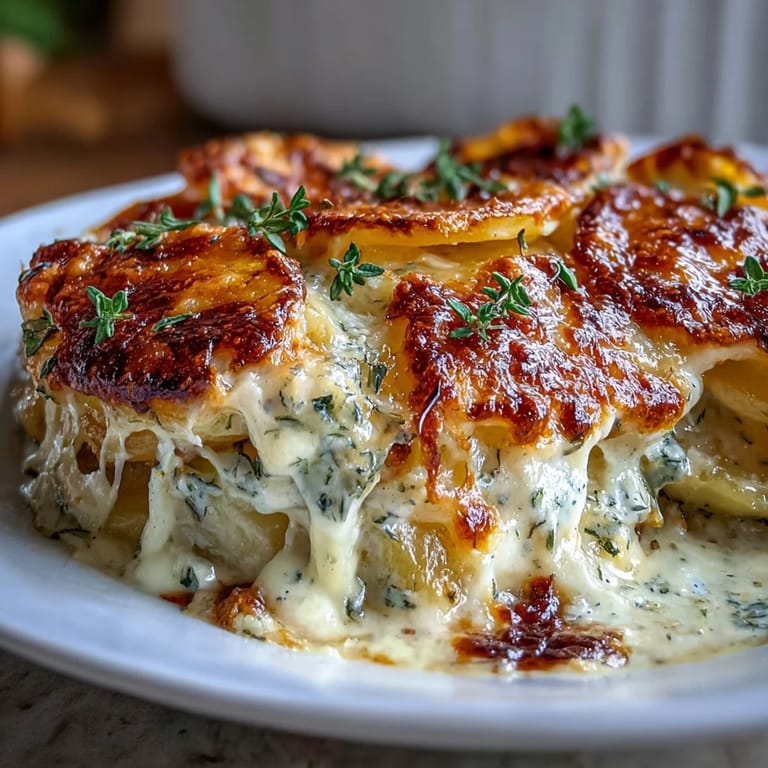
Save The first time I made scalloped potatoes with Gruyere, the kitchen was awash in the aroma of garlic and bubbling cheese just as rain started flickering against the windows. I didn't realize how quiet I'd become, caught up in layering the silky potato slices just so, almost meditative. Cooking felt like a kind of gentle alchemy—the moment milk met nutmeg and thyme, my spoon paused, savoring the smell. It was a little experiment, hoping the sauce wouldn't turn grainy, and tasting a corner piece before serving revealed a depth I hadn't expected. My spatula left swirls on the golden crust, and the anticipation silently built.
Last spring, I cooked these scalloped potatoes for a mix of friends—one vegetarian, one gluten-free—and they both dug in with gusto, raving about the silky texture. I remember the way we hovered around the pan, even before the rest of dinner was ready, sneaking tastes as the bubbling cheese cooled. Someone joked that the crispy edge pieces were 'prime real estate,' sparking a tiny fork war. The laughter lingered longer than the food did. It became the unofficial centerpiece, even overshadowing the roast.
Ingredients
- Yukon Gold or Russet potatoes: Slicing them thinly (about 1/8-inch) makes every bite tender, and using a mandoline keeps the layers nice and uniform.
- Heavy cream: Don't substitute here—cream creates that luscious, velvety sauce and prevents the dish from drying out.
- Whole milk: Mixing milk with cream lightens the sauce just enough so it's rich but not overwhelming.
- Gruyere cheese: Gruyere adds an unmistakable nutty-sweet flavor and melts to golden perfection, but Emmental or Swiss will work if needed.
- Parmesan cheese: A sharp, salty kick that amplifies the Gruyere and creates that signature crust.
- Unsalted butter: Greasing the dish means crispy edges, while dotting on top encourages those golden brown bubbles.
- Garlic: Mincing it finely brings a deeper savory note without overpowering the potatoes.
- Kosher salt: Always season as you go to avoid bland spots.
- Freshly ground black pepper: Pepper offers a subtle bite and balances the richness.
- Ground nutmeg: Just a pinch—it's the secret to authentic French potato casseroles.
- Fresh thyme leaves: Thyme's gentle herbal warmth keeps everything tasting bright and balanced.
Tired of Takeout? 🥡
Get 10 meals you can make faster than delivery arrives. Seriously.
One email. No spam. Unsubscribe anytime.
Instructions
- Prep the pan:
- Preheat your oven to 375°F (190°C), then swipe butter in every nook of your baking dish for those irresistible crisp edges.
- Warm the sauce:
- In a saucepan, combine heavy cream, milk, garlic, salt, pepper, and nutmeg and gently heat until just steaming—watch closely to avoid boiling, then stir in half the thyme.
- Layer the potatoes:
- Arrange half the potatoes in the dish so they're overlapping slightly, like shingles, to ensure even cooking.
- Add flavor and cheese:
- Pour half the cream mixture over the potatoes, then sprinkle with half the Gruyere and Parmesan for early flavor payoff.
- Repeat and finish:
- Top with remaining potatoes and pour over the rest of the cream; finish with the leftover cheeses, thyme, and dot with butter.
- Bake and uncover:
- Cover tightly with foil and bake for 45 minutes so everything steams and softens; remove foil and let the top brown, watching as the cheese bubbles and the potatoes turn fork-tender.
- Let it rest:
- Allow the dish to sit 15 minutes before serving—this helps the creamy sauce thicken and makes slicing clean and easy.
 Save
Save One Easter, after everyone had pushed their plates away, the biggest compliment came from the quietest guest: he asked to take home the leftovers, straight into tomorrow's lunch. It felt like passing along a little comfort—proof that a simple dish could make memories last.
How to Nail Those Golden Edges
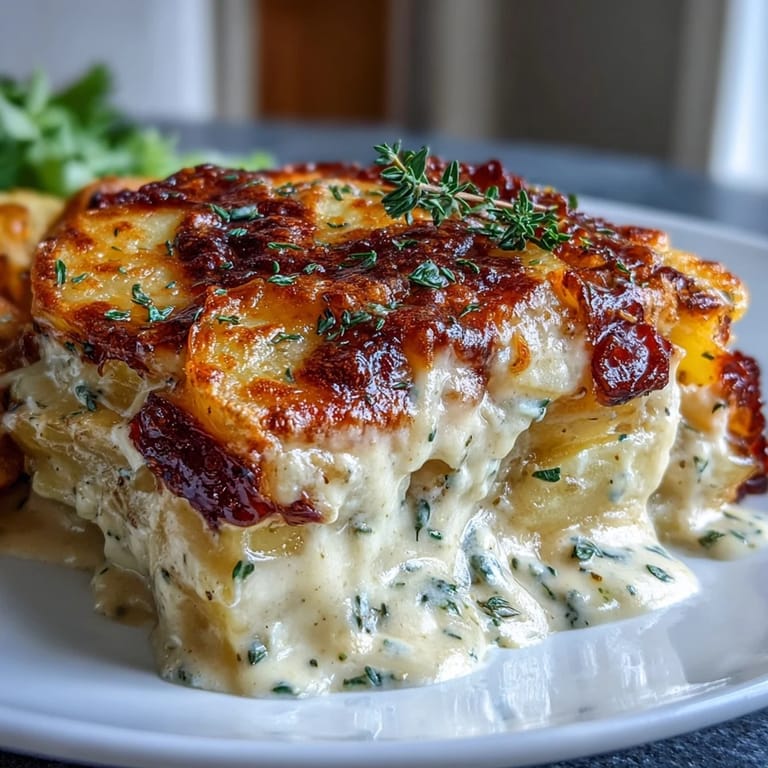
A trick I discovered by accident: if you grease around the corners with extra butter, the edges crisp up and caramelize, creating the bits everyone fights over. It works wonders especially when you let the dish bake for the last ten minutes uncovered and at a slightly higher heat. Sometimes I even sneak in a little more cheese just along the rim for added crunch. Watching the cheese bubble and brown is honestly one of my favorite kitchen sights. Timing matters, so peek often.
Choosing the Best Potatoes
Russets are classic, but Yukon Golds have that naturally creamy texture and just the right balance for soaking in the sauce. Slicing them thinly is crucial—if you use a mandoline, you'll save time and get more uniform layers. Making this with slightly older potatoes actually works best as they hold their shape. If you forget to peel them once, you'll notice the skins distract from the silken feel, so that's a step worth sticking to. Even potato skeptics are converted after one bite.
Simple Variations for Extra Flavor
Sometimes I toss in sautéed onions or a pinch of cayenne for deeper warmth (especially if I'm serving alongside spicy mains). Layering in extra herbs like dill or chives changes things up for spring gatherings. Swapping cheeses can be fun too; Emmental or Swiss provide a milder melt if Gruyere isn‘t available. Just remember not to overload—the dish shines best with simple additions.
- Adding a handful of sautéed leeks gives a sweet, mellow undertone.
- Try sprinkling smoked paprika on the top just before you uncover for a golden finish.
- If you're short on time, prepare the entire dish a day ahead and refrigerate; bake right before serving.
 Save
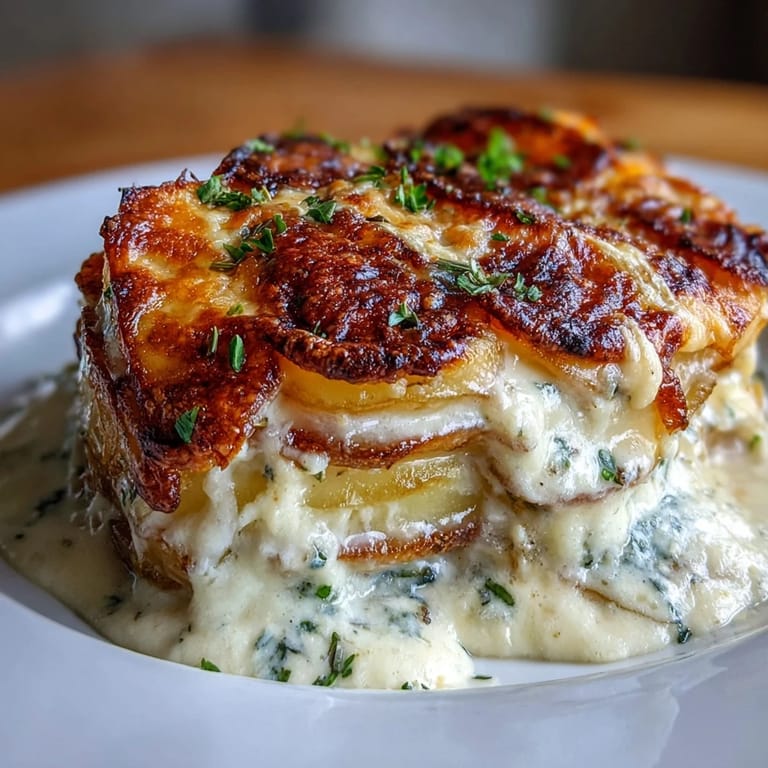
Save Every time I bake this, I'm grateful for the aroma, the warmth, and those crunchy, cheesy corners that make everyone smile. Keep a fork handy—you‘ll want seconds!
Recipe FAQs
- → What type of potatoes work best?
Yukon Gold or Russet potatoes provide the ideal texture and flavor for layered creamy sides.
- → Can Gruyere be substituted?
Emmental or Swiss cheese can be used if Gruyere is unavailable, offering similar melting qualities.
- → How can I make it gluten-free?
Ensure all cheese and dairy products are certified gluten-free for a suitable alternative.
- → Why is resting after baking important?
Resting allows the creamy sauce to thicken and flavors to meld, making serving easier and tastier.
- → Can I add extra flavors?
Sautéed onions or a pinch of cayenne can be layered in for subtle heat and depth.
- → What are ideal pairings?
This dish pairs wonderfully with roast lamb, ham, or fresh spring vegetables for a complete meal.