 Save
Save There's something about assembling a bowl that feels less like cooking and more like creating—you're building layers of color and texture, each one telling its own story. I stumbled onto this black-eyed pea version on an ordinary Tuesday when I had a handful of ingredients and no real plan, just a vague craving for something that felt complete without feeling heavy. The first bite surprised me: the earthiness of the peas, the sweetness of roasted vegetables, and that tahini dressing that somehow made everything taste more like itself. It became the kind of meal I make when I want to feel nourished and alive, not deprived.
I made this for a friend who'd just gone vegan, and I watched her face transform as she took that first bite—she actually put her fork down and said, "This tastes like real food." That's when I realized how much this bowl matters; it's not apologetic, not trying to be something else. It's just generously itself, which somehow makes it feel like the most sophisticated thing you could offer someone.
Ingredients
- Quinoa (or brown rice): Choose whichever grain you have on hand; quinoa cooks slightly faster and has a fluffier texture, while brown rice is earthier and more forgiving if you're new to cooking grains.
- Sweet potato: The natural sweetness balances the savory elements, and it gets creamy inside with crispy edges when roasted properly.
- Red bell pepper: Adds brightness and a slight sweetness; the color is beautiful, but use whatever pepper appeals to you.
- Red onion: The sharpness mellows into something almost caramelized after roasting, making it taste completely different than raw.
- Zucchini: This is your neutral player that absorbs the smoked paprika beautifully and adds moisture without heaviness.
- Olive oil: Don't skimp here; good oil makes the vegetables taste richer and helps them caramelize properly.
- Smoked paprika: This is the secret ingredient that makes everything taste like you put in more effort than you actually did.
- Black-eyed peas: Canned works perfectly fine and saves you hours; fresh or frozen are equally good if you have them on hand.
- Cumin and garlic powder: These warm up the peas and give them personality beyond being just another legume.
- Baby spinach or kale: The heat from the warm components wilts it slightly while keeping some raw freshness.
- Avocado: Add this at the very end so it stays creamy and doesn't turn brown; it's the luxurious final touch.
- Tahini: The foundation of your dressing; make sure it's fresh because rancid tahini will ruin the whole bowl.
- Lemon juice: Brightens everything and keeps the avocado from oxidizing too quickly.
- Maple syrup: Just enough to balance the tahini's earthiness without making the dressing sweet.
Tired of Takeout? 🥡
Get 10 meals you can make faster than delivery arrives. Seriously.
One email. No spam. Unsubscribe anytime.
Instructions
- Heat your oven and prep your vegetables:
- Set the oven to 425°F and while it preheats, cut your sweet potato into roughly half-inch cubes, chop the bell pepper into bite-sized pieces, slice the red onion into thin half-moons, and cut the zucchini into quarter-inch rounds. Don't stress about uniform sizes too much; just keep them roughly similar so they roast evenly.
- Season and roast:
- Toss all your prepped vegetables with olive oil, smoked paprika, salt, and pepper on a baking sheet, spreading them in a single layer. Roast for about 25 minutes, stirring halfway through, until the edges are golden and caramelized and you can pierce the sweet potato easily with a fork.
- Cook your grain while vegetables roast:
- Rinse the quinoa under cold water to remove any bitterness, then combine it with two cups of water and salt in a saucepan. Bring it to a boil, then reduce heat to low, cover, and let it simmer for 15 minutes until the water is absorbed and the grains look slightly translucent. Remove from heat, keep it covered for 5 minutes, then fluff with a fork.
- Warm the black-eyed peas:
- In a small skillet over medium heat, add your drained peas with cumin and garlic powder, stirring occasionally for about 3-4 minutes until they're heated through and smell fragrant. This quick warmth wakes up the spices and makes the peas taste more interesting.
- Make the tahini dressing:
- In a bowl, whisk together tahini, fresh lemon juice, maple syrup, water, and minced garlic until it's smooth and creamy, adding more water a tablespoon at a time until it reaches the consistency of heavy cream. Taste it and adjust salt as needed; it should taste bright and slightly nutty, not bitter.
- Assemble your bowls:
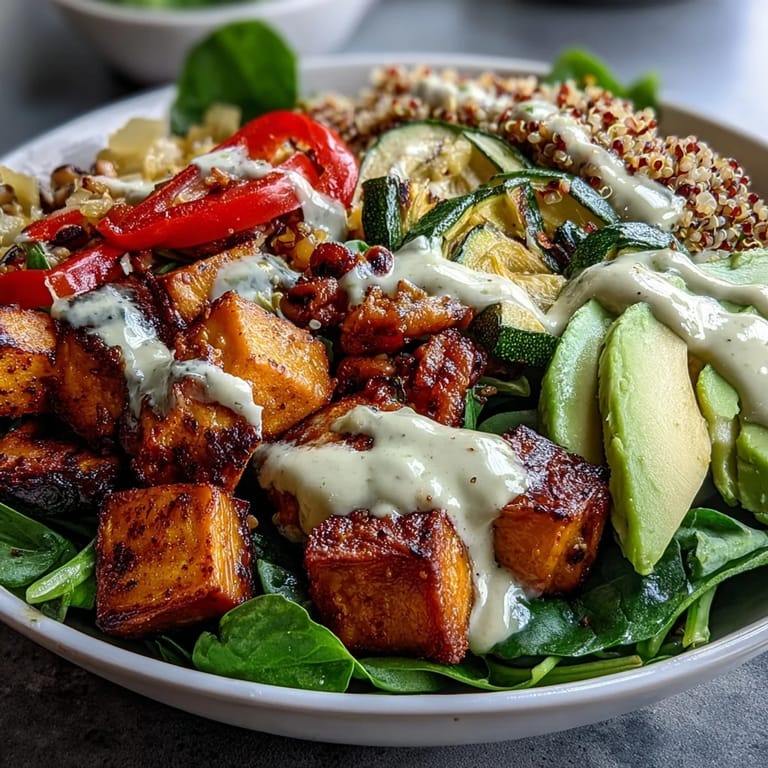
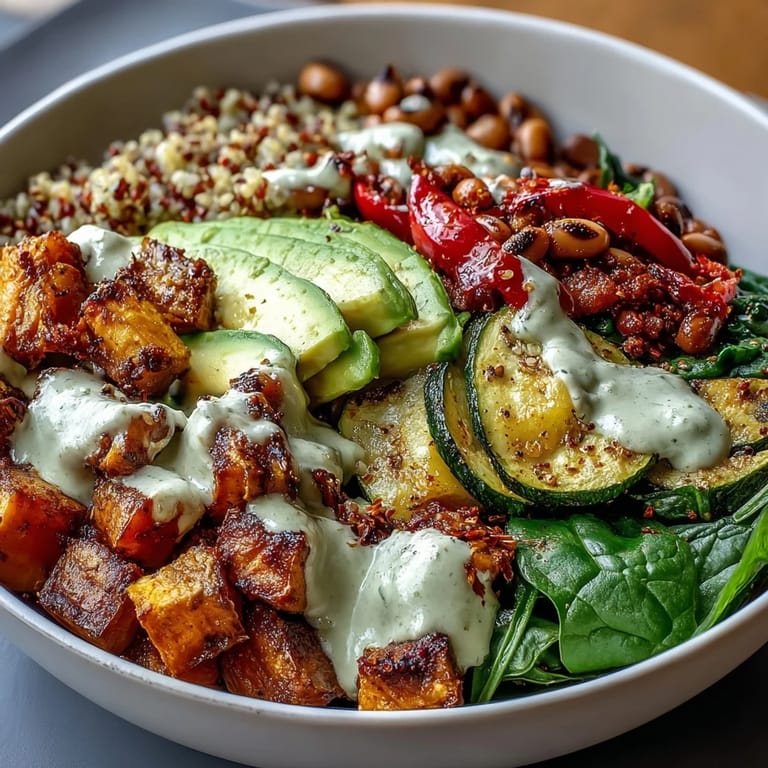
- Start with a generous handful of cooked grain in each bowl, then arrange the roasted vegetables in sections around it, add a scoop of warm black-eyed peas, and tuck in a handful of fresh spinach or kale. Drizzle generously with tahini dressing, top with avocado slices, and finish with a scatter of fresh herbs.
 Save
Save There's a moment while you're assembling these bowls when everything comes together and you realize you've made something that nourishes both your body and your sense of creativity. That's the whole point of a bowl like this—it's not just food, it's proof that simple ingredients, a little time, and good intentions create something genuinely beautiful.
Why This Becomes Your Go-To Bowl
Once you've made this a few times, you stop thinking of it as a recipe and start thinking of it as a template. The black-eyed peas could be chickpeas or lentils, the zucchini could be broccoli, the quinoa could be millet or farro. This flexibility means you're never stuck waiting for a specific ingredient; you work with what you have and it still tastes intentional and complete.
Building Flavor Layers That Actually Matter
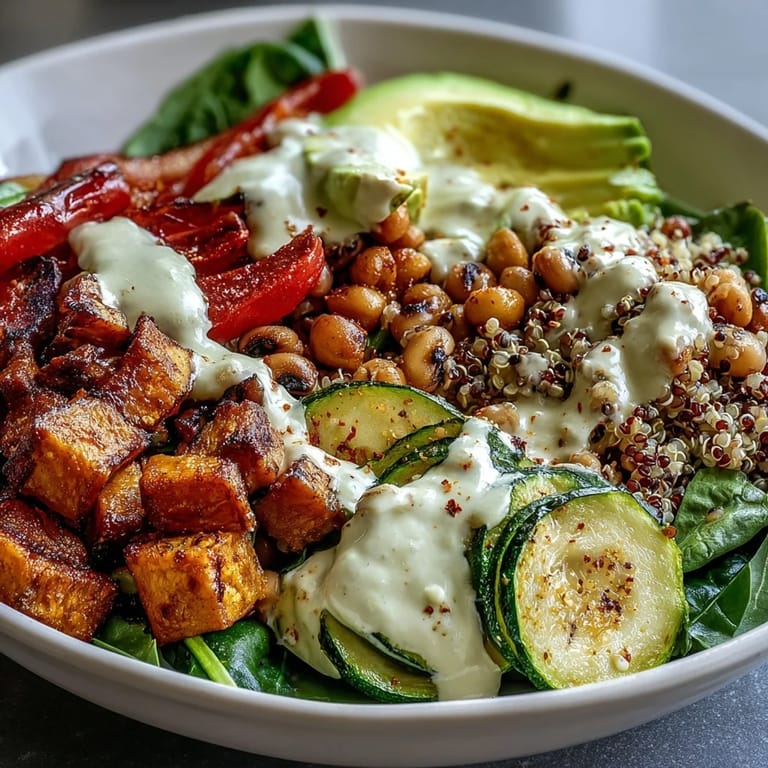
The genius of this bowl is how each component does something different—the roasted vegetables add sweetness and depth, the warm peas bring earthiness and protein, the fresh greens give brightness, the avocado adds creaminess, and the tahini dressing pulls everything together into something cohesive. It's not one-note; it's a conversation happening in your mouth where every flavor gets to speak.
Making This Meal Work for Your Life
This bowl thrives on preparation and forgiveness in equal measure. You can roast your vegetables the night before, cook your grain in the morning, and assemble everything fresh when hunger hits. The components hold up well when stored separately, though I don't recommend mixing everything until you're ready to eat since the dressing will soften the greens over time. Think of assembly as part of the pleasure—that moment of creation is half the satisfaction.
- Store roasted vegetables and cooked grain in separate containers in the fridge for up to four days.
- If your tahini dressing thickens overnight, whisk in a bit more water or fresh lemon juice before serving.
- Make extra tahini dressing and drizzle it over salads, roasted vegetables, or grain bowls all week long.
 Save
Save This black-eyed pea bowl became my answer to those nights when I want something that feels both generous and grounded, that feeds my body and reminds me why I chose to cook in the first place. Once you taste it, you'll understand why bowls like this become less of a meal and more of a ritual.
Recipe FAQs
- → Can I use canned black-eyed peas?
Yes, canned black-eyed peas work perfectly. Just drain and rinse them thoroughly before warming with the spices.
- → What other grains can I use?
Brown rice, farro, or bulgur work well as alternatives to quinoa. Adjust cooking time accordingly.
- → How long do leftovers keep?
Store components separately in airtight containers for up to 4 days. Keep dressing separate and add just before serving.
- → Can I make this nut-free?
Yes, substitute tahini with sunflower seed butter or a creamy avocado-cashew dressing instead.
- → What vegetables work best for roasting?
Sweet potato, bell pepper, red onion, and zucchini are ideal. You can also add Brussels sprouts, cauliflower, or carrots.