 Save
Save There's something about October that makes me crave butternut squash soup, but it wasn't until a friend casually mentioned roasting the squash instead of boiling it that everything changed. The smell of caramelized butternut filling my kitchen that first time was revelatory—suddenly this humble soup tasted like autumn distilled into a bowl. Now, whenever I make it, I can't help but smile at how such a simple technique transformed what I thought was already a favorite into something genuinely special.
I made this soup for my sister during her first winter living alone, and she called me three days later asking if I could write down the recipe because she'd already made it twice. Watching her come alive talking about how the nutmeg made her whole apartment smell like home reminded me that cooking isn't really about technique—it's about creating moments that stick with people.
Ingredients
- 1 large butternut squash (about 2 lbs), peeled, seeded, and cubed: The star of the show—look for one that feels heavy for its size, which means more flesh and less watery seeds to deal with.
- 1 medium yellow onion, chopped: Yellow onions caramelize beautifully when roasted and add a subtle sweetness that balances the earthiness of the squash.
- 2 garlic cloves, peeled: Keep them whole so they roast gently and become almost jammy rather than bitter.
- 1 medium carrot, peeled and chopped: This adds natural sweetness and helps round out the flavor profile without needing added sugar.
- 4 cups vegetable broth (gluten-free, if needed): Use the best quality broth you can find—it's tasted in every spoonful, so it matters more than you'd think.
- 2 tbsp olive oil: Good olive oil helps everything roast evenly and contributes to that golden, caramelized finish.
- 1 tsp salt: Start with this amount and adjust after blending, since the broth may already contain salt.
- 1/2 tsp black pepper: Fresh cracked pepper makes a real difference here if you have it.
- 1/2 tsp ground nutmeg: This is what makes people pause mid-spoonful and ask what you did differently—toast it lightly in a dry pan first if you want to unlock even more flavor.
- 1/4 tsp cayenne pepper (optional): Just a whisper of heat that doesn't announce itself but reminds you why this soup feels warm from the inside out.
- 1/4 cup heavy cream or coconut cream (optional): This makes the soup silky, though it's honestly beautiful without it—adjust based on what you're in the mood for.
- Toasted pumpkin seeds (optional): Toast them yourself in a dry pan for just a few minutes until fragrant, and the difference in flavor is remarkable.
- Fresh thyme (optional): A small sprig draped on top feels intentional and tastes like you actually know what you're doing.
Tired of Takeout? 🥡
Get 10 meals you can make faster than delivery arrives. Seriously.
One email. No spam. Unsubscribe anytime.
Instructions
- Heat your oven and prep the vegetables:
- Preheat to 400°F while you're cutting everything, and don't stress about perfect uniform pieces—roasting actually rewards a little variety in size since some pieces caramelize faster than others. Pat the squash dry after cutting since excess moisture is the enemy of good caramelization.
- Get everything on the sheet and roast:
- Toss your cubed squash, onion, whole garlic cloves, and carrot with olive oil until every piece glistens, then spread them in a single layer. Roast for 30–35 minutes, stirring halfway through, until the squash is fork-tender and the edges have turned a deep golden brown—this is where the magic happens.
- Combine and simmer:
- Scrape everything from the baking sheet into your pot with all those crusty, caramelized bits still clinging to it, then pour in your vegetable broth along with salt, pepper, nutmeg, and cayenne if you're using it. Let it bubble gently for about 10 minutes—this isn't about cooking the vegetables further, it's about letting all the flavors get acquainted.
- Blend until it's silky:
- Using an immersion blender, work directly in the pot in slow circular motions, letting the soup transform from chunky to completely smooth—it should look like poured cream when you're done. If you're using a countertop blender, work in batches and be careful with the heat, letting each batch cool slightly before blending.
- Taste and adjust:
- This is the moment where you become the chef—add more salt if it feels flat, more nutmeg if you want that warming spice to shine brighter, or a splash of broth if it's thicker than you like. This is also where you stir in cream if you want that luxurious richness.
- Serve with intention:
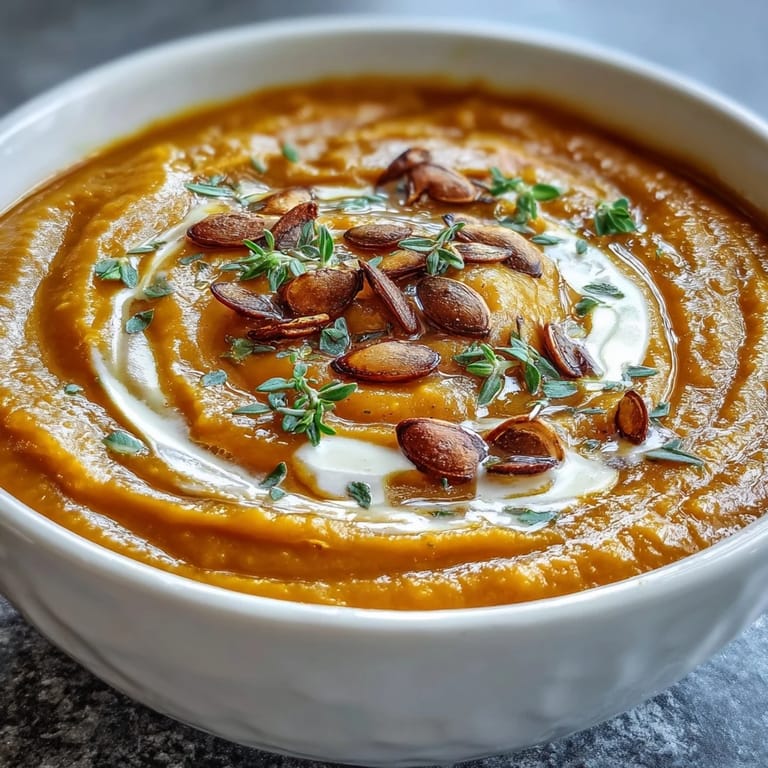
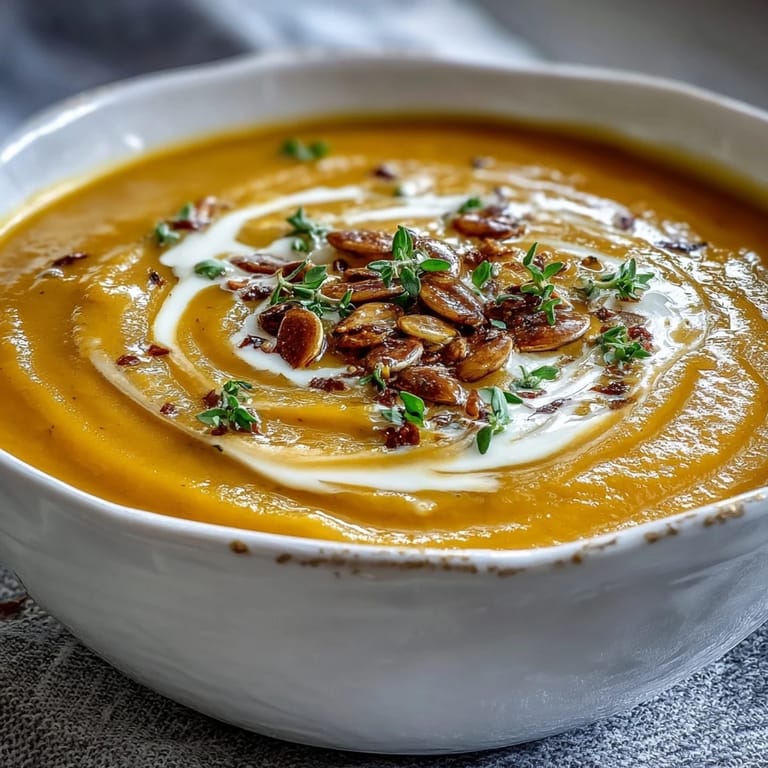
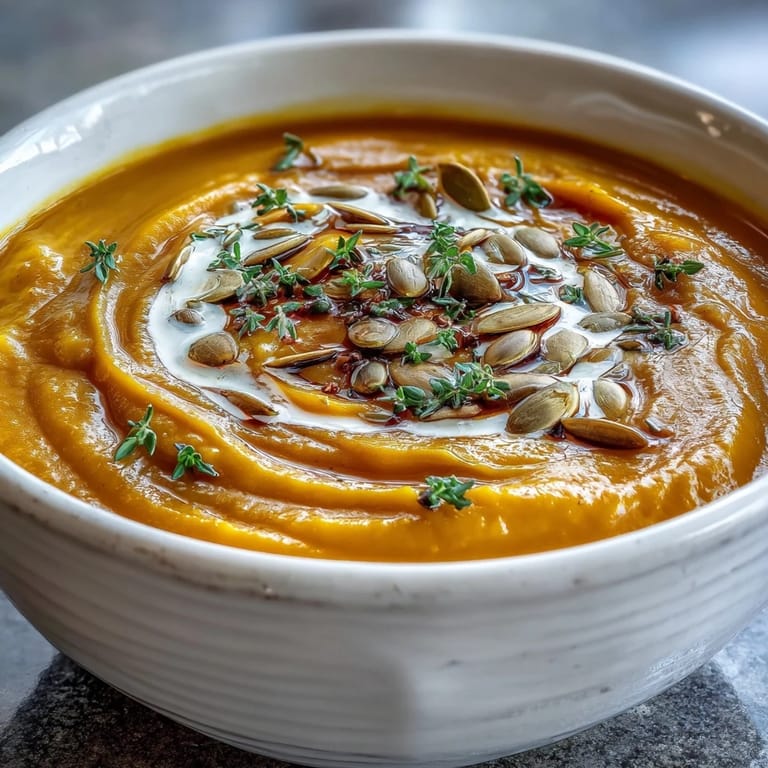
- Ladle the soup into bowls and top with a scattering of toasted pumpkin seeds for crunch, a drizzle of cream if you're feeling fancy, and a small thyme sprig laid right on the surface. The garnish matters because it says you cared enough to finish the thing properly.
 Save
Save My neighbor came by on a rainy evening, and I had just finished making this soup, so naturally I poured her a bowl. She sat at my kitchen counter and we talked for two hours, and she's mentioned that moment almost every time I've seen her since—not because the soup was perfect, but because it was the kind of thing that made her feel taken care of.
The Roasting Step Is Everything
When you roast butternut squash instead of boiling it, something chemical and wonderful happens—the natural sugars concentrate and caramelize against the hot pan, creating a complexity that boiling can never achieve. I learned this the hard way by making watery, bland soup for years before someone finally showed me the difference. Now I think of roasting as the secret technique that separates a soup you tolerate from one you crave.
Making It Your Own
This soup is a canvas that welcomes your additions without demanding them. I've made it with a small peeled apple added to the roasting tray, which adds a subtle sweetness that makes people wonder what you did differently. Some days I lean heavy on the nutmeg, other days I barely use it—the beauty is that it works both ways.
Serving and Storage Secrets
This soup actually tastes better the next day after the flavors have had time to meld together, which makes it perfect for meal prep or for having something ready when unexpected guests show up. It keeps in the refrigerator for up to five days and freezes beautifully for up to three months, though I'd add cream only when reheating if you're planning to freeze it.
- Serve alongside crusty bread or a grilled cheese sandwich for a combination that feels both casual and complete.
- A drizzle of good olive oil on top adds sophistication and a slight richness that cream can't quite match.
- Leftover soup reheats gently on the stovetop, and a splash of broth or cream brings it back to life if it's thickened up in the fridge.
 Save
Save This soup has become the thing I make when I want to feel grounded, or when I want someone else to feel that way. It's a reminder that the best recipes are the ones that fit into real life.
Recipe FAQs
- → Can I make this soup ahead of time?
Absolutely. This soup actually develops deeper flavors when made ahead. Store in the refrigerator for up to 4 days or freeze for up to 3 months. Reheat gently on the stovetet, adding a splash of broth if needed to adjust consistency.
- → What can I use instead of heavy cream?
Coconut cream creates a lovely dairy-free alternative and adds subtle sweetness. For a lighter option, try Greek yogurt stirred in off the heat, or simply omit cream entirely—the soup stands beautifully on its own.
- → How do I know when the squash is properly roasted?
Look for golden-brown caramelization on the edges and fork-tender flesh throughout. The vegetables should smell sweet and slightly nutty. This usually takes 30–35 minutes at 400°F, though timing varies based on cube size.
- → Can I use frozen squash instead of fresh?
While fresh squash yields the best texture and flavor, frozen cubed squash works in a pinch. Thaw completely and pat dry before roasting. Expect slightly longer roasting time and adjust seasonings accordingly.
- → What's the purpose of adding carrot to this soup?
Carrot contributes additional natural sweetness and depth to the flavor profile. It also enhances the golden-orange color. The roasting process transforms the carrot's sugars, creating a more complex backbone that complements the squash perfectly.