 Save
Save There's something about the smell of roasting butternut squash that fills a kitchen with pure comfort—it happened on a chilly October afternoon when I was experimenting with what felt like the hundredth soup variation, and this one just clicked. The maple syrup whispered through the spices, and suddenly I understood why this soup had become such a quiet favorite in so many homes. My partner walked in mid-roast and asked if something magical was happening in the oven, which felt like the ultimate compliment.
I made this for my sister's book club last winter, and watching everyone's faces soften with that first spoonful reminded me why simple food done well never goes out of style. Someone asked for the recipe before dessert was even served, which tells you everything.
Ingredients
- 1 large butternut squash (about 1.2 kg / 2.5 lbs), peeled, seeded, and cubed: Buy one with a deep, matte orange color and it'll reward you with natural sweetness—the paler ones sometimes feel watery.
- 1 medium yellow onion, chopped: This becomes your flavor foundation, so don't skip it or rush through the sautéing.
- 2 cloves garlic, minced: Garlic rounds out the sweetness with a gentle savory note that keeps the soup from feeling one-dimensional.
- 1 liter (4 cups) vegetable broth: Use a good quality broth if you can—it's one of the few ingredients that truly makes a difference here.
- 250 ml (1 cup) water: This dilutes the broth just enough so the squash flavor stays center stage.
- 120 ml (1/2 cup) coconut milk or heavy cream: The richness here is non-negotiable; it transforms the soup from good to velvety.
- 2 tbsp pure maple syrup: Real maple syrup deepens as the soup cooks, while the cheaper stuff can taste artificial—trust me on this one.
- 1/4 tsp ground nutmeg: A light hand with this spice is your friend; it's easy to overpower everything else.
- 1/2 tsp ground cinnamon: Cinnamon brings warmth without making the soup taste like dessert, which is the whole balance of this dish.
- 2 tbsp olive oil: Split between the roasting pan and the pot—this amount keeps things light but flavorful.
- Salt and freshly ground black pepper, to taste: Taste as you go, especially near the end, since the cream can mute the seasoning.
Tired of Takeout? 🥡
Get 10 meals you can make faster than delivery arrives. Seriously.
One email. No spam. Unsubscribe anytime.
Instructions
- Heat your oven and prep the squash:
- Set the oven to 200°C (400°F) and while it warms, cube your butternut squash on a cutting board—this is the only knife work, so take your time and work safely. The pieces should be roughly the same size so they roast evenly.
- Get the squash caramelizing:
- Toss your cubes with a tablespoon of olive oil, a pinch of salt, and pepper on a baking sheet, then slide them into the oven. Around the 15-minute mark, give them a gentle turn so they brown on all sides—you're looking for golden, slightly charred edges that smell like comfort itself.
- Build your flavor base:
- While the squash is roasting, heat the remaining olive oil in a large pot over medium heat and add your chopped onion, letting it soften and turn translucent for about 4 to 5 minutes. Add the minced garlic for just 1 minute more—you want it fragrant but not brown.
- Bring everything together:
- Once the squash is tender and caramelized, scrape it into the pot with the onion and garlic, then pour in the vegetable broth, water, maple syrup, nutmeg, and cinnamon. Stir everything together and let it come to a gentle boil, then lower the heat and simmer for about 10 minutes so the flavors can actually get to know each other.
- Make it silky:
- This is where magic happens—using an immersion blender right in the pot, purée the soup until it's completely smooth and creamy. If you're using a countertop blender instead, work in batches and be careful with the heat, then pour it back into the pot.
- Add the finishing touch:
- Stir in your coconut milk or cream and taste it—this is when you adjust the salt and pepper to make it sing. If it's cooled down, reheat it gently over medium-low heat, stirring occasionally.
- Serve with intention:
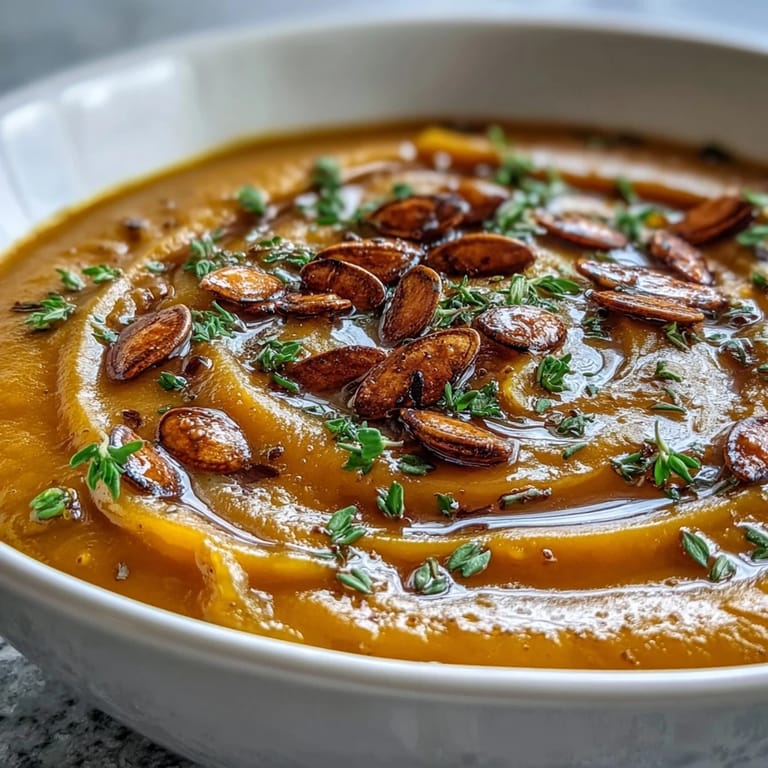
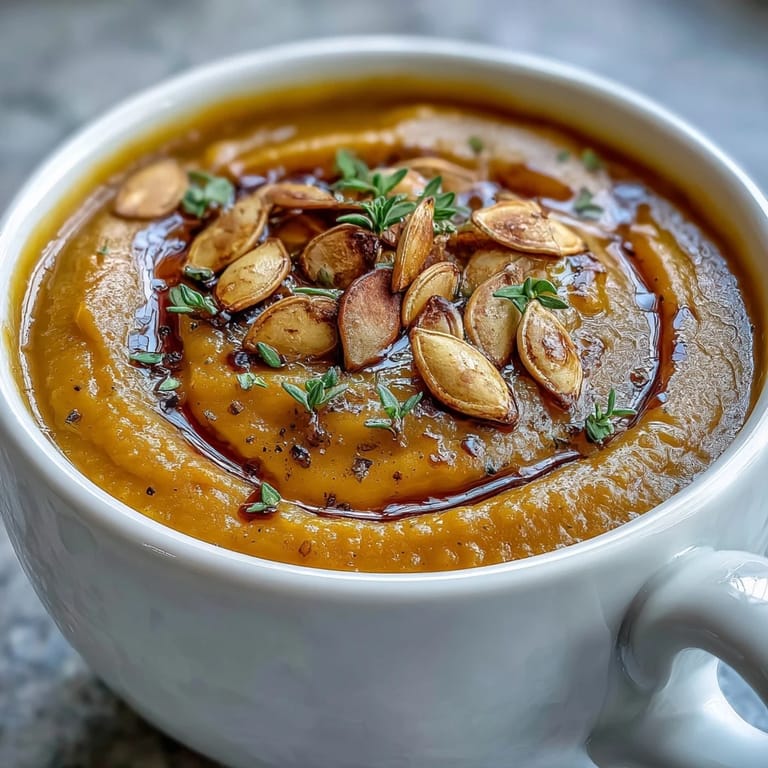
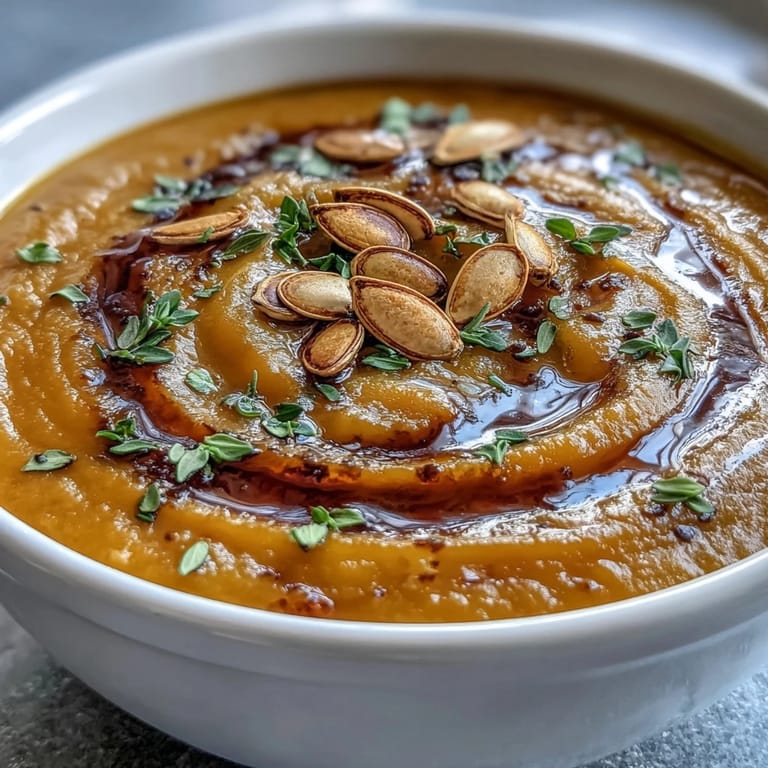
- Ladle the soup into bowls and scatter pumpkin seeds across the top, drizzle with a touch more maple syrup, and add some fresh thyme if you have it on hand. Serve it while it's warm and the flavors are at their brightest.
 Save
Save There was an unexpected moment when I served this soup to someone who told me they didn't usually like soup—they'd always found it boring—and watching them come back for seconds felt like I'd somehow shifted their entire relationship with it. Food that changes minds is rare, and this soup does exactly that.
The Secret of Roasting
Roasting vegetables before they go into soup isn't just a chef thing; it's where you unlock flavors that boiling can never touch. The heat caramelizes the natural sugars in the squash, creating depth and complexity that a raw vegetable simply can't offer. I learned this the hard way after making pale, forgettable squash soup for years, and the difference is honestly staggering once you taste it side by side.
Cream Versus Coconut Milk
Heavy cream makes this soup taste like it came from a fancy restaurant, rich and luxurious and unapologetic about it. Coconut milk keeps it lighter and vegan-friendly, with a subtle tropical note that doesn't announce itself but somehow makes the cinnamon and nutmeg taste even warmer. I've made it both ways depending on what I'm in the mood for, and honestly, both versions are worth your time—just know that cream will be richer and slightly more decadent, while coconut milk lets the squash flavor shine just a bit brighter.
Timing and Storage
This soup tastes even better the next day once the spices have settled and made friends with each other, so don't hesitate to make it ahead. It keeps beautifully in the refrigerator for up to four days, and freezes wonderfully for up to three months if you have the space—just thaw it in the fridge overnight and reheat gently on the stove.
- If you freeze it, add the cream after you thaw and reheat it, since reheating cream can sometimes make it separate slightly.
- A bowl of crusty bread on the side turns this from a starter into a complete, satisfying meal.
- Fresh thyme stirred in at the end adds a brightness that dried thyme can't match, so use it if you have it.
 Save
Save This soup has become the kind of recipe I make when I want to feed someone well without any fuss, and it never disappoints. Sometimes the simplest dishes are the ones that matter most.
Recipe FAQs
- → Can I make this ahead of time?
Absolutely. This actually tastes even better the next day as flavors have more time to meld together. Store in an airtight container in the refrigerator for up to 4 days. Reheat gently over low heat, adding a splash of broth or water if needed to restore creamy consistency.
- → Is freezing possible?
Yes, freeze cooled portions in freezer-safe containers for up to 3 months. Thaw overnight in the refrigerator before reheating. Note that if using cream rather than coconut milk, texture may separate slightly—simply whisk while reheating to restore smoothness.
- → What can I substitute for maple syrup?
Honey or agave nectar work beautifully as alternatives. For a lower-sugar version, simply omit the sweetener entirely—the roasted squash provides plenty of natural sweetness on its own.
- → Can I use pre-cut squash?
Certainly. Look for fresh butternut squash already cubed in the produce section to save prep time. You'll need approximately 6 cups cubed squash. Note that pre-cut pieces may roast slightly faster, so check for tenderness around the 25-minute mark.
- → How do I make it thicker or thinner?
For thicker results, simmer longer after puréeing to reduce liquid further. For a lighter version, simply add more broth or water until reaching desired consistency. The coconut milk or cream also affects final texture—use less for a thinner result.
- → What protein pairs well?
Grilled chicken, roasted chickpeas, or crispy pancetta make excellent additions. For vegetarian protein, serve alongside quinoa-stuffed acorn squash or a hearty kale salad with toasted nuts.