 Save
Save There's a particular kind of magic that happens when you stop rushing and let onions do what they do best. I learned this on a cold November evening when my neighbor mentioned she'd been craving French onion soup but found it intimidating. We decided to make it together, and watching those golden-brown layers build up in the pot over nearly forty minutes felt less like cooking and more like meditation. The aroma that filled her kitchen was so intoxicating that by the time we ladled it into bowls, both of us were already planning to make it again.
I made this soup for my parents during their anniversary dinner at home, and my dad—who claims to not really enjoy soups—went back for seconds. He actually sat there analyzing the flavors like he was trying to crack a code, which meant it was doing something right. My mom kept dipping her bread into the cheese-soup mixture with this contented smile, and honestly, that's the highest compliment I could ask for.
Ingredients
- Yellow onions (3 large, thinly sliced): These are your star—their natural sweetness becomes pure caramel under heat, and size matters because thinner slices cook more evenly and melt into silky strands.
- Unsalted butter and olive oil (1 tablespoon each): Butter brings richness while oil prevents burning; using both gives you the best of both worlds without the fussiness.
- Garlic (2 cloves, minced): Don't let it sit too long after adding or it'll turn bitter, but that one minute of cooking releases all its savory promise.
- Sugar (1 teaspoon): A counterintuitive trick that actually deepens the caramelization rather than making it sweet—trust the process.
- Salt and black pepper: Half a teaspoon of salt goes in halfway through cooking to accelerate caramelization; the rest seasons at the end when you can taste properly.
- All-purpose flour (2 tablespoons): Creates a light thickening that gives the soup body without feeling heavy or starchy.
- Dry white wine (1/2 cup): The acidity cuts through richness and those browned bits on the pot bottom are liquid gold once dissolved.
- Beef or vegetable stock (1.2 liters or 5 cups): Use what aligns with your diet; beef adds deeper color and richness, vegetable keeps it lighter but still luxurious.
- Fresh thyme and bay leaf: These quiet workers add herbal complexity that makes people ask what the secret ingredient is (it's just these two).
- French baguette (4 slices, 1 inch thick): Toasting matters—it should be golden and crispy enough to have texture but still absorb soup without dissolving into mush.
- Gruyère cheese (120 g or about 1 cup, grated): The nutty, complex flavor here is essential; it's not just a topping but a flavor anchor that makes the whole dish sing.
Tired of Takeout? 🥡
Get 10 meals you can make faster than delivery arrives. Seriously.
One email. No spam. Unsubscribe anytime.
Instructions
- Start the caramelization:
- Heat butter and oil in your large pot over medium heat, then add those sliced onions all at once. You'll hear them hit the warm fat with a gentle sizzle—stir them so they're evenly coated and start breaking down. This is your first commitment: thirty-five to forty minutes of occasional stirring, watching them transform from raw and sharp to golden, jammy, and almost sweet.
- Deepen the color:
- About halfway through (around twenty minutes in), sprinkle the sugar and salt over the onions and keep stirring every few minutes. You're not trying to rush them; you're just checking in like you're visiting an old friend, making sure nothing's sticking to the bottom or browning unevenly.
- Add the aromatics:
- Once your onions are deeply golden and have shrunk down considerably, add the minced garlic and stir constantly for exactly one minute—you want that fragrant smell to bloom without the garlic turning sharp or bitter.
- Build the foundation:
- Sprinkle flour over the onions and stir for two minutes, letting it cook into the mixture and thicken everything slightly. This base is going to support all the flavors that come next.
- Deglaze and build the broth:
- Pour in the white wine and use a wooden spoon to scrape the bottom of the pot, releasing all those caramelized brown bits—that's pure flavor waiting to dissolve. Once it's incorporated, pour in your stock, add the thyme sprigs and bay leaf, and let it come to a simmer.
- Let it rest and develop:
- Once it's simmering, reduce the heat and cook uncovered for twenty to twenty-five minutes so flavors can marry and deepen. Remove the thyme and bay leaf, taste, and season with pepper and additional salt until it tastes balanced and rich.
- Toast the bread:
- While the soup is simmering, preheat your broiler and arrange baguette slices on a baking sheet. Brush both sides lightly with olive oil and toast under the broiler for about one minute per side until they're golden and crispy—watch them closely because the line between toasted and burnt is quick.
- Assemble and finish:
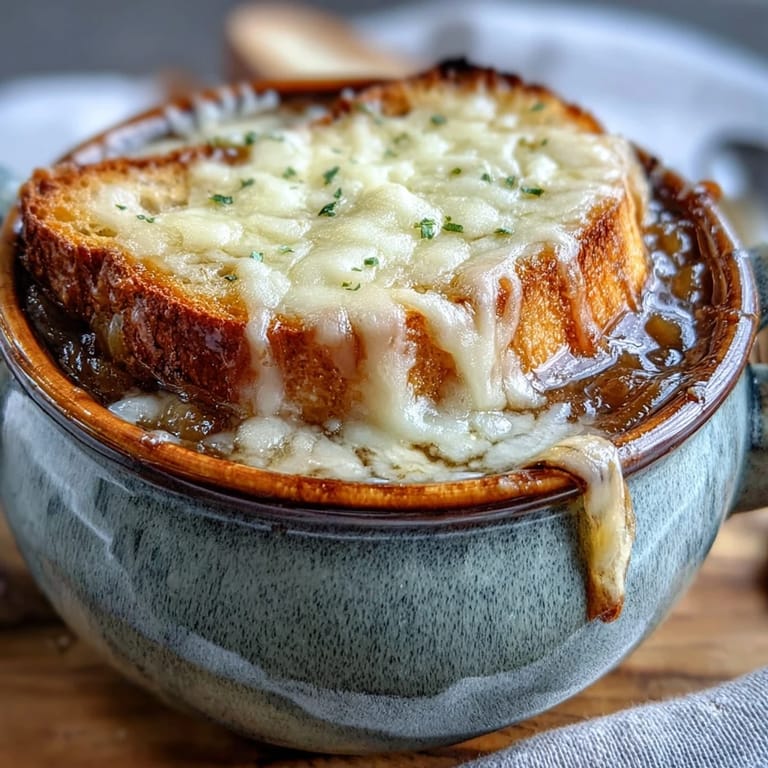
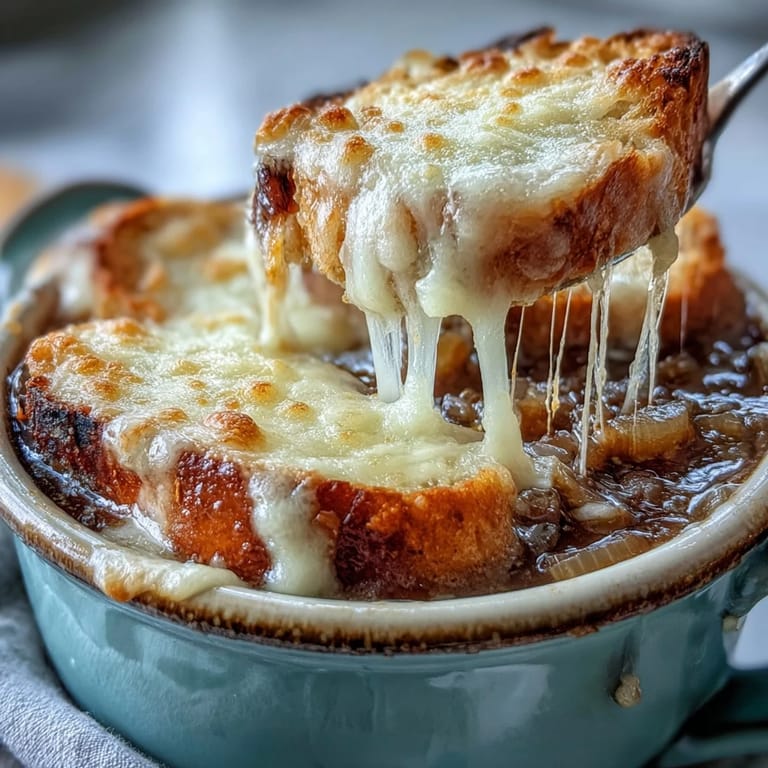
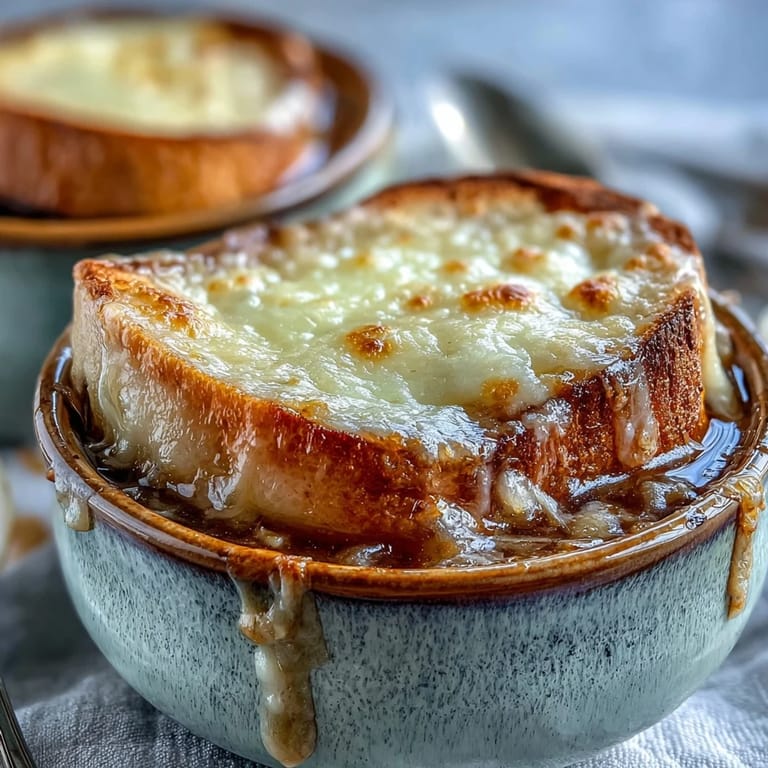
- Ladle the hot soup into oven-safe bowls, place one toasted slice on top of each, then pile the grated Gruyère generously over the bread. Place the bowls on a baking sheet (in case of drips) and slide them under the broiler for two to three minutes, watching until the cheese is melted, bubbly, and golden with just a hint of brown on top.
- Serve with care:
- These bowls are extremely hot, so warn anyone eating that the soup, bread, and cheese will each burn differently—sometimes cheese cools before soup, sometimes the opposite. Serve immediately with maybe a small spoon and a warning smile.
 Save
Save There's something about serving French onion soup that makes a simple weeknight feel like an occasion. The ritual of it—the careful assembly, the dramatic broiler finish, the warning about heat—turns cooking into theater, and everyone at the table becomes a participant in something a little bit special.
The Art of Caramelization
Caramelization isn't a fancy technique; it's patience with chemistry. Those onions contain natural sugars that, when exposed to steady, moderate heat, undergo a transformation called the Maillard reaction. The color deepens from pale cream to gold to amber to rich brown, and with each shift, new flavors emerge—first sweet, then savory, then almost meaty and complex. The key is medium heat; if it's too high, the outside browns before the inside softens and you end up with burnt onion bits and raw onion pieces, which defeats the entire purpose. Too low and you're standing there for an hour with minimal progress. Medium heat with patience is the honest approach, and it works every single time.
Wine and Deglazing Secrets
That moment when wine hits the hot pan and creates steam is when magic happens. The acidity loosens all those browned, caramelized bits stuck to the bottom—what cooks call fond—and dissolves them into the liquid, creating instant depth. You're not cooking off the wine taste; you're cooking with the wine's acidity to build flavor. If you don't have white wine or prefer not to use it, substitute with a splash of apple cider vinegar or even a good broth, though wine genuinely does something special that's hard to replicate. The deglazing process takes maybe thirty seconds of active scraping, but it's one of those moments where small effort yields surprising results.
Cheese and Bread as Partners
The toasted bread isn't just a vehicle for cheese—it's a textural anchor that separates the soup into three distinct experiences: the initial crunch, the soft middle where it's absorbed soup but still holds shape, and the melted cheese binding everything together. Gruyère was chosen for this dish centuries ago because it has a complex, slightly nutty flavor that doesn't overwhelm but rather harmonizes; it also melts smoothly without becoming greasy or stringy. If you substitute, lean toward cheeses with similar melting qualities and nuanced flavor rather than mild cheddar, which can taste one-dimensional alongside everything else.
- Toast your bread just before assembly so it stays crispy instead of steaming into softness.
- Grate your cheese fresh rather than using pre-shredded if you can, as it melts more evenly and tastes cleaner.
- Don't be shy with the cheese—this soup actually benefits from generous coverage, and the slight burnt edges are flavor, not a mistake.
 Save
Save French onion soup teaches you that the best food doesn't require exotic ingredients or complicated technique—just respect for what's in front of you and the patience to let it become what it's meant to be. Make this once and you'll understand why it's never left French tables in centuries.
Recipe FAQs
- → How do I get the onions properly caramelized?
Cook onions slowly over medium heat for 35-40 minutes, stirring frequently. Add sugar and salt halfway through to help the process. The onions should turn deep golden brown, not just soft. This slow transformation creates the soup's signature rich flavor.
- → Can I make this ahead of time?
Absolutely. The base actually improves after sitting in the refrigerator for 1-2 days as flavors meld. Store the soup and toasted bread separately. Add fresh bread and cheese when reheating, then broil until bubbly.
- → What cheese works best as a Gruyère substitute?
Emmental or Comté are excellent French alternatives that melt beautifully. Swiss cheese works in a pinch. Avoid pre-shredded cheese—grate it yourself for the best melting texture and flavor.
- → Why is my soup too sweet?
Caramelized onions naturally become sweet. Balance this by using beef stock instead of vegetable, adding an extra splash of wine, or increasing the pepper and salt slightly. A tablespoon of acid like balsamic vinegar can also help.
- → Can I freeze this soup?
Freeze the broth base without bread or cheese for up to 3 months. Thaw overnight in the refrigerator, reheat gently, and add fresh toppings before serving. The texture remains excellent, though you may want to adjust seasoning after reheating.
- → What wine should I use?
A dry white wine like Sauvignon Blanc or Pinot Grigio works perfectly. Avoid overly sweet wines as they'll unbalance the flavors. If you prefer not to cook with wine, use additional beef stock plus a splash of white wine vinegar or lemon juice.