 Save
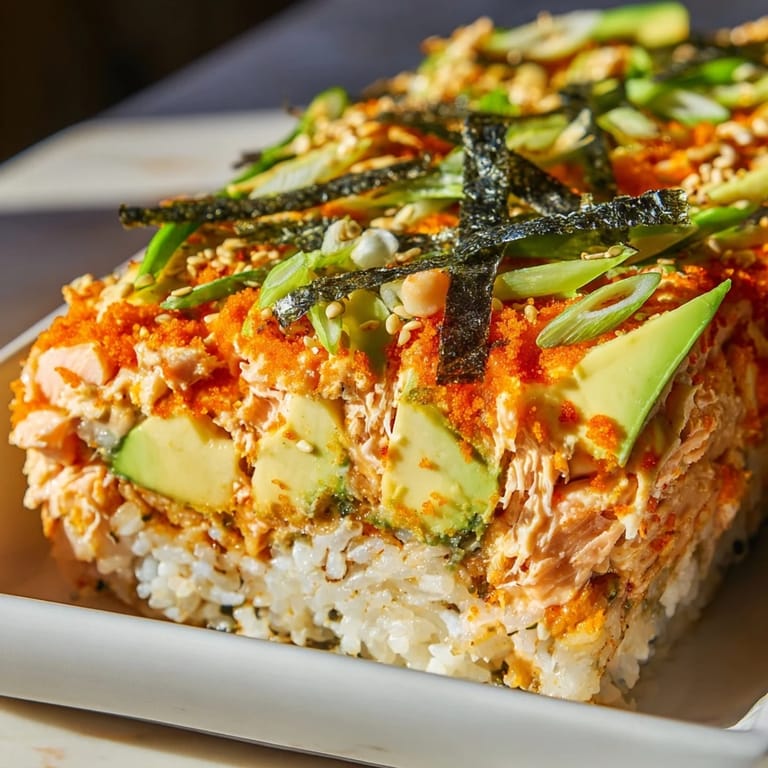
Save My friend texted me a photo of a sushi platter one Tuesday night, and I realized I'd been craving sushi for weeks but couldn't justify the delivery cost or the time to roll everything by hand. That's when it hit me: what if I just baked it instead? The next weekend, I layered seasoned rice, flaked salmon, and avocado in a casserole dish like I was deconstructing a California roll, and twenty-five minutes later, something magical came out of the oven. It tasted exactly like the sushi I loved, but arrived on the table without the precision or the cleanup.
I made this for my roommate's birthday dinner last spring, and watching everyone dive into a warm, sushi-inspired casserole instead of the expected cake felt like I'd cracked some kind of code. The best part wasn't the praise, though that was nice, but the way my roommate kept going back for seconds, asking why this wasn't on more restaurant menus.
Ingredients
- Sushi rice: Two cups gives you the foundation—it needs to be rinsed until the water runs clear, which removes the starch and keeps the rice light instead of gluey.
- Rice vinegar, sugar, and salt: These three transform plain rice into something with actual flavor and personality.
- Salmon fillet: Four hundred grams of good quality salmon is worth it because the flavor carries the whole dish.
- Soy sauce and sesame oil: Brush these on the salmon before baking to deepen its taste.
- Cream cheese and Kewpie mayo: The Kewpie makes a real difference in richness, and softening the cream cheese first means no lumpy streaks.
- Sriracha: Add this if you want heat, but it's truly optional—the dish is perfect without it.
- Avocado: Slice it just before serving so it stays bright green and doesn't turn that sad brown.
- Nori: Cut it into small squares so every bite has that toasted seaweed flavor.
- Sesame seeds and spring onions: These finish the dish with texture and a fresh bite that balances the richness.
Tired of Takeout? 🥡
Get 10 meals you can make faster than delivery arrives. Seriously.
One email. No spam. Unsubscribe anytime.
Instructions
- Prepare the rice foundation:
- Rinse your sushi rice under cold water until the water runs clear—this takes patience but makes all the difference. Cook it with two and a half cups of water in a covered saucepan over low heat for fifteen minutes, then let it sit undisturbed for another ten.
- Season the rice:
- While it's still warm, stir in the rice vinegar, sugar, and salt mixture, fluffing gently with a fork so every grain gets coated without turning to mush. Spread this into your greased nine-by-thirteen baking dish in an even layer.
- Bake the salmon:
- Preheat your oven to four hundred degrees, place your salmon on parchment paper, brush it with soy sauce and sesame oil, sprinkle black pepper on top, and let it bake for twelve to fifteen minutes until it flakes easily with a fork.
- Mix the creamy layer:
- Combine softened cream cheese, mayonnaise, sriracha if you're using it, and lemon juice until smooth, then fold in the flaked salmon so everything stays tender and doesn't break apart.
- Assemble and bake:
- Spread the salmon mixture over your rice layer and bake for ten more minutes until the whole thing is warm and the edges start to turn golden.
- Top and serve:
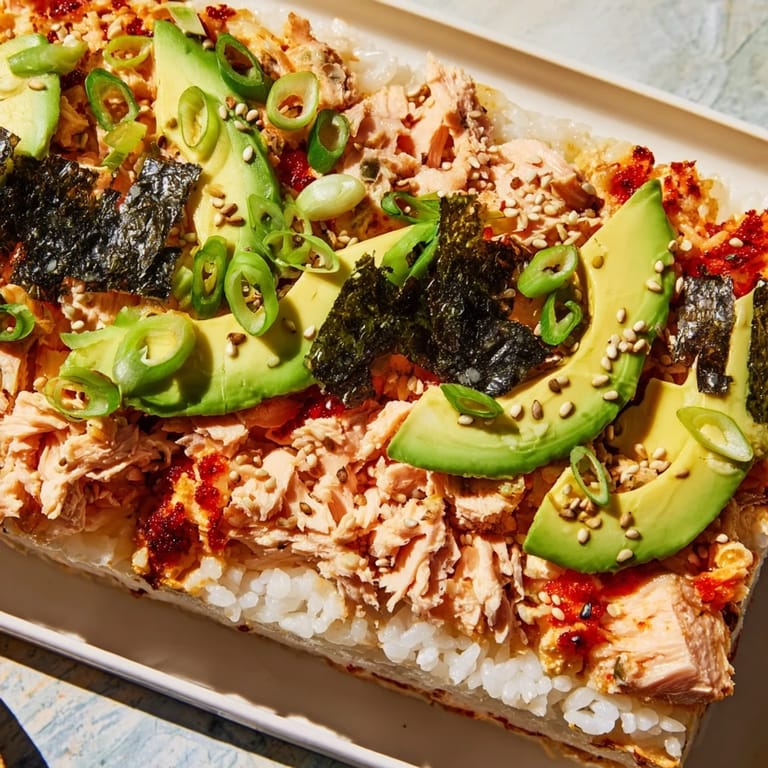
- Arrange your avocado slices, nori squares, sesame seeds, and spring onions on top just before serving so they stay fresh and don't get steamed.
 Save
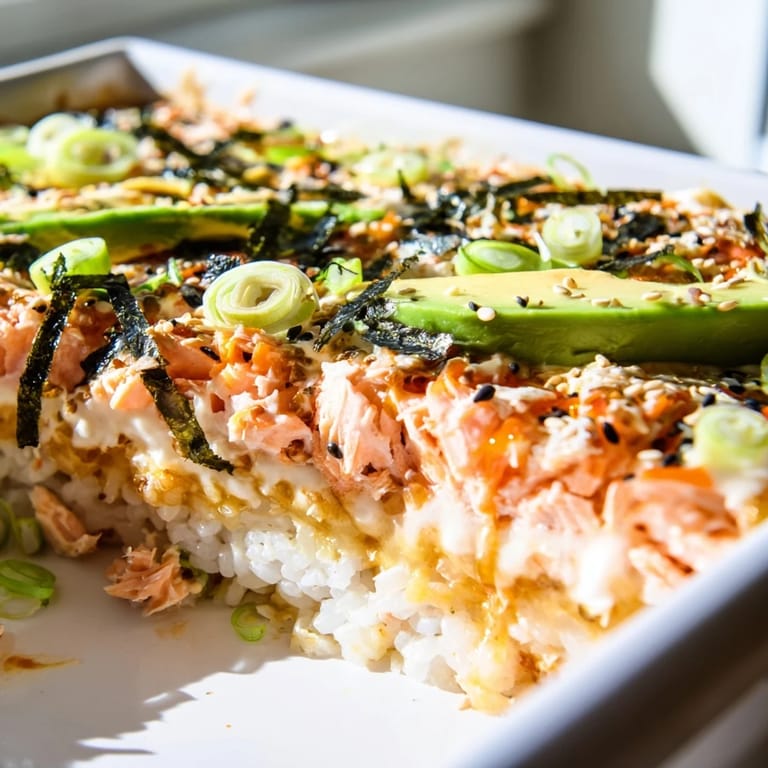
Save The moment I realized this dish worked was when my sister, who's picky about textures, came back for thirds. Something about the combination of warm rice, soft salmon, and cool avocado all together felt both familiar and completely new, like sushi had decided to be cozy.
The Secret to Perfect Layers
The magic happens because each layer stays distinct instead of blending into a soup. The rice stays firm underneath because you spread it in an even layer and let the oven just warm the whole thing, not steam it. The salmon mixture doesn't dry out because it bakes on top for only ten minutes, and the avocado stays creamy because it goes on at the end.
Why This Beats Rolling Sushi
I used to think homemade sushi meant sitting at the counter for an hour, wrapping rolls that looked nothing like restaurant quality. This casserole approach gave me back the joy of making sushi without the frustration or the perfectionism. The deconstructed style means texture still matters, flavor still matters, but the execution suddenly becomes forgiving.
Variations and Swaps
Once you understand how this works, you can swap almost anything in and it still tastes right. I've made it with canned tuna on nights when I didn't have fresh salmon, with imitation crab when someone was budget-conscious, and even with cooked shrimp once when salmon wasn't available. The rice and cream cheese mixture stay the same, which means the foundation is always solid.
- Try panko breadcrumbs sprinkled on top before the final bake for extra crunch.
- Cucumber slices layered under the avocado add freshness without changing the texture.
- A drizzle of spicy mayo over the top right before serving adds complexity with minimal effort.
 Save
Save This recipe feels like the answer to a question I didn't know I was asking: how do I make restaurant-quality sushi at home without losing my mind? The answer turns out to be casserole season.
Recipe FAQs
- → Can I substitute salmon with other seafood?
Yes, cooked crab meat, canned tuna, or cooked shrimp can be used instead of salmon for variation.
- → What type of rice is best for this dish?
Short-grain sushi rice is ideal as it becomes sticky and holds together well when layered.
- → How do I bake the salmon to keep it moist?
Brush the salmon with soy sauce and sesame oil, then bake at 400°F for 12–15 minutes until just cooked through.
- → Can I make this dish ahead of time?
Yes, prepare layers in advance and bake shortly before serving to keep toppings fresh and textures balanced.
- → What can I serve alongside this sushi bake?
Serve with soy sauce for dipping along with pickled ginger and wasabi to complement the flavors.