 Save
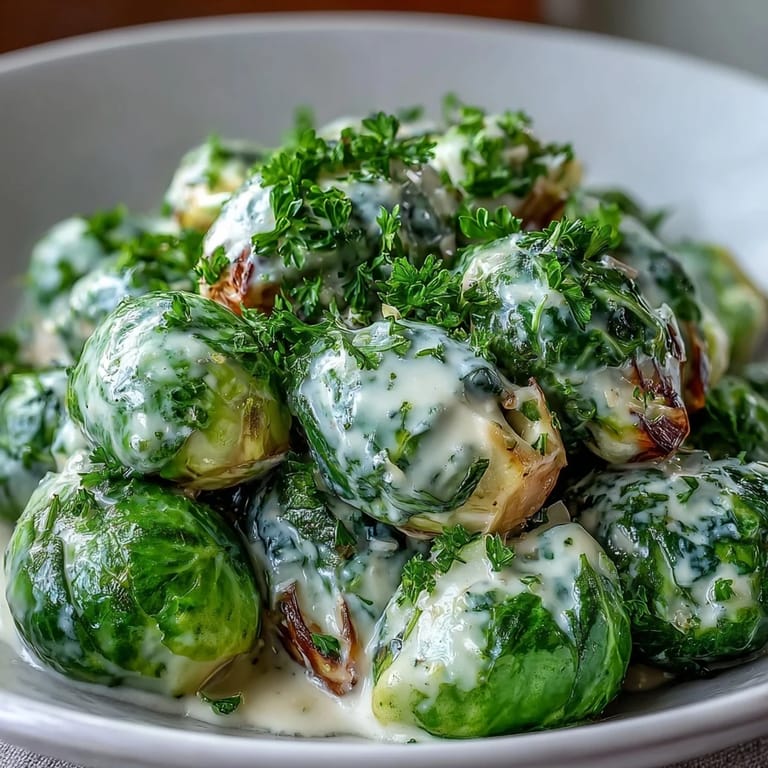
Save My neighbor handed me a bag of Brussels sprouts from her garden one October morning, and I had no idea what to do with them beyond roasting. I stood in my kitchen staring at the pile of tight green orbs, then remembered a creamy mustard sauce I'd had at a German restaurant years ago. I grabbed the cream cheese from the fridge, whisked in some Dijon, and what came together in that skillet was so silky and aromatic it became my go-to way to cook them. Now every time Brussels sprouts show up, I think of that experimental morning and how a simple sauce can turn skeptics into believers.
I made this for a small dinner party in November, and one friend who swore she hated Brussels sprouts went back for seconds. She said it was the sauce that did it, the way the garlic and onion melted into the cream and made everything taste like comfort food. We sat around the table with candles flickering, and she admitted she'd been avoiding them since childhood. That night, she left with the recipe scribbled on a napkin.
Ingredients
- Brussels sprouts (600 g, cleaned and trimmed): Choose firm, bright green sprouts with tightly packed leaves, and trim the stems just enough to remove any dry bits without losing too many outer leaves.
- Onion (1 small, finely chopped): A small onion adds sweetness and body to the sauce without overpowering the delicate sprouts, and chopping it finely ensures it melts into the cream.
- Garlic (1 clove, minced): One clove is enough to perfume the sauce with warmth, and mincing it fine prevents any harsh bites.
- Fresh chopped parsley: This bright green garnish adds a pop of color and a hint of freshness that cuts through the richness of the sauce.
- Cream cheese (150 g): The base of the sauce, it melts into a silky texture that coats every sprout, and full-fat works best for the creamiest result.
- Dijon mustard (2 tablespoons): This brings tangy depth and a gentle heat that wakes up the whole dish without overwhelming it.
- Vegetable broth (150 ml): It loosens the cream cheese into a pourable sauce and adds savory backbone, so choose a good-quality broth if you can.
- Butter (2 tablespoons): Butter is where the flavor starts, giving the onions a rich base to soften in and adding a glossy finish to the sauce.
- Lemon juice (1 teaspoon): Just a teaspoon brightens everything and balances the cream, so add it at the end and taste as you go.
- Salt and pepper: Season generously, tasting after you add the sprouts, because the broth and mustard bring salt but the sprouts need their own.
Tired of Takeout? 🥡
Get 10 meals you can make faster than delivery arrives. Seriously.
One email. No spam. Unsubscribe anytime.
Instructions
- Blanch the Brussels Sprouts:
- Bring a large pot of salted water to a rolling boil, then drop in the cleaned and trimmed Brussels sprouts and cook for 5 to 7 minutes until they are just tender but still have a little bite. Drain them in a colander and set aside, letting the steam escape so they stay firm.
- Start the Sauce Base:
- Melt the butter in a large skillet over medium heat, then add the finely chopped onion and sauté for 3 to 4 minutes, stirring occasionally, until it turns translucent and fragrant. The butter should sizzle gently, not brown.
- Add the Garlic:
- Toss in the minced garlic and sauté for about 1 minute, stirring constantly, until the kitchen fills with that warm, toasty garlic aroma. Be careful not to let it burn or it will turn bitter.
- Build the Cream Sauce:
- Lower the heat and stir in the cream cheese and Dijon mustard, mixing with a wooden spoon until the cream cheese melts and blends smoothly with the mustard. It will look thick and a little clumpy at first, but keep stirring.
- Thin with Broth:
- Gradually pour in the vegetable broth, stirring continuously, until the sauce becomes creamy and homogeneous with no lumps. The consistency should coat the back of a spoon but still flow easily.
- Season and Brighten:
- Season the sauce with salt, pepper, and lemon juice, stirring well and tasting as you go. The lemon should cut through the richness without making the sauce taste sour.
- Coat the Sprouts:
- Add the cooked Brussels sprouts to the skillet and gently toss them in the sauce, making sure each one is evenly coated, then let them heat through for 2 to 3 minutes. The sauce will cling to the leaves and settle into every crevice.
- Serve and Garnish:
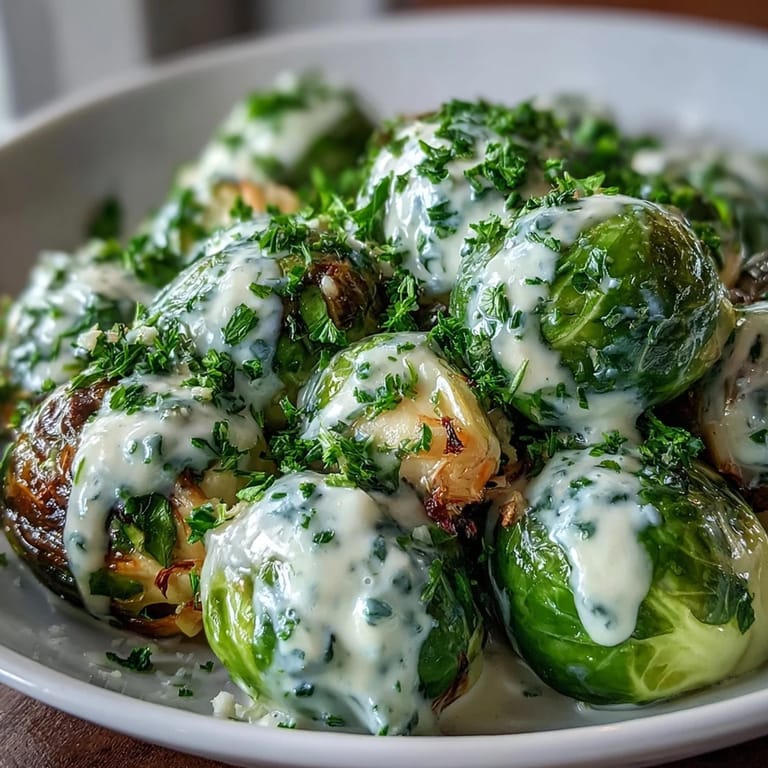
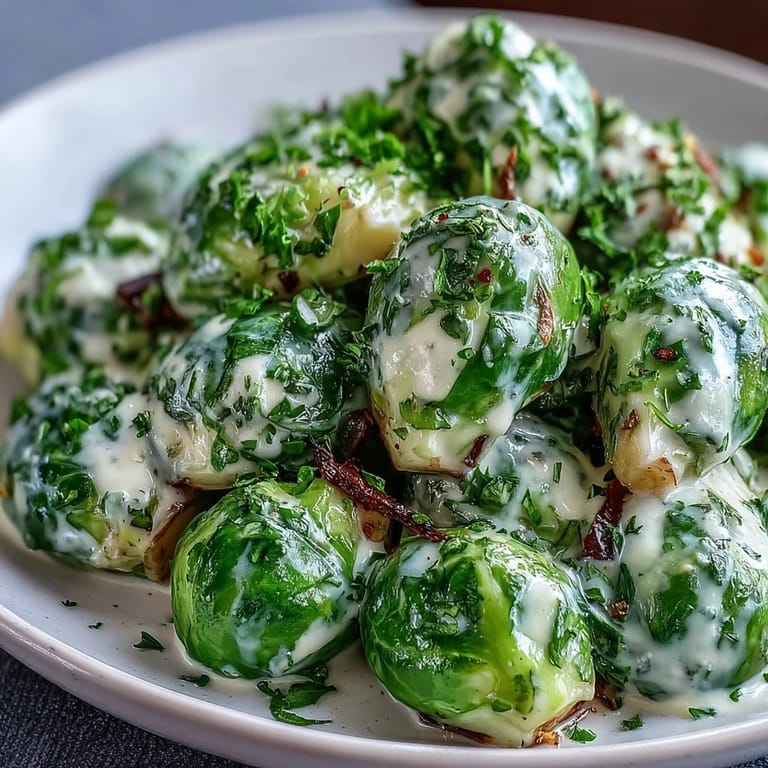
- Transfer everything to a serving dish and scatter fresh chopped parsley over the top. Serve warm while the sauce is still silky.
 Save
Save One rainy Sunday, I made a double batch and invited my sister over for lunch. We sat at the kitchen table with the windows fogged up, and she said it reminded her of the creamed vegetables our grandmother used to make but with more personality. We talked for hours, and the empty dish sat between us, scraped clean. It was one of those meals that felt like more than food.
Serving Suggestions
This dish shines as a side for roasted chicken, pork chops, or a simple grilled steak, but I have also served it as a vegetarian main with crusty bread and a green salad. The creamy sauce is rich enough to stand on its own, and the sprouts add enough heft to make it satisfying. If you are feeding a crowd, double the recipe and keep it warm in a low oven until everyone is ready to eat.
Storage and Reheating
Leftovers keep well in an airtight container in the fridge for up to three days, and the flavors actually deepen overnight as the mustard and garlic meld. To reheat, warm them gently in a skillet over low heat with a splash of broth or water to loosen the sauce, stirring occasionally. I have also reheated individual portions in the microwave, though the skillet method keeps the texture better.
Variations and Swaps
If you want a little heat, stir in a pinch of cayenne pepper or a few red pepper flakes when you add the mustard. You can swap the Dijon for whole-grain mustard for a more rustic texture, or use Greek yogurt in place of half the cream cheese for a tangier, lighter sauce. I have also stirred in a handful of grated Parmesan at the end for extra richness, and it melts right into the cream.
- Try adding crispy bacon bits or toasted walnuts on top for crunch and a smoky or nutty contrast.
- For a vegan version, use plant-based cream cheese and butter, and check that your mustard and broth are dairy-free.
- Substitute the lemon juice with a splash of white wine vinegar if that is what you have on hand.
 Save
Save Every time I make this, I am reminded that the best recipes are the ones that surprise you with how simple they are and how much joy they bring. I hope this becomes one of those dishes in your kitchen too.
Recipe FAQs
- → Can I use frozen Brussels sprouts?
Fresh Brussels sprouts work best for texture, but frozen can be used in a pinch. Thaw completely and pat dry before boiling, and reduce cooking time by 1-2 minutes since they're already partially cooked during freezing.
- → What can I substitute for Dijon mustard?
Whole grain mustard adds lovely texture and mild heat. For a smoother alternative, try stone-ground mustard. If you need something milder, yellow mustard works though you'll miss the complex Dijon flavor.
- → How do I store leftovers?
Keep in an airtight container in the refrigerator for 3-4 days. The sauce may thicken when cold—add a splash of broth or cream when reheating on the stovetop over low heat, stirring gently until warmed through.
- → Can I make this dairy-free?
Use dairy-free cream cheese alternative and plant-based butter or olive oil. Coconut cream can substitute for traditional cream cheese, though it will add subtle coconut flavor. The sauce may be slightly less thick but still delicious.
- → Should I cover the sprouts while boiling?
No need to cover while boiling—uncovered helps them maintain their bright green color. Cook until just tender when pierced with a knife, about 5-7 minutes. You want them to have some bite since they'll cook more in the sauce.
- → Can I add other vegetables?
Blanched green beans or cauliflower florets pair wonderfully with this sauce. Add them during the final tossing stage so they heat through without overcooking. Pearl onions also complement the flavors beautifully.