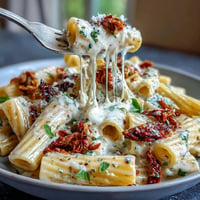
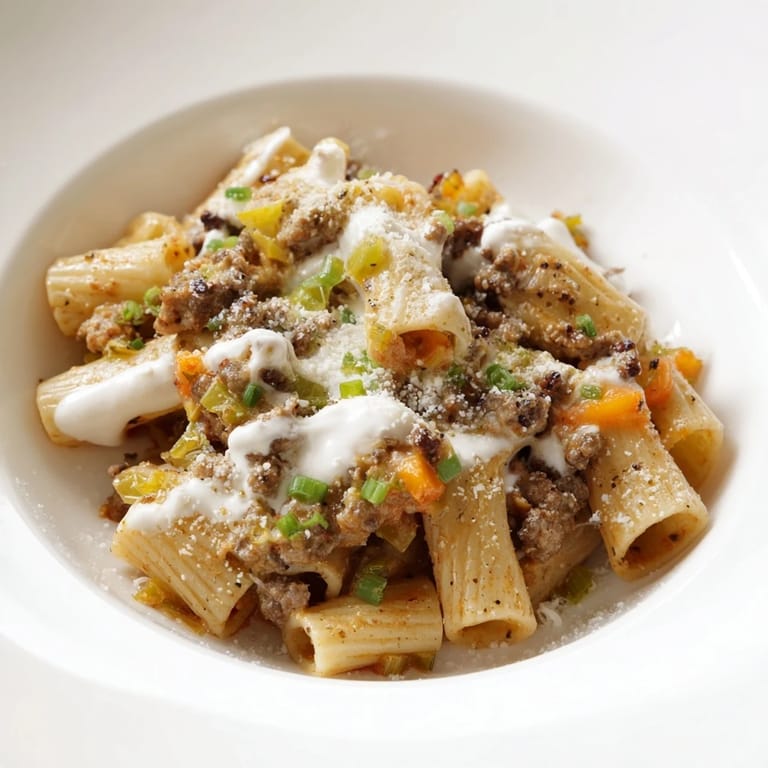
 Save
Save I was halfway through a boring Tuesday night ragu when my roommate came home with a jar of kimchi, and we ended up throwing it into the sauce on a whim. The heat cut through the richness in a way that made us both pause mid-bite and ask, "Wait, why isn't this already a thing?" That accident became this dish—a collision of two food worlds that somehow knew they belonged together from the moment they hit the same pan.
I made this for friends who were skeptical about mixing Korean and Italian, and watching their faces shift from doubt to "can I have the recipe?" was honestly the best kitchen moment of my month. One of them said it tasted like both cuisines were having a conversation, and somehow that stuck with me.
Ingredients
- Ground pork (300 g): The backbone—beef works too, but pork has just enough fat to carry the sauce's flavor without getting heavy.
- Napa cabbage kimchi (200 g, chopped, plus 2 tbsp juice): This is your flavor anchor, bringing funkiness and heat that store-bought tomato sauce could never touch on its own.
- Crushed tomatoes (400 g can): San Marzano if you can swing it, but any quality crushed tomatoes will do—they're your foundation.
- Heavy cream (120 ml): Creates that silky finish that makes the spice land softer on your palate; swap for plant-based if that's your lane.
- Onion, carrot, and celery (1 medium onion, 1 medium carrot, 1 stalk celery, all finely diced): The holy trinity that builds depth—don't skip dicing small, it matters for texture.
- Garlic (2 cloves, minced): Goes in after the veggies have softened to keep it fragrant, not burnt.
- Soy sauce (1 tbsp): Adds a salty punch that ties the Italian and Korean elements together.
- Gochugaru (1 tsp, optional): If you want extra heat and color, this is your move—but start small if you're uncertain.
- Olive oil (2 tbsp): Your cooking medium; use something you don't mind the flavor of since it's doing real work here.
- Sugar (1 tsp): A tiny bit balances the fermented bite of the kimchi and cuts any harsh edges.
- Salt and black pepper: Season as you go, not all at once—you'll taste better that way.
- Rigatoni or penne (350 g): Pick a shape with ridges so the sauce clings instead of sliding off.
- Scallions (2 tbsp, chopped) and Parmesan (25 g, grated, optional): The final flourish that adds color, freshness, and a salty note.
Tired of Takeout? 🥡
Get 10 meals you can make faster than delivery arrives. Seriously.
One email. No spam. Unsubscribe anytime.
Instructions
- Build your base:
- Heat olive oil in a large skillet over medium-high heat and add the onion, carrot, and celery. Let them soften for about 5 minutes, stirring every minute or so—you want them tender but not browning yet.
- Wake up the garlic:
- Add minced garlic and cook for just 1 minute until the smell fills your kitchen. This is your signal to move fast so it doesn't burn.
- Brown the meat:
- Crumble in the ground pork and break it up with your spoon as it cooks, about 6 to 7 minutes total. You're looking for no pink remaining and a light golden color on most pieces.
- Let kimchi do its thing:
- Stir in the chopped kimchi and its juice, then sauté for 3 to 4 minutes so the kimchi softens and releases its flavor into the fat. You'll notice the pan suddenly smell funky and amazing at the same time.
- Simmer into sauce:
- Pour in the crushed tomatoes, soy sauce, gochugaru if using, and sugar plus a pinch of salt and pepper. Bring to a gentle bubble and let it sit uncovered for 15 to 20 minutes, stirring now and then, until it thickens and deepens in color.
- Cook pasta meanwhile:
- While the sauce is working, get a pot of salted water going and cook your rigatoni or penne according to the package until it's al dente—tender with a slight bite. Scoop out about 100 ml of the starchy pasta water before draining.
- Cream it smooth:
- Turn the ragu heat down to low and stir in the heavy cream and half the reserved pasta water. Mix until you get a silky, flowing sauce, then taste and adjust salt and pepper to your liking.
- Bring it together:
- Add the cooked pasta directly to the ragu and toss to coat everything evenly. If it looks too thick, splash in a bit more pasta water until it reaches that glossy, cling-to-the-noodles consistency.
- Plate and serve:
- Spoon into bowls while hot and scatter scallions and Parmesan cheese on top if you're using them. The fresher the toppings, the better the contrast.
 Save
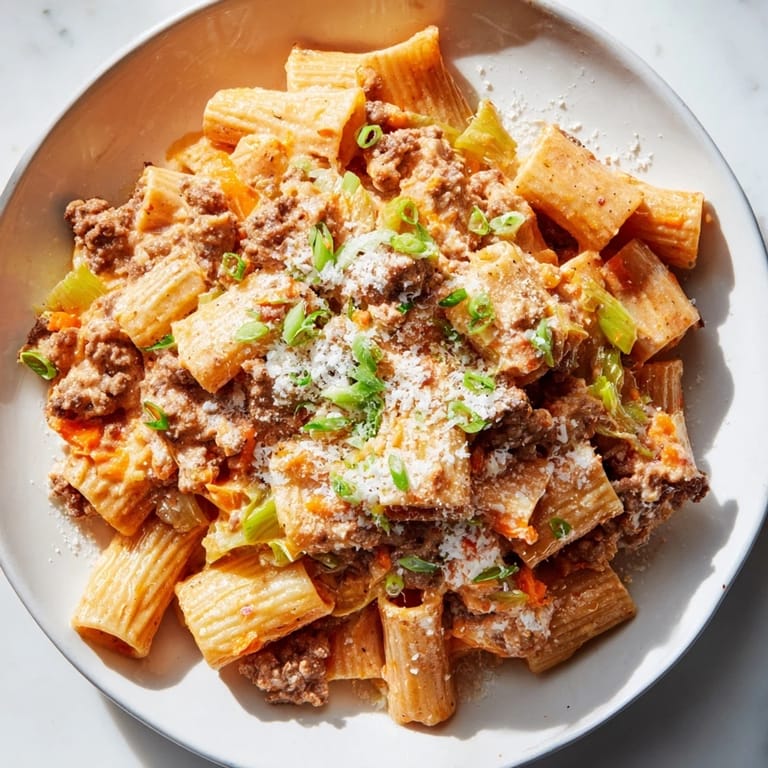
Save There's something about bringing two cuisines together that shouldn't work but absolutely does—it reminds me that the best dishes aren't always about following tradition, they're about listening to what's in your pantry and being brave enough to stir it together. This ragu proved that to me every single time I've made it since.
Why This Works as Fusion
The Italian ragu gives you the structure and richness, the tomato and cream creating that classic comfort-food backbone. Then the kimchi jumps in with its fermented funk and heat, cutting through the heaviness and waking up your palate so every bite feels fresh instead of heavy. It's not confused about what it wants to be—it's just confident in its own weirdness.
Making It Yours
This recipe is a starting point, not a rulebook. If you like things spicier, add more gochugaru or use a spicy kimchi from the start. If cream isn't your thing, coconut milk brings a subtle sweetness that plays beautifully with the fermented notes. Some nights I've added a splash of the kimchi's brine jar because I was feeling bold, and honestly, it only made things better.
Storage and Serving Ideas
This sauce actually gets better the next day once the flavors settle and meld—make a double batch and you've got lunch sorted. Keep it in the fridge for up to three days, or freeze it for a month if you want to grab something special on a random weeknight. Serve it over pasta, toss it with rice, spoon it over crispy tofu, or eat it straight from the pot at midnight when you thought you were done cooking.
- Leftover ragu reheats beautifully on low heat with a splash of water or cream to loosen it back up.
- Turn any leftovers into a pasta bake by mixing with cooked pasta, topping with cheese, and baking at 375°F until golden.
- This sauce also works as a meat sauce for sandwiches or as a filling for Korean-Italian fusion dumplings if you're feeling creative.
 Save
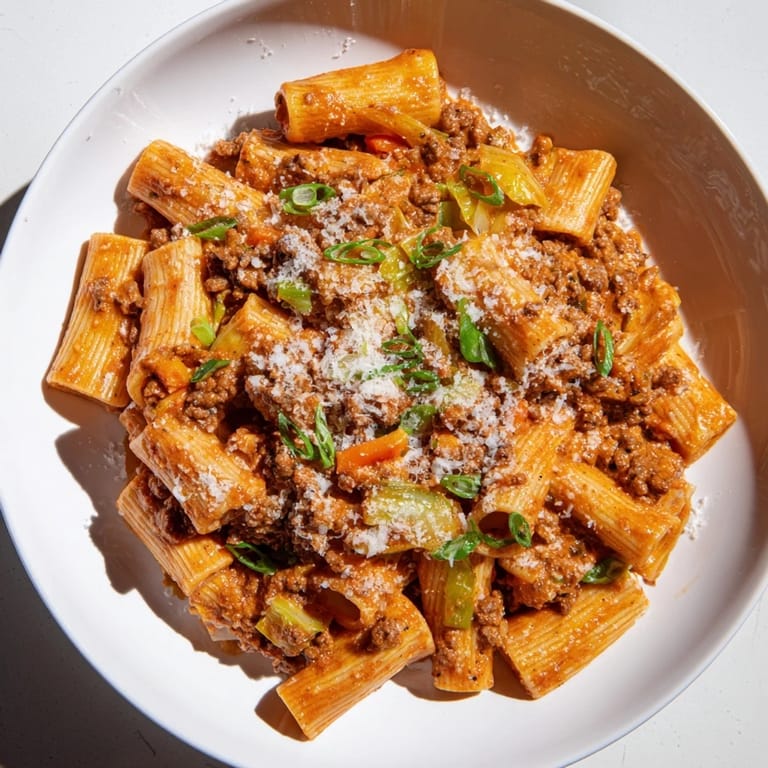
Save Make this when you want dinner that tastes like you took risks in the kitchen and they all paid off. It's the kind of dish that turns a regular night into something worth remembering.
Recipe FAQs
- → Can I use beef instead of pork?
Yes, beef or a blend of beef and pork works well, providing rich depth while maintaining the dish's savory character.
- → How can I make this dairy-free?
Substitute heavy cream with unsweetened plant-based cream or coconut cream for a creamy texture without dairy.
- → What pasta types suit this dish best?
Short, ridged pastas like rigatoni or penne hold the sauce well and complement the hearty ragu texture.
- → How spicy is the dish?
The spiciness level can be adjusted by varying the amount of gochugaru and kimchi, offering a mild to bold kick.
- → What wine pairs with this meal?
Fruity reds like Lambrusco or aromatic whites such as Riesling pair wonderfully with the spicy and creamy flavors.
- → Is it possible to make a vegetarian version?
Yes, use plant-based ground meat and omit or replace Parmesan with a vegan alternative for a meat-free adaptation.