 Save
Save I discovered this dish on a rainy Tuesday when my freezer held only pasta and a jar of Thai green curry paste I'd bought on impulse months before. The kitchen smelled like coconut and garlic within minutes, and suddenly I was stirring silky sauce into linguine, watching vegetables turn tender-crisp in the heat. What started as improvisation became something I crave—that perfect collision of creamy, aromatic, and just spicy enough to make you feel alive.
I made this for friends who showed up expecting something ordinary, and the moment they tasted it, the whole dinner shifted. Someone asked if I'd learned to cook Thai food professionally, which made me laugh into my wine—but that's the magic of this dish. It feels impressive without any pretense.
Ingredients
- 350 g linguine or spaghetti: Al dente is everything here; it should have just a whisper of resistance when you bite it so it drinks in the sauce without turning mushy.
- 1 tbsp salt for pasta water: Never underestimate this—it seasons the pasta itself and gives the water body for binding the final dish.
- 1 red bell pepper and 1 zucchini: These two are the backbone; they stay crisp and offer natural sweetness that balances the curry's heat.
- 100 g snap peas and 100 g baby corn: They keep their snap even after cooking, which matters more than you'd think for texture.
- 2 spring onions: These go in at the very end so they stay fresh and bright against the richness of the sauce.
- 2 tbsp fresh cilantro: Buy it fresh; dried tastes like sadness in this context.
- 2 tbsp vegetable oil: Use something neutral—coconut oil will make the flavor muddled.
- 3 tbsp Thai green curry paste: This is your flavor foundation; quality matters, so get one you'd actually eat by the spoonful.
- 400 ml full-fat coconut milk: Don't skimp on the fat content—that's where the richness lives.
- 1 tbsp soy sauce: It adds umami depth and a savory note that grounds all that aromatic heat.
- 1 tbsp brown sugar: Just enough to tame the spice and bring harmony to the sauce.
- 1 tsp freshly grated ginger: Fresh makes an enormous difference; jar ginger won't give you that bright, clean heat.
- Juice of 1 lime: This is the final note that lifts everything and makes you taste every layer.
Tired of Takeout? 🥡
Get 10 meals you can make faster than delivery arrives. Seriously.
One email. No spam. Unsubscribe anytime.
Instructions
- Set Your Water to Boiling:
- Fill a large pot with water, add your salt, and let it come to a rolling boil—not a gentle simmer, but real heat. This is where everything begins.
- Build Your Sauce Base:
- Heat oil in a large skillet over medium heat, then add the curry paste and ginger. You'll know you've done it right when your kitchen fills with that intoxicating fragrance and the paste starts to darken slightly at the edges, about a minute or two.
- Create the Creamy Foundation:
- Pour in the coconut milk slowly, stirring as you go, then add soy sauce and brown sugar. Let it bubble gently for a few minutes so everything melds together into a silky, cohesive sauce.
- Cook Your Pasta:
- While the sauce simmers, add the pasta to your boiling water and cook it just until al dente—tender with a slight firmness in the center. Drain it in a colander but save about half a cup of that starchy pasta water; you'll need it soon.
- Introduce the Vegetables:
- Slide your bell pepper, zucchini, snap peas, and baby corn into the simmering curry sauce. They should take about five to six minutes to become tender-crisp, still with a bit of resistance when you bite them.
- Bring Everything Together:
- Add your drained pasta to the skillet along with a splash of that reserved pasta water. Toss everything together and let it simmer for a couple of minutes so the pasta absorbs the flavors and the sauce coats every strand evenly.
- Finish with Brightness:
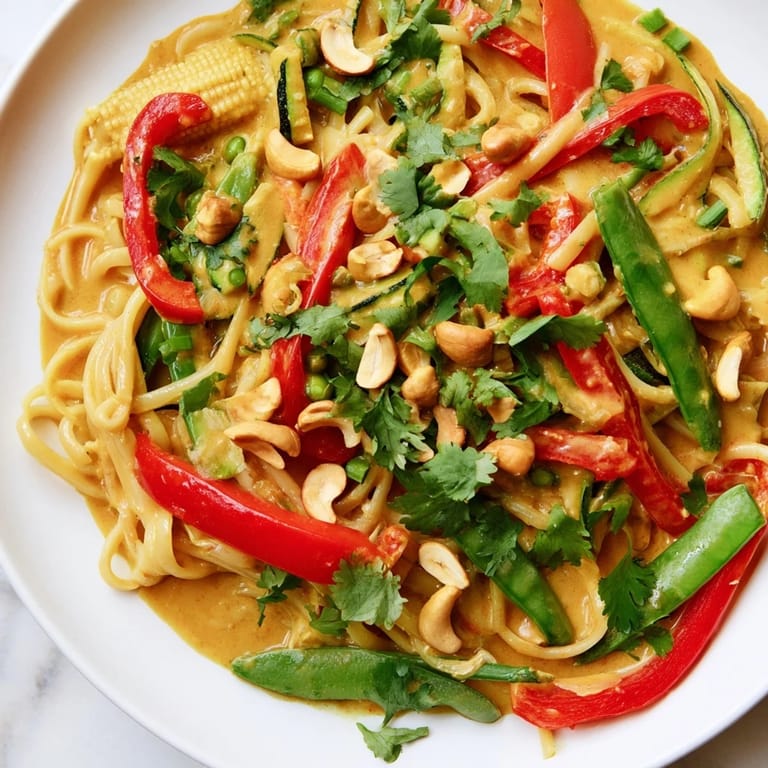
- Stir in the spring onions, lime juice, and cilantro at the very end. Taste it—you might want more lime, more soy sauce, more heat—and adjust until it feels right to you.
 Save
Save There's a moment, just after you've tossed the pasta into the sauce, when you stop rushing and actually smell what you're making. That's when this dish stops being a recipe and becomes something you want to cook again and again.
Why This Fusion Works
Pasta and curry shouldn't make sense together, but they do—the starchy, neutral base of the pasta lets the sauce shine without fighting back, and the vegetables add texture that neither dish alone would offer. It's like two completely different kitchens decided to collaborate, and somehow they understood each other perfectly from the first moment.
Customizing Your Bowl
This dish welcomes experimentation in a way that feels generous. If you don't have snap peas, throw in broccoli or carrots; if your red pepper is tired, use what's bright and fresh. You can add cooked shrimp, chicken, or crumbled tofu if you want protein, or leave it vegetarian and let the coconut milk be the star.
Serving and Storing
Serve this immediately while the pasta is still warm and the vegetables haven't begun to soften too much—timing matters here. Leftovers can live in the refrigerator for three days, though the vegetables will lose some of their snap.
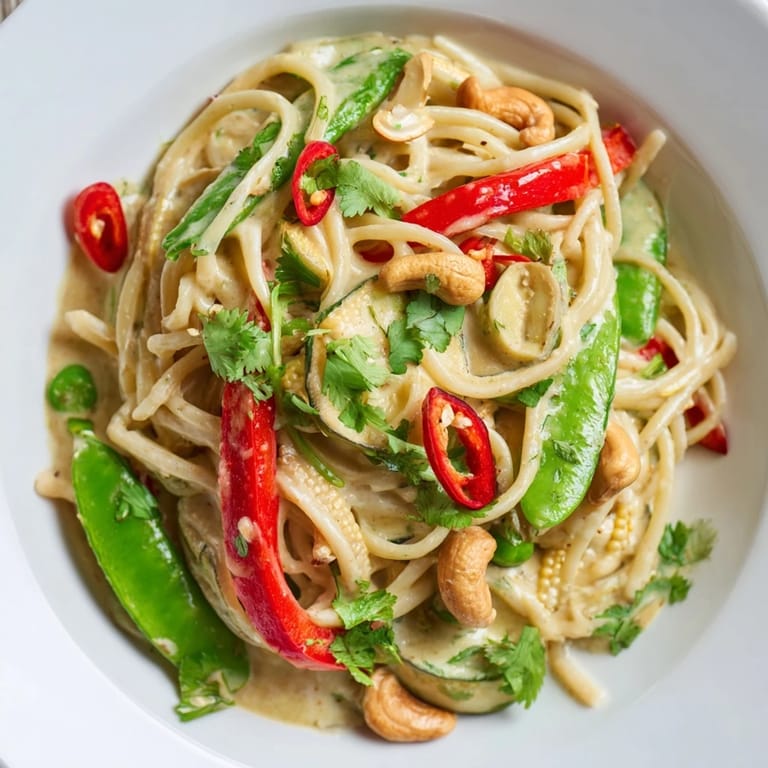
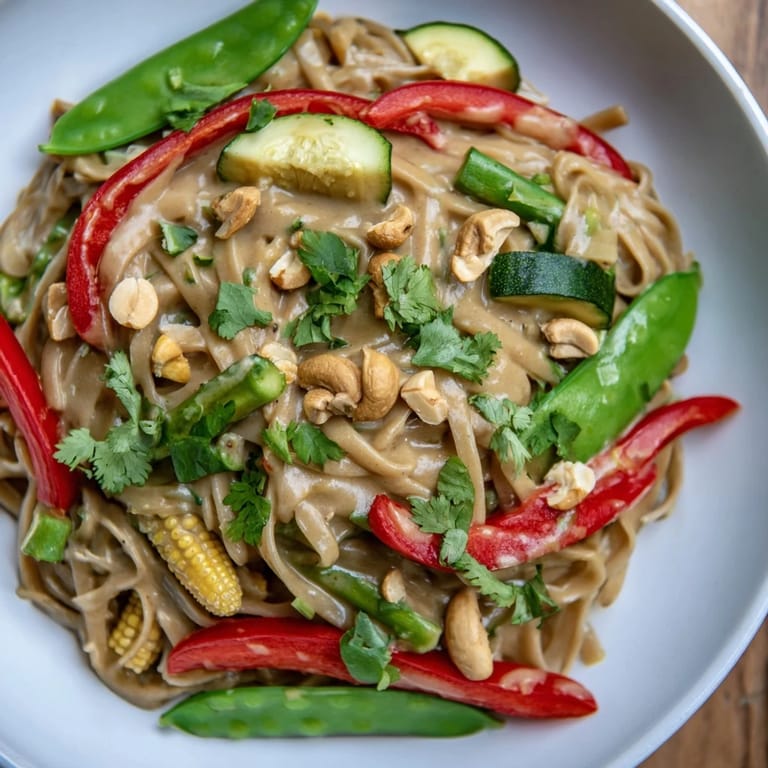
- Garnish with lime wedges, extra cilantro, sliced red chili, and roasted cashews or peanuts if you want a final touch of elegance.
- A crisp, aromatic white wine like Riesling pairs beautifully because its sweetness won't compete with the spice.
- If the sauce seems too thick when you reheat it, add a splash of coconut milk or pasta water to loosen it back up.
 Save
Save This is the kind of dish that makes ordinary weeknights feel like an event. Once you've made it once, you'll keep making it.
Recipe FAQs
- → What pasta types work best for this dish?
Linguine or spaghetti are ideal, providing the perfect texture to absorb the curry sauce while remaining tender and satisfying.
- → How can I adjust the spice level?
Modify the amount of green curry paste used or add sliced red chili for extra heat. Reducing curry paste softens the spice but keeps flavor intact.
- → Is there a vegan version available?
Yes, use curry paste free of shrimp or fish sauce and plant-based alternatives to keep it fully vegan without compromising taste.
- → Can I add protein to the dish?
Cooked chicken, shrimp, or tofu can be added to boost protein and make the meal heartier while complementing the curry flavors.
- → What garnishes enhance the flavors?
Lime wedges, extra cilantro, sliced red chili, and roasted cashews or peanuts add brightness, crunch, and a hint of spice to finish the dish.