 Save
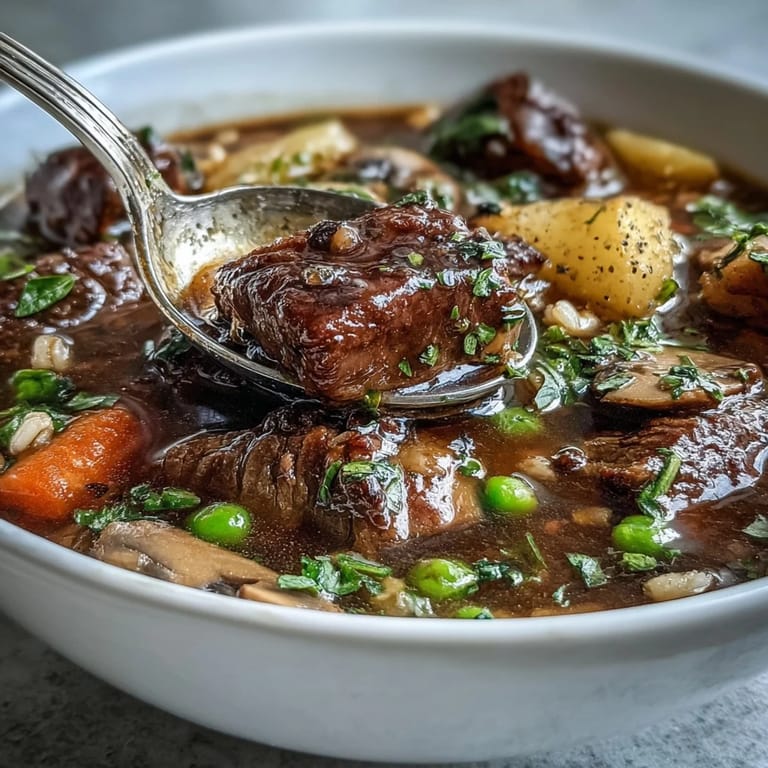
Save My neighbor knocked on my door one October afternoon with a container of beef and barley soup still steaming from her stove. She'd made too much, she said, but really she just knew I'd had a rough week. One spoonful and I understood why this soup has been feeding people for generations—it's the kind of dish that wraps around you like a hug, substantial enough to feel like real nourishment.
Years later, I made this soup for my partner during a snowstorm when we were stuck inside together. We sat by the window watching the flakes fall while eating bowl after bowl, and somehow the simple act of sharing something warm we'd made felt like the best part of the day. That's when I realized this recipe was worth keeping close.
Ingredients
- Beef stew meat (1 lb, cut into 1-inch cubes): The key is choosing meat with some marbling so it becomes tender rather than tough as it simmers in the broth.
- Pearl barley (3/4 cup, rinsed): Rinsing removes the starch and prevents the soup from getting gummy, plus it develops a nutty flavor as it cooks.
- Carrots (2 medium, diced): They soften beautifully and their natural sweetness balances the savory beef broth.
- Celery (2 stalks, diced): This is the quiet hero of the pot, adding depth without overwhelming anything else.
- Onion (1 large, chopped): Chopped rather than minced so the pieces stay distinct throughout the long cooking time.
- Garlic (2 cloves, minced): Added after the vegetables soften so it doesn't burn and turn bitter in the hot oil.
- Potatoes (1 cup, peeled and diced): They absorb the broth flavor and add substance, making each spoonful feel hearty.
- Mushrooms (1 cup, sliced): These add an earthy richness that makes the soup feel more complex than its simple ingredients suggest.
- Frozen peas (1 cup): Added near the end so they stay bright and slightly tender rather than turning to mush.
- Diced tomatoes (1 can, drained, optional): If you use them, draining them first prevents the soup from becoming too watery.
- Beef broth (8 cups): The foundation of everything, so using good quality broth makes a real difference in the final taste.
- Bay leaves (2): These need the full cooking time to infuse their flavor, so don't skip them.
- Dried thyme (1 tsp): A classic pairing with beef that feels warm and slightly herbaceous.
- Dried parsley (1 tsp): It adds freshness even though it's dried, balancing the rich beef.
- Salt and black pepper: Season in layers rather than all at once so you develop balanced flavors.
- Olive oil (2 tbsp): Just enough to brown the meat without making the final soup greasy.
Tired of Takeout? 🥡
Get 10 meals you can make faster than delivery arrives. Seriously.
One email. No spam. Unsubscribe anytime.
Instructions
- Brown the beef properly:
- Heat your oil until it shimmers, then work in batches so the meat actually browns instead of steaming. You'll hear it sizzle when you add each piece, and that's exactly what you want—it takes about 5 minutes total but builds flavor that carries through the whole pot.
- Build the flavor base:
- After removing the beef, the same pot still has all those brown bits stuck to the bottom (that's liquid gold). Sauté your onions, carrots, celery, and mushrooms until they start to soften and release their moisture, about 5 minutes.
- Add the garlic carefully:
- Just 1 minute after the vegetables have started to soften, stir in your minced garlic. This timing prevents it from burning while still letting it perfume everything.
- Combine everything:
- Return the beef to the pot and add your potatoes, rinsed barley, tomatoes if using, broth, and herbs all at once. Stir everything together so nothing sticks to the bottom.
- Simmer low and slow:
- Bring it to a boil first so you see the bubbles racing across the surface, then drop the heat to low and cover it. Let it cook for a full hour, stirring every 15 minutes or so—the beef will gradually become tender and the barley will start to soften.
- Finish strong:
- After an hour, add your frozen peas and let everything cook uncovered for another 20 to 30 minutes. This is when you taste and adjust for salt and pepper, keeping in mind the broth already has some seasoning in it.
- Release and serve:
- Remove those bay leaves (they'll be soft and dark now), ladle into bowls, and serve while it's still steaming.
 Save
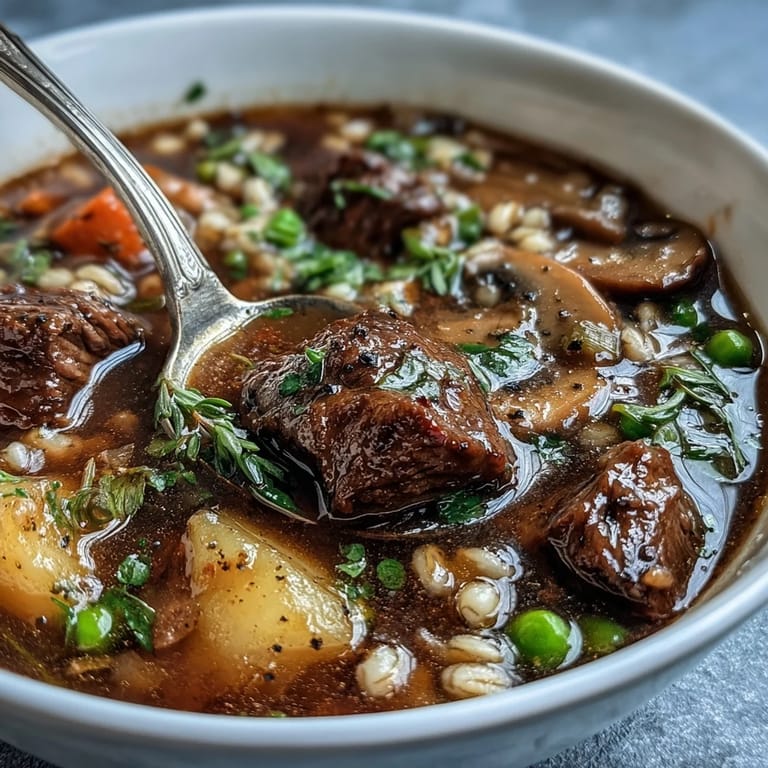
Save I served this soup to a friend who was going through a rough time, and she called me three days later to say she'd made a fresh batch because she couldn't stop thinking about it. That's when I understood soup isn't just food—it's a way of saying I'm thinking of you without having to say much at all.
Making It Your Own
The beauty of this soup is how forgiving it is to personal taste. I've added parsnips and turnips on autumn nights when I found them at the market, and once I swapped half the beef for turkey because that's what I had defrosted. Each version tastes slightly different but equally satisfying, which means you can make this recipe your own without worrying you've done something wrong.
Storage and Reheating
This soup actually improves if you let it sit overnight because the flavors meld together and deepen. Refrigerate it in a covered container for up to 4 days, or portion it into freezer bags and freeze for up to 3 months. When reheating from frozen, thaw it overnight in the refrigerator if you have time, then warm gently on the stovetop over medium heat, stirring occasionally so nothing scorches on the bottom.
Pairing and Serving Suggestions
Crusty bread is the obvious choice—something with a tough exterior and a soft middle that you can use to soak up every last drop from your bowl. A robust red wine like Cabernet or Merlot pairs beautifully if you're feeling fancy, though honestly a simple glass of water is just as perfect. For a heartier meal, add a simple green salad on the side or serve with sharp cheddar biscuits.
- Tear off a piece of bread and let it absorb some broth before eating so it becomes part of the soup rather than just an accompaniment.
- If the soup is too thick after a day or two, thin it with a little extra broth or water rather than accepting it as is.
- This recipe easily doubles, so make extra and have it waiting in your freezer for the next time someone needs comforting.
 Save
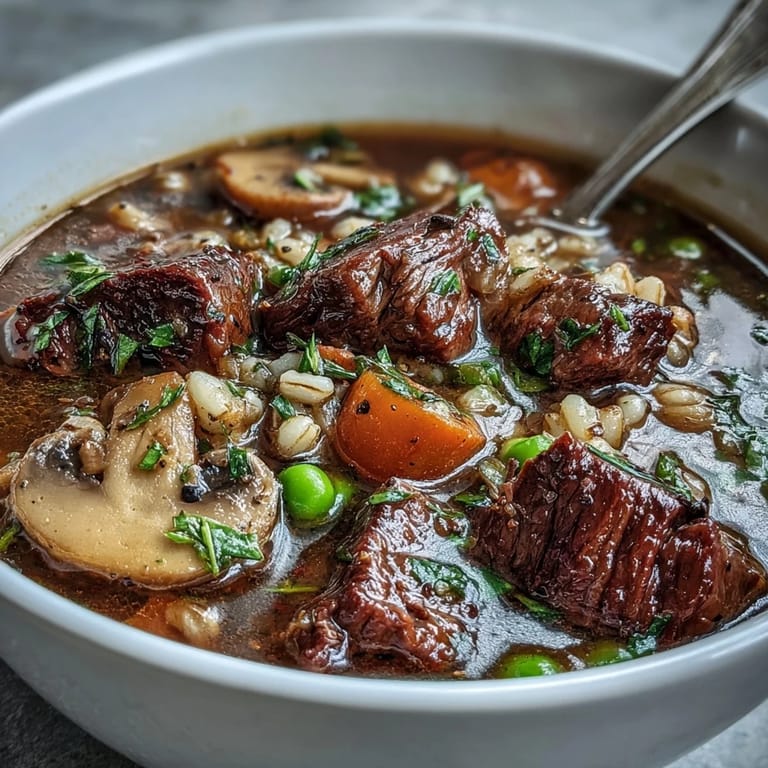
Save This is the kind of soup that becomes part of your life, something you make when you need comfort or when you want to show someone you care. Once you've made it once, you'll find yourself making it again.
Recipe FAQs
- → How long does beef barley soup keep in the refrigerator?
This soup stores beautifully in the refrigerator for up to 4 days. The flavors actually improve after a day or two as the ingredients continue to meld together. Just cool completely before transferring to an airtight container.
- → Can I freeze beef barley soup?
Absolutely! This soup freezes well for up to 3 months. Cool completely, then portion into freezer-safe containers leaving some space for expansion. Thaw overnight in the refrigerator before reheating gently on the stovetop.
- → Do I need to soak pearl barley before cooking?
No soaking required! Pearl barley is processed to remove the outer hull and bran layer, so it cooks relatively quickly. Just give it a quick rinse under cold water before adding to the pot.
- → What cut of beef works best?
Beef stew meat or chuck roast cut into cubes are ideal choices. These cuts have enough marbling and connective tissue to become tender and flavorful during long simmering. Leaner cuts may become tough.
- → Can I make this in a slow cooker?
Yes! Brown the beef and sauté vegetables first, then transfer everything to your slow cooker. Cook on low for 7-8 hours or high for 4-5 hours. Add the frozen peas during the last 30 minutes.
- → Why is my soup too thick?
Pearl barley naturally releases starch and expands significantly while cooking, creating a thick, hearty consistency. If you prefer a thinner soup, simply add more broth or water until you reach your desired consistency.