 Save
Save One Tuesday night, I had exactly twelve minutes before my roommate got home and zero ideas for dinner. A half-empty jar of peanut butter caught my eye in the pantry, and I started rummaging for what else I could find. Rice noodles, a bottle of sriracha, some wilting bell peppers—suddenly those random ingredients transformed into something so good that she asked me to make it again the next week. That's when I realized this dish didn't need fancy planning or a trip to the store; it just needed a little heat, some creamy sauce, and the courage to trust what tastes right.
I made this for a potluck where I was nervous about my contribution, and it completely disappeared before the main course even landed on the table. A friend I'd just met asked for the recipe right there with noodles still clinging to her fork, and we've been texting about food ever since. That's when I knew this recipe had something special—not just flavor, but the kind of dish that brings people together without pretense.
Ingredients
- Dried rice noodles or spaghetti (12 oz): Rice noodles absorb sauce beautifully and cook quickly, but spaghetti works just fine if that's what you have; the key is draining and rinsing them cold so they don't clump.
- Creamy peanut butter (1/2 cup): Use the kind with just peanuts and salt, not the kind with added oils or sugar, so your sauce stays velvety without breaking.
- Soy sauce (1/4 cup): This is your backbone of umami and salt; don't skip it or dilute it with water before mixing.
- Rice vinegar (2 tbsp): Adds brightness that cuts through richness and keeps the sauce from tasting one-dimensional.
- Toasted sesame oil (1 tbsp): This isn't cooking oil; just a drizzle for aroma and depth, so a little goes a long way.
- Honey or maple syrup (2 tbsp): Balances the heat and tang with subtle sweetness that makes people say "I can't quite put my finger on what makes this so good."
- Sriracha or chili garlic sauce (2-3 tbsp): Start with 2 and taste as you go; heat levels vary wildly by brand, and you can always add more.
- Garlic and ginger (2 cloves and 1 tbsp): Fresh is non-negotiable here; they give the sauce its warm, living quality that makes it taste homemade.
- Warm water (1/4 cup, plus more): This loosens the sauce to a pourable consistency, but the exact amount depends on how thick your peanut butter was to begin with.
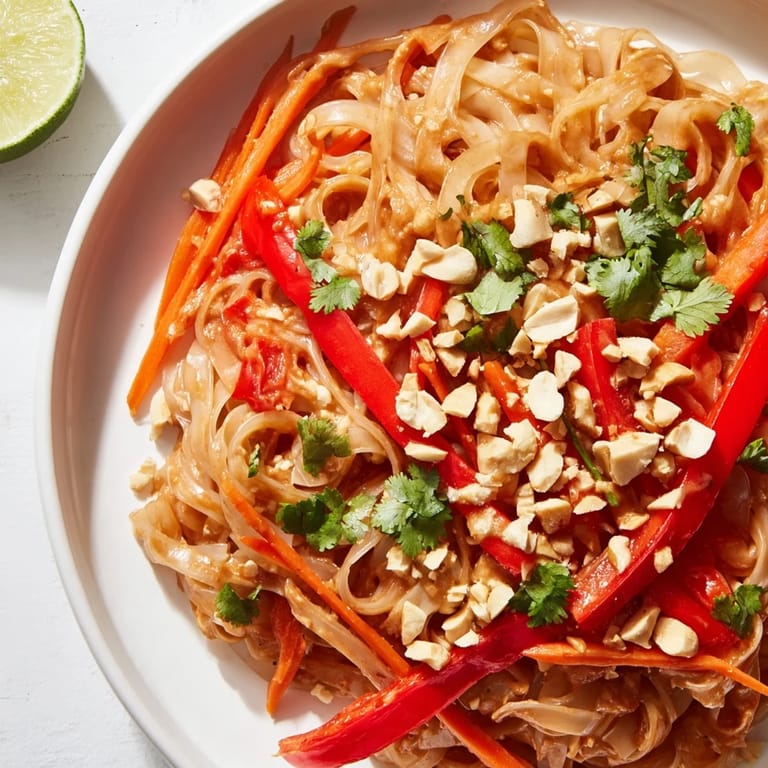
- Shredded carrots (1 cup): Raw carrots stay crisp and add sweetness and color; thinly slicing them helps them soften slightly in the warm noodles.
- Bell pepper, thinly sliced (1 cup): Any color works, but red or yellow feels more festive and adds subtle sweetness.
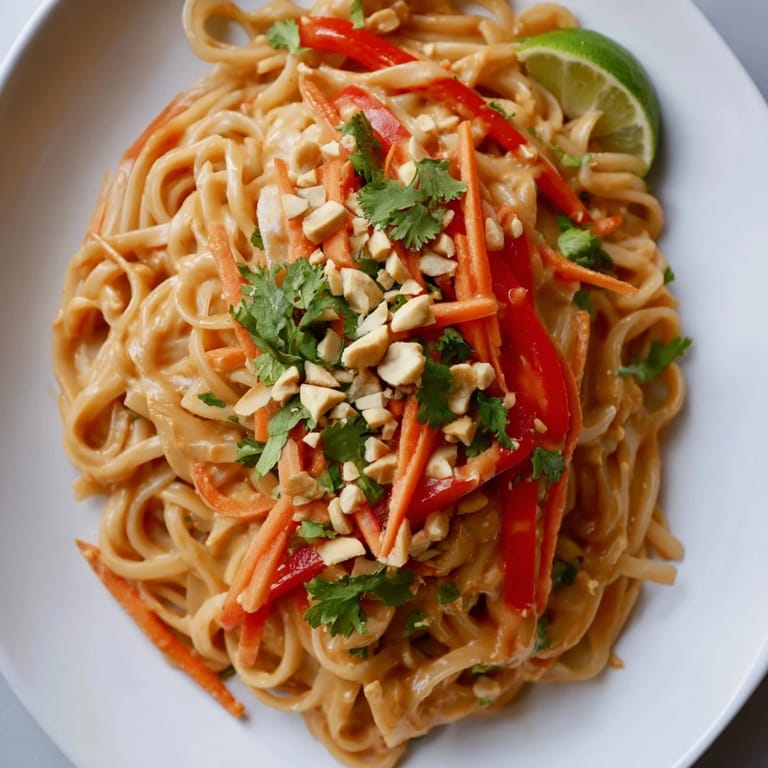
- Scallions (2), roasted peanuts (1/4 cup), and fresh cilantro (1/4 cup): These three transform the dish from good to memorable, adding texture and brightness right before serving.
- Lime wedges: A squeeze of lime brings everything into focus, especially the heat; serve them on the side so people can adjust to their taste.
Tired of Takeout? 🥡
Get 10 meals you can make faster than delivery arrives. Seriously.
One email. No spam. Unsubscribe anytime.
Instructions
- Boil the noodles until they're just tender:
- Follow the package timing but start checking a minute early; undercooked is better than mushy when you're about to toss them in warm sauce. Drain them, rinse under cold running water, and set them aside in a bowl so they don't stick to each other.
- Blend the sauce until it's smooth and pourable:
- Whisk peanut butter with soy sauce, rice vinegar, sesame oil, honey, sriracha, minced garlic, and grated ginger in a bowl. Add warm water a splash at a time, whisking between additions, until you reach the consistency of heavy cream; if it's too thick, the noodles won't coat evenly.
- Toss everything together:
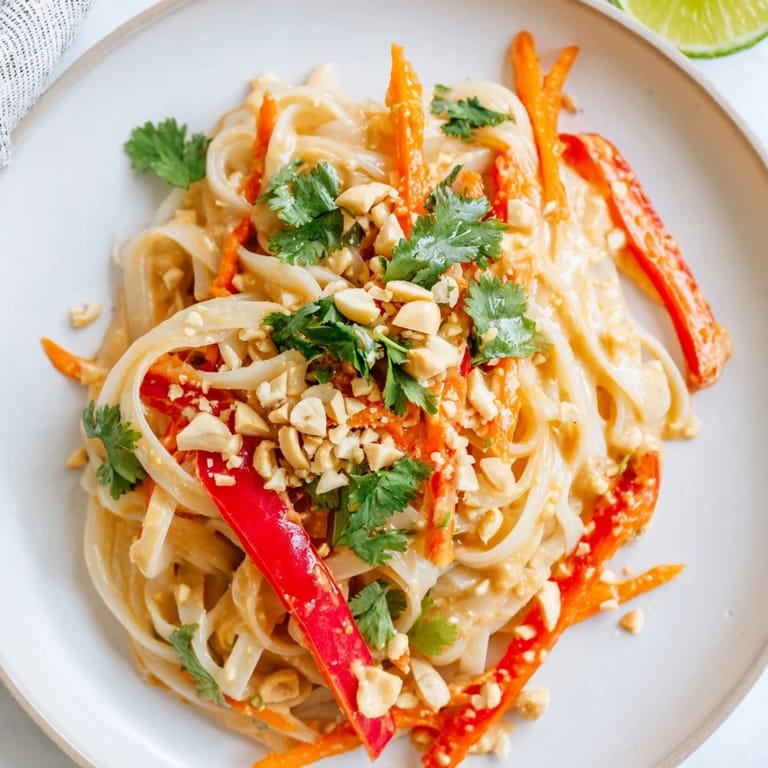
- Put the cooled noodles into a large bowl with the raw carrots and bell pepper, pour the sauce over top, and toss with two spoons or forks until every strand is glossy and coated. This is where the magic happens; take your time and enjoy how the colors come together.
- Build your bowls with intention:
- Divide the noodles among serving dishes, then scatter scallions, roasted peanuts, and cilantro over each one. Let people add lime juice and extra sriracha at the table so everyone controls their own heat level.
- Serve right away or chill for later:
- These are perfect hot or cold, straight from the bowl or eaten straight from the fridge tomorrow morning when you're tired and hungry.
 Save
Save There's something grounding about standing at the counter, whisking peanut sauce together and watching it transform from separate ingredients into something cohesive and alive. That moment when everything comes together—when you toss the noodles and the sauce coats every strand—is when you remember why cooking matters, even when you're just feeding yourself on a Tuesday night.
Making It Your Own
This recipe is a canvas, not a rulebook. I've stirred in crispy tofu cubes, scattered rotisserie chicken across the top, and once threw in some cooked shrimp when someone texted that they were vegetarian no longer. The sauce is forgiving enough to handle whatever protein you want to add, and it's hearty enough to work as a cold salad the next day straight from the refrigerator.
Spice Control and Flavor Balance
Heat is personal, and this dish respects that. I keep the sriracha moderate in the pot and let people adjust at the table with hot sauce or lime juice, because there's nothing worse than a dish that's aggressively spicy for someone who wanted comfort food. The honey or maple syrup matters more than you'd think; it's not sweetness for its own sake but a gentle hand that lets the garlic and ginger shine instead of getting overshadowed by soy and vinegar.
Storage, Leftovers, and Quick Fixes
These noodles keep in the fridge for three or four days and somehow taste even better cold, though the sauce does thicken. A splash of warm water stirred through loosens them back up and brings out the flavors again. Meal prep this without the fresh herbs and garnishes, then add cilantro and peanuts right before eating to keep everything bright and textured. The sauce separates slightly when chilled, so give it a gentle stir and adjust the consistency with a little warm water if needed.
- Make the sauce in a jar and store it separately if you want meal-prep flexibility and noodles that don't get soggy.
- Toast your own peanuts or grab pre-roasted ones; either way, they're insurance against a bland bite.
- Double the sauce recipe and keep it in the fridge for when you need a quick noodle bowl in the middle of the week.
 Save
Save This is the kind of recipe that reminds you why cooking at home matters—not because it's complicated, but because it's honest and fast and tastes like someone cared enough to get it right. Make it tonight, and next week someone will ask you for the recipe too.
Recipe FAQs
- → What type of noodles work best?
Dried rice noodles or spaghetti are ideal, as they absorb the sauce well and maintain texture after tossing.
- → How can I adjust the spiciness?
Modify the sriracha or chili garlic sauce quantity to increase or reduce heat according to your preference.
- → Can I make this dish gluten-free?
Yes, using gluten-free noodles and tamari instead of soy sauce ensures a gluten-free meal.
- → What garnishes enhance the flavors?
Toppings like chopped roasted peanuts, fresh cilantro, scallions, and lime wedges add contrasting textures and bright flavors.
- → How can I add protein to this dish?
Incorporate sautéed tofu, cooked chicken, or shrimp to boost protein content and create a more filling dish.