 Save
Save The first time lemon zest hit my cutting board for this tart, I realized how much the scent alone could wake up a whole kitchen. There’s a brightness to freshly grated lemon that sets the tone—anticipation, a little spark of mischief, and a whispered promise that spring has finally arrived. I wasn’t even planning on making dessert, but a neighbor left a basket of lemons on my doorstep, and, suddenly, I knew exactly what I’d be baking that afternoon. Sometimes, the best recipes just sneak into your day this way. This tart quickly became my favorite kind of surprise: one that feels like a celebration of the season every single bite.
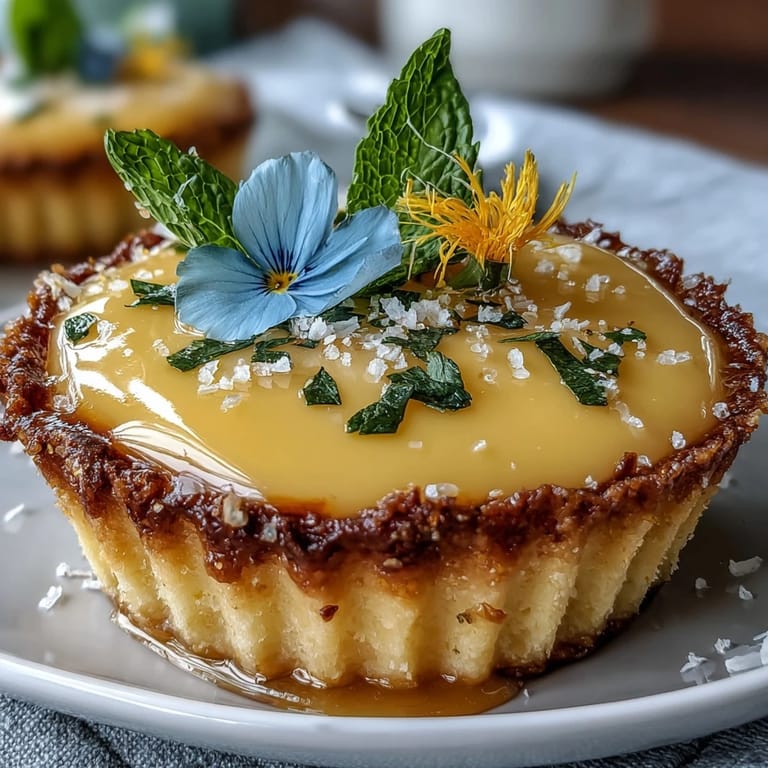
I brought this tart to a Sunday picnic last April, and the moment I set it on the table, the edible flowers drew a little crowd. My friend Sam, who swears he “doesn’t like tart things,” ended up sneaking a second slice between stories. We cut wedges under the dappled sunlight, handing out slices on napkins, and every burst of lemon felt like another reason to linger a bit longer over dessert. There’s something easy and joyful about sharing a tart that looks this cheerful. Even the crumbled edge where I’d rushed the shell made it memorable, not less delightful.
Ingredients
- All-purpose flour: Gives the tart shell its structure; I’ve found sifting it first makes for an even lighter bite.
- Unsalted butter: Needs to be cold and cubed; work quickly so the crust stays extra flaky.
- Powdered sugar: Sweetens the base just enough and helps with that melt-in-your-mouth texture.
- Egg yolk: Keeps the dough tender; sometimes I use an extra yolk for extra richness if I'm feeling bold.
- Cold water: Add slowly, just until the dough comes together; a little goes a long way.
- Salt: Don’t skip it—just a pinch brings out the flavors in the shell.
- Eggs (for lemon curd): Whisk gently for a silky, lump-free finish.
- Granulated sugar: Balances the lemon’s sharpness and brings sunny sweetness.
- Lemon zest: Use only the yellow part—avoid the bitter white pith for bright citrus flavor.
- Fresh lemon juice: Bottled juice doesn’t do justice—freshly squeezed truly matters here.
- Unsalted butter (for curd): Stir in off the heat for luscious, glossy lemon curd.
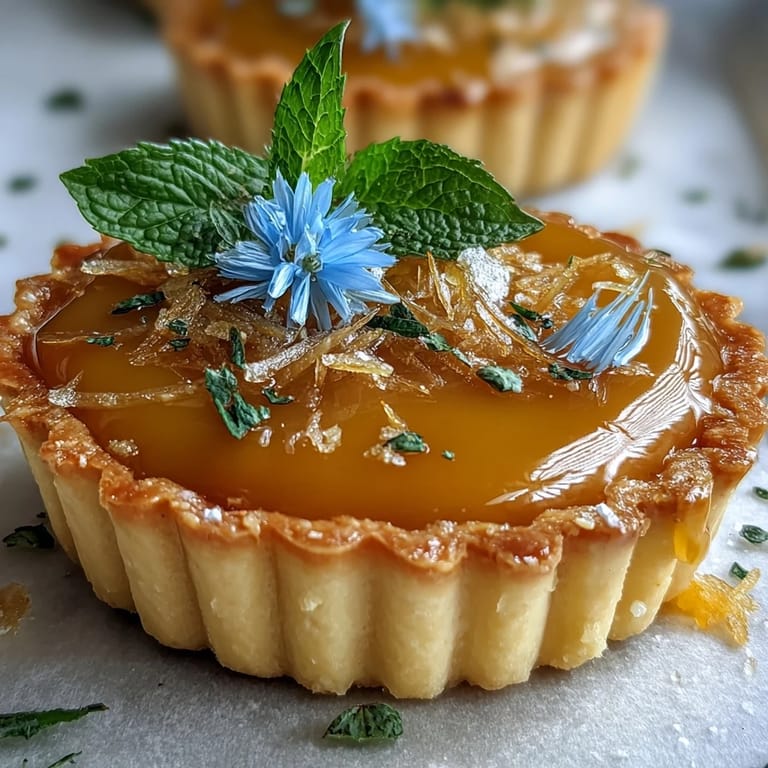
- Edible flowers: Always opt for unsprayed, food-safe blooms; they’re the tart’s crowning touch.
- Fresh mint leaves (optional): Adds a cool, herbal pop and extra spring flair.
Tired of Takeout? 🥡
Get 10 meals you can make faster than delivery arrives. Seriously.
One email. No spam. Unsubscribe anytime.
Instructions
- Make the shell dough:
- Pulse flour, powdered sugar, and salt in the food processor until combined—don’t overmix, or your crust will lose its tenderness. Add cold, cubed butter, and pulse until the mixture looks like tiny pebbles scattered in sand.
- Bring it together:
- Add the egg yolk and a tablespoon of cold water; pulse just until the dough starts clumping. Shape it into a flat disk, wrap it, and let it chill while you clear the counters—at least 30 minutes keeps the crust snappy.
- Roll and bake the crust:
- Roll out the chilled dough on a lightly floured surface—if it cracks, just patch it with a pinch of dough. Press gently into a tart pan, prick with a fork, chill briefly, then bake with parchment and pie weights for golden, even results.
- Finish baking:
- After removing the weights and parchment, bake until fragrant and lightly golden; let it cool completely to avoid a soggy bottom.
- Cook the lemon curd:
- Whisk eggs, sugar, lemon zest, and lemon juice in a saucepan until smooth, cooking over medium-low and whisking the whole time until thickened. Remove from heat and add the butter, stirring until shiny and smooth—straining through a sieve removes any stray zest or egg bits.
- Assemble and chill:
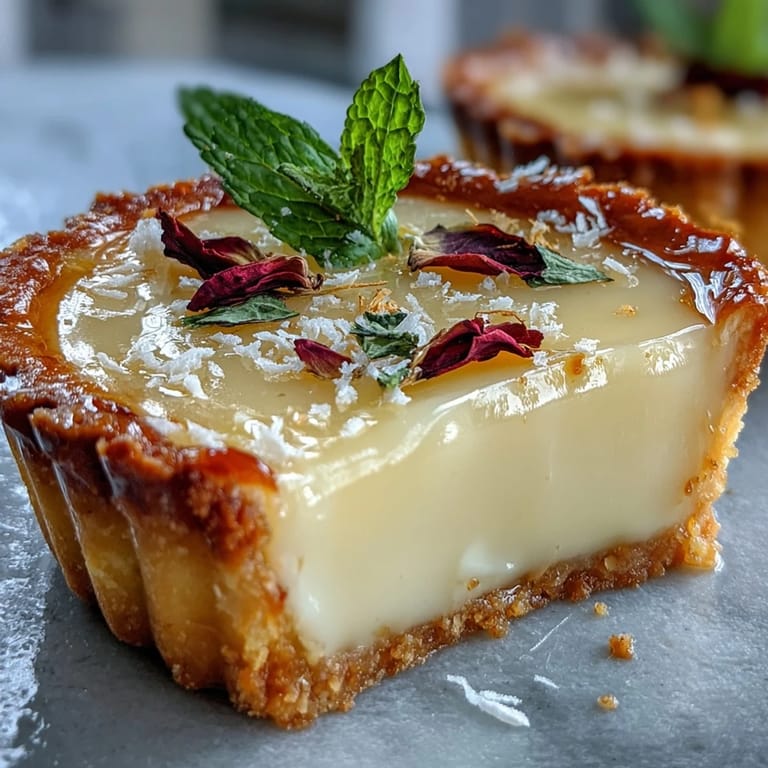
- Pour the cooled lemon curd into the baked tart shell, smoothing the top with a spatula. Chill for at least an hour so the curd sets softly and slices cleanly.
- Decorate and serve:
- Scatter edible flowers and mint leaves just before serving—keep things casual or make patterns, as you like. Slice with a sharp knife (wiped clean between cuts) and serve cold for the best texture.
 Save
Save There was a moment during one quiet afternoon when I sliced this tart for my sister, candles flickering and rain tapping at the window. We didn’t say much, but as we both took that first bright, tangy bite, it felt like time paused. Somehow this simple tart had become a kind of comfort—proof that even a gray day could taste like spring.
Getting the Right Texture for the Crust
Texture is everything here: If your tart shell feels a bit tough, it’s probably overworked or the butter wasn’t cold enough. I like to pop my rolled-out dough into the freezer for a few minutes before baking—less shrinkage, more snap. The pastry should feel light yet crisp when baked, shattering just a little under your fork.
What Makes the Lemon Curd Silky
Slow and steady heat is your friend. Rushing the curd means scrambled eggs, so keep it low and whisk constantly. I find that watching the mixture gently thicken and catching the moment it coats the back of a spoon is as satisfying as the first taste.
Choosing and Using Edible Flowers
Edible flowers are more than just flair—they bring bright color and a whisper of flavor. Always pick blooms that are truly food-safe and unsprayed; I found a local market vendor who offers a gorgeous selection every spring. Arrange them just before serving so they stay fresh and perky.
- If you store the decorated tart, cover loosely so flowers aren’t crushed.
- Leftover curd makes great toast or yogurt topping.
- Chill your knife before slicing for the cleanest wedges.
 Save
Save I hope this tart brings a burst of sunshine to your table, whether it’s early spring or you just need something bright. Nearly every time I make it, someone smiles before even taking a bite—and that, for me, is the best part.
Recipe FAQs
- → How do I avoid curd curdling while cooking?
Cook over medium-low heat and whisk constantly; never let the mixture boil. Removing from heat as soon as it thickens and whisking in butter off the heat helps keep the curd smooth. Straining removes any cooked bits.
- → Can the lemon curd be made ahead?
Yes. Store the cooled curd in an airtight container in the refrigerator for up to 3 days. Rewarm slightly or bring to room temperature before pouring into the tart shell for easier smoothing.
- → What’s the best way to blind-bake the tart shell?
Chill the shaped shell, line with parchment, and fill with pie weights or dried beans. Bake until the edges are set, remove weights, then bake a little longer until golden to ensure a crisp base that won’t go soggy.
- → Any suggestions for gluten-free pastry?
Use a reliable gluten-free flour blend with xanthan gum if needed, keep the dough cold to prevent crumbling, and handle gently. Blind-baking helps maintain structure and crispness.
- → How do I know when the curd is done?
The curd is ready when it thickens enough to coat the back of a spoon and hold a line when you run your finger across it. Avoid boiling—gentle, steady thickening yields the best texture.
- → Which edible flowers work best for garnish?
Violas, pansies and nasturtiums provide color and a delicate look. Use pesticide-free blooms and check for possible allergens if serving guests. Add flowers just before serving to preserve freshness.