 Save
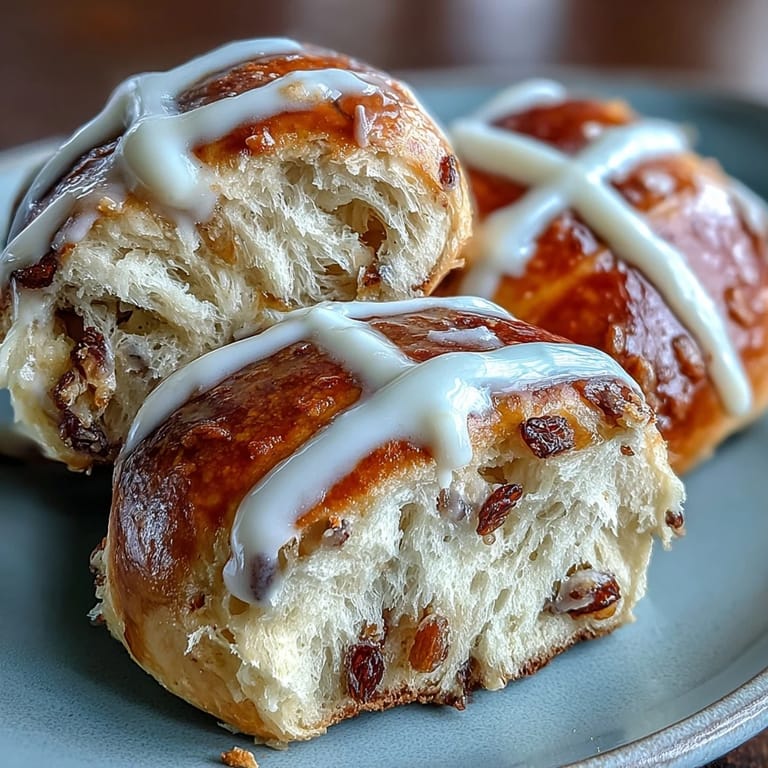
Save The first time I made hot cross buns, the kitchen was filled with the warm, spiced aroma that always makes me think something wonderful is about to happen. I was half expecting to mess up somewhere between kneading dough and piping those iconic crosses, but honestly, the process felt almost meditative. There's a certain hush right before the buns rise, as if everything in the house is waiting for those sweet rolls to come out golden. Sometimes, baking isn't dramatic—it's just quietly satisfying. And these buns, with their subtle citrus twist and sticky apricot glaze, deliver comfort in the simplest way.
I once baked these late at night for a neighbor who needed cheering up after a rough week. We split them with butter while she told stories about her own family's quirky Easter traditions, and for a little while, it felt like the sort of care that baking is meant to offer. I’ll always remember how she couldn't stop sniffing the air and laughing about how her cross looked more like a plus sign.
Ingredients
- Bread flour: Going for bread flour gives these buns a tender, stretchy crumb—don't use all-purpose unless you must.
- Granulated sugar: Just enough for a mild sweetness; I find it helps the yeast bubble up faster too.
- Active dry yeast: Give it a moment to mingle with the warm milk so you’re sure it’s alive and ready.
- Salt: A little salt in the dough keeps the flavor balanced.
- Ground cinnamon and nutmeg: These two are the soul of the buns, and fresh spices make a huge difference.
- Ground allspice: That subtle warmth gives the buns depth—don’t skip it if you have it.
- Whole milk: Slightly warm milk helps bring the dough together smoothly; not too hot or it’ll ruin the yeast.
- Unsalted butter: Melted for easy mixing, and it keeps the buns rich but still light.
- Eggs: Room temperature eggs help the dough rise evenly and add a bit of richness.
- Raisins or currants: I love how they plump up as the buns bake, turning every bite juicy.
- Orange zest (optional): This adds a lovely fragrance; just be careful not to include the bitter white pith.
- All-purpose flour (for the cross): Just enough for a paste you can pipe—no fancy tools required.
- Apricot jam or honey (for glaze): I heat mine gently for an easy shine, and either option works beautifully.
Tired of Takeout? 🥡
Get 10 meals you can make faster than delivery arrives. Seriously.
One email. No spam. Unsubscribe anytime.
Instructions
- Mix the dry ingredients:
- Combine the flour, sugar, yeast, salt, cinnamon, nutmeg, and allspice in a big bowl—the spices alone will make your kitchen feel inviting.
- Add the wet ingredients:
- Pour in the lukewarm milk, melted butter, and eggs; stir until a heavy, sticky dough starts to pull together into a mound.
- Knead the dough:
- Knead by hand or stand mixer until the dough is smooth and stretchy—it should feel bouncy when pressed.
- Incorporate the fruit and zest:
- Fold in your raisins and orange zest so they’re evenly scattered but not crushed, just until combined.
- First rise:
- Put the dough in a greased bowl, cover, and place somewhere warm until doubled in size; an hour usually does the trick.
- Shape the buns:
- Gently punch down the dough, divide into twelve, and roll each into a ball—imperfections only add charm.
- Second rise:
- Arrange on a parchment-lined tray, give them space, then cover to let them puff up again for about 45 minutes.
- Make the cross paste:
- Stir flour with enough water to create a thick but pipeable paste, then pipe neat crosses on each bun (or do your best—no one's judging).
- Bake:
- Bake at 375°F until golden brown atop and they sound hollow when tapped; about 20 - 25 minutes.
- Prepare the glaze:
- While buns are baking, gently melt jam (or honey) with water, just until runny enough to brush on easily.
- Glaze the buns:
- Brush the sticky glaze generously over warm buns for shine and sweetness—it sets quickly and makes them irresistible.
- Cooling and serving:
- Let buns cool briefly before serving—warm is best, but watch out for that sticky glaze.
 Save
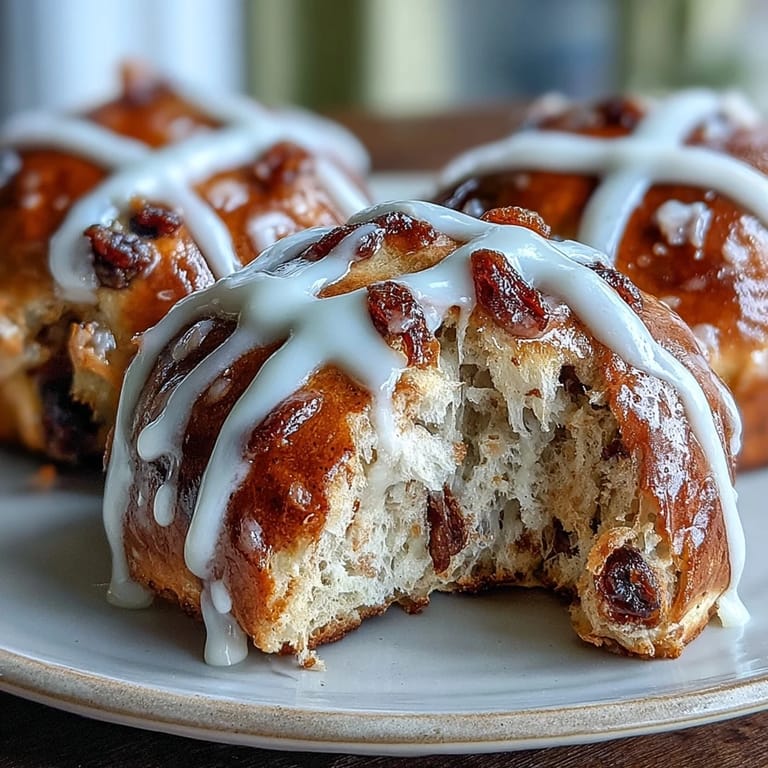
Save There was a rainy afternoon when these buns turned into an impromptu family project, with everyone rushing to pipe their crosses—each one more wobbly than the last. It became clear that the shape never mattered as much as the laughter and floury fingerprints left behind on the counters.
No Stand Mixer? No Problem
I've made these by hand plenty of times, and kneading can be a surprise workout but oddly satisfying. The dough might stick a bit at first, but keep going—the magic happens right about when you think it never will.
Getting the Rise Just Right
Patience here pays you back: a warm, draft-free corner makes dough rise beautifully, but if your kitchen is chilly, near the oven or even an off-top gas burner gives it the needed boost.
Switching Up the Flavors (And Freezing Leftovers)
I like folding in chopped candied peel or swapping in dried cranberries for raisins when I’m feeling adventurous; the buns freeze well, too, so there’s never any waste.
- Make sure to let buns cool before freezing for best texture.
- Wrap individually so you can grab just what you need.
- Pop frozen buns in the oven briefly to revive their softness.
 Save
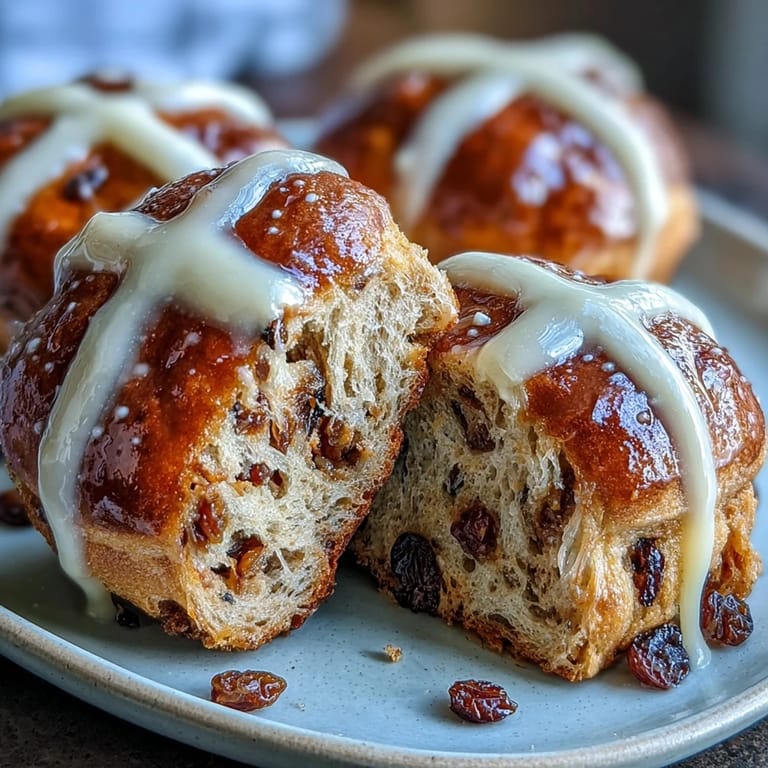
Save Homemade hot cross buns turn any day into a small celebration. I hope your kitchen smells wonderful and there’s someone to share them with.
Recipe FAQs
- → Can I use instant yeast instead of active dry yeast?
Yes. If using instant yeast, mix it directly with the dry ingredients and reduce the initial rise time slightly. Keep an eye on the dough—rise times vary with yeast type and room temperature.
- → How do I keep the buns soft the next day?
Store cooled buns in an airtight container at room temperature. Reheat briefly in a low oven or microwave with a damp paper towel to restore softness. Freezing baked buns in a sealed bag also preserves texture.
- → How thick should the cross paste be for piping?
Mix flour and water to a thick, pipeable paste that holds shape but squeezes smoothly through a piping bag. If too thin, the cross will spread during baking; if too stiff, it won’t pipe cleanly.
- → Can I substitute dried fruit or add citrus zest?
Yes. Swap half the raisins for chopped dried apricots or cranberries, or add orange zest for brightness. Fold dried fruit in gently to avoid overworking the dough.
- → What oven signs indicate the buns are done?
Look for an even golden-brown crust and a hollow sound when tapped on the bottom. An internal temperature of about 190–200°F (88–93°C) also indicates doneness for enriched breads.
- → Is there a tip for achieving a shiny glaze?
Heat apricot jam with a little water until smooth, then brush immediately on hot buns. Strain if needed for a clear shine and reheat the glaze if it begins to thicken.