 Save
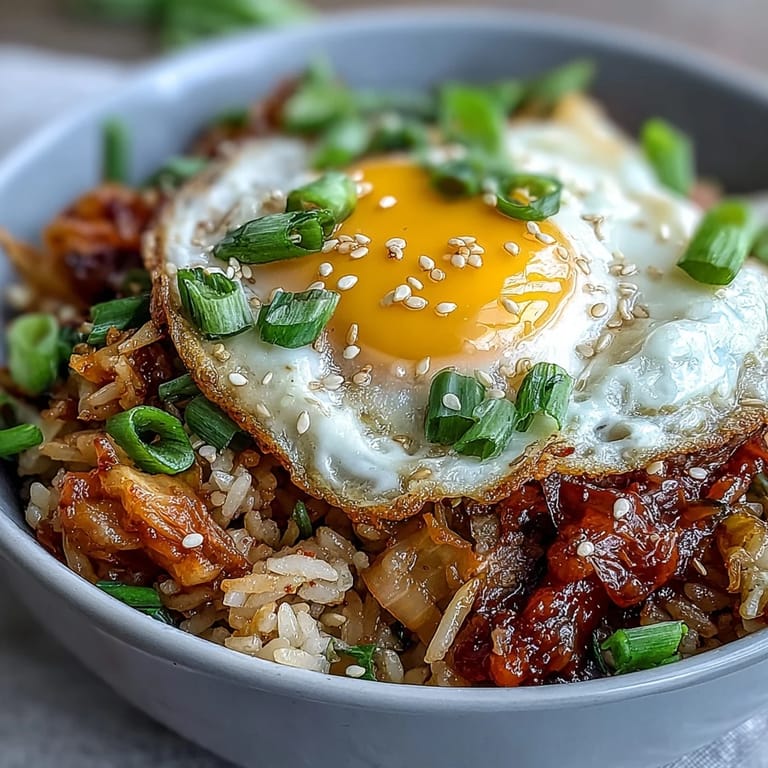
Save Walking into the kitchen with the lingering scent of kimchi from last night's dinner still in the air, I couldn't resist the urge to turn those leftovers into something bold and satisfying. There&aposs an almost cheerful crackle that comes with stir-frying cabbage, and that&aposs when I know comfort food is only minutes away. Kimchi fried rice isn&apost so much a dish as an excuse to experiment – a blank canvas for spice, crunch, or a velvety yolk. Sometimes lunch lands at the tail end of a flurry of emails, and this recipe is my favorite rescue plan. The whole process is quick, but it never fails to break up any monotony swirling through my day.
I remember making this kimchi fried rice in a cramped apartment during an unexpected snowstorm – we were stuck inside, and our fridge was down to scraps. With a pan, some chilled rice, and last of the spicy kimchi, we huddled by the stovetop, convinced no meal had ever tasted so warming. That day, the only thing louder than the sizzle was our laughter at trying to flip an egg perfectly in such a tiny pan. Now, even when the sun is shining, this recipe brings a bit of that cozy spark to our table.
Ingredients
- Napa cabbage: Its subtle sweetness softens quickly and soaks up all the flavors – slice it finely for quicker cooking and satisfying texture.
- Kimchi (with juice): The heart of the dish, lending tang, heat, and crunch – don&apost skimp on the juice for maximum punch.
- Green onions: Their fresh bite at the start and finish brightens up every forkful – save some for a final sprinkle.
- Carrot: Optional but love the pop of color plus touch of sweetness – a thin julienne helps it blend in.
- Cooked jasmine or short-grain rice: Day-old rice fries best, holding shape and soaking up seasoning without turning mushy.
- Soy sauce: Adds salty depth – just enough to round out the spice without overwhelming.
- Gochujang: For those who crave a smoky, deeper heat – a little goes a long way.
- Toasted sesame oil: A drizzle at the end is what makes the kitchen smell irresistible – avoid overheating as it can get bitter.
- Sugar: Balances kimchi&aposs acidity and the umami; don&apost be tempted to skip this pinch.
- Black pepper: A subtle kick that brings all the savory tastes together.
- Eggs: Sunny-side up creates that luscious sauce once you cut in – room temperature eggs fry more evenly.
- Neutral oil: For frying without adding extra flavor – making sure you get those lovely crispy edges.
- Toasted sesame seeds: A finishing flourish that adds nutty crunch – quick toast in a dry pan if you have raw seeds.
- Extra sliced green onions: For garnish, adding color and more freshness with each bite.
Tired of Takeout? 🥡
Get 10 meals you can make faster than delivery arrives. Seriously.
One email. No spam. Unsubscribe anytime.
Instructions
- Mise en place magic:
- Gather everything first – rice cold, veggies chopped, kimchi ready – so you can move fast when the pan heats up.
- Sizzle the veggies:
- In a wide skillet, splash in half the oil, then toss in cabbage and carrot, listening for that gentle crackle as they start to wilt, about two minutes.
- Add kimchi & onions:
- Stir in kimchi and green onions, letting their aroma fill the air for another two minutes – this really wakes the flavors up.
- Rice joins the party:
- Tip in the rice, pressing out any clumps and folding it to mingle with the spicy veggies – the pan should hiss with each move.
- Season and stir-fry:
- Drizzle in soy sauce, gochujang if you dare, sesame oil, sugar, and black pepper; stir-fry until every grain is gleaming, about three to four minutes.
- Taste and adjust:
- Have a quick taste – add a bit more soy or gochujang if your palate says so.
- Fry the eggs:
- In a nonstick pan with the rest of the oil, fry the eggs sunny-side up so the yolks stay lush and golden.
- Garnish and serve:
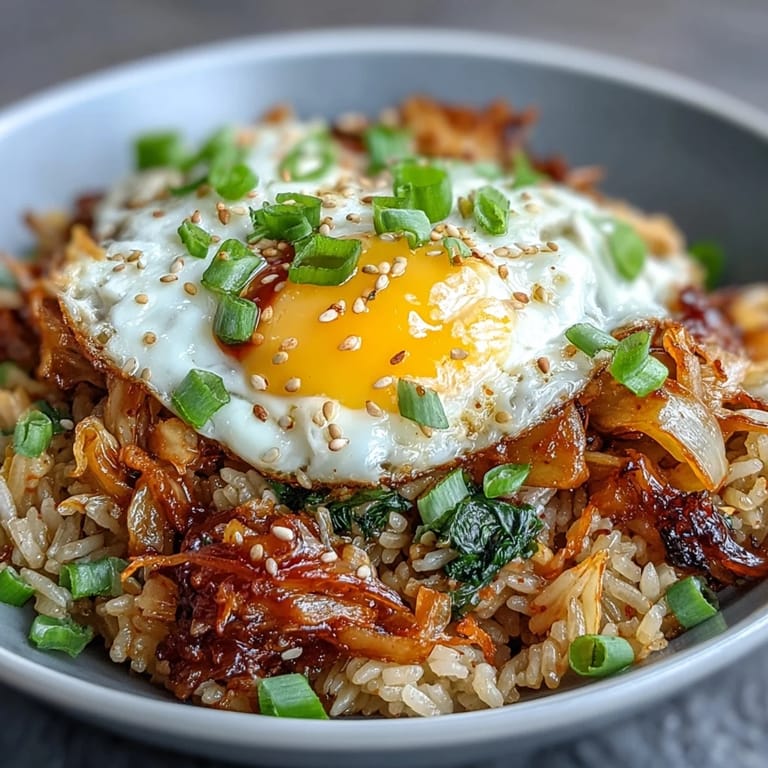
- Spoon steaming rice into bowls, crown each with a runny egg, then finish with sesame seeds and a sprinkle of green onions.
 Save
Save  Save
Save The first time I made this for friends, one quietly took a picture of their bowl before even picking up a spoon – proof that some food really does invite admiration. Later, they confessed it had become their favorite weeknight ritual and even inspired a little kimchi habit of their own.
The Magic of Texture in Every Bite
Stir-frying the cabbage just long enough so it&aposs tender-crisp keeps things lively, while the rice picks up toasty edges if you leave it undisturbed for a minute. If you like a bit more crunch, don&apost overmix once the sauce goes in – those golden bits at the bottom are pure gold.
Working With What You Have
No carrots left Add bell pepper or peas, or bulk it out with tofu, edamame, or whatever scrap veggies look lonely in your fridge. The recipe thrives on flexibility, and most days, that&aposs exactly what I need.
Perfecting Your Egg Topping
Letting the eggs set gently on medium heat — no rushing, no poking — keeps the yolks perfectly runny for rich contrast against the spicy rice. If you&aposs a fan of crispy edges, give the eggs a little shake and wait for a subtle lace to form around the sides.
- A tiny pinch of salt over the egg makes the yolk pop even more.
- Slide the egg onto the rice while it&aposs still hot for an extra silky texture as it melts in.
- Don&apost skip the final sprinkle of sesame seeds and green onions — it looks and tastes like care in a bowl.
 Save
Save 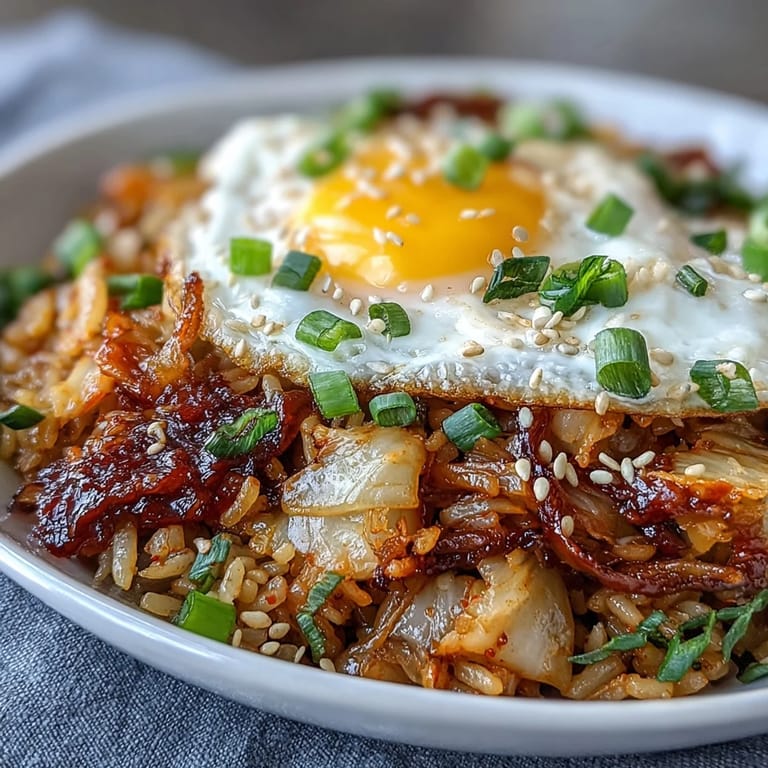 Save
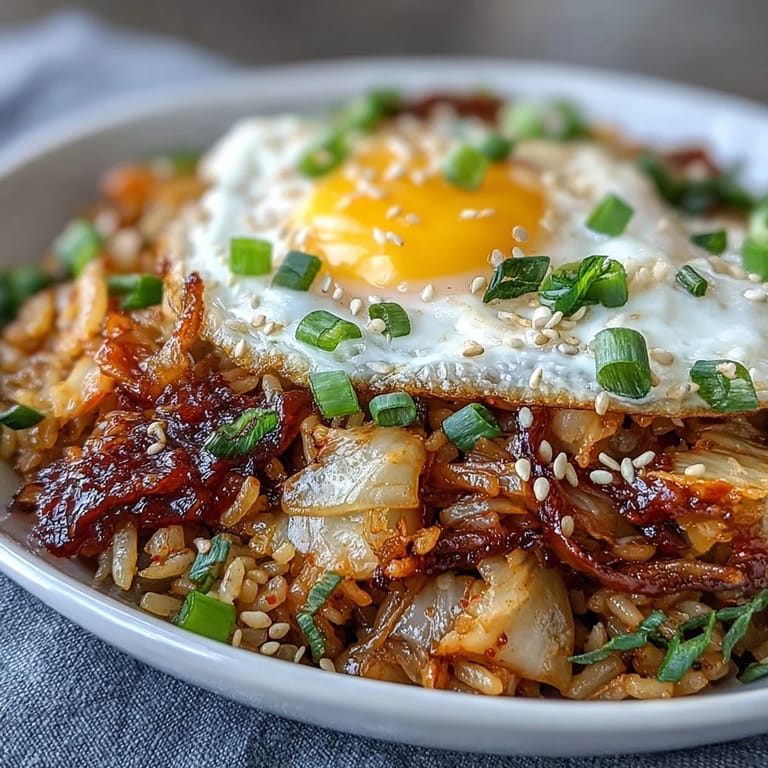
Save However you top it or tweak it, this kimchi cabbage fried rice always feels a bit like an impromptu celebration — here&aposs to making the most out of what&aposs in your fridge and finding joy at your own table.
Recipe FAQs
- → Can I use freshly cooked rice?
Day-old, chilled rice works best because it’s drier and separates easily. If using fresh rice, spread it on a tray to cool and dry for 20–30 minutes, then break up any clumps before frying.
- → How do I control the spice level?
Adjust heat by the amount of gochujang and the kimchi you add. Use milder kimchi or reduce gochujang for less spice, and balance with a pinch of sugar or extra sesame oil to mellow flavors.
- → How can I make it vegan?
Choose a vegetarian kimchi (no fish sauce or shrimp paste) and replace the fried egg with sautéed mushrooms, pan-fried tofu, or crispy tempeh for a satisfying vegan option.
- → What pan and heat are best?
A large skillet or wok over medium-high to high heat gives the best stir-fry sear. Preheat the pan, work quickly, and avoid overcrowding so the rice gets light browning rather than steaming.
- → How should I store and reheat leftovers?
Store in an airtight container in the fridge up to 3 days. Reheat in a hot skillet with a splash of oil or water to loosen the grains, or microwave covered for 1–2 minutes, stirring halfway.
- → What proteins pair well with this dish?
Add diced tofu, shredded chicken, or shrimp—cook them separately until browned, then fold into the fried rice at the end to keep textures distinct and prevent overcooking.