 Save
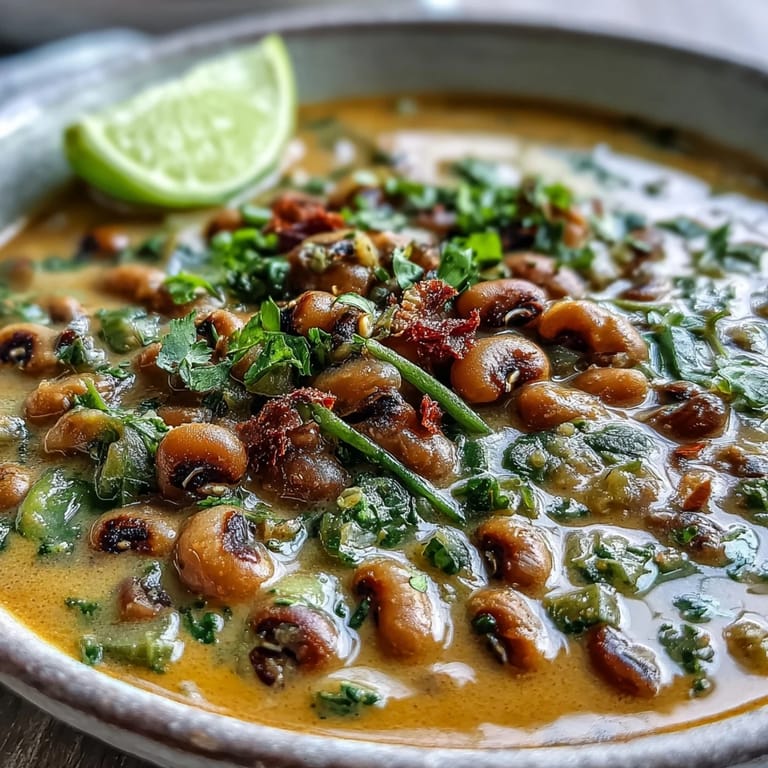
Save There's something about the moment when mustard seeds start to crackle in hot oil that makes you feel like you're cooking something real. I stumbled onto this black-eyed pea curry on a gray afternoon when I was craving warmth that had nothing to do with the weather outside. The combination of creamy coconut milk with that golden turmeric and the brightness of lime felt like it belonged in my kitchen, and it turns out it belonged in my regular rotation too.
I made this for friends who were visiting during a cold snap, and I watched their faces when they tasted it, that moment where they realized this wasn't just comfort food but actually interesting comfort food. Someone asked for the recipe before they'd even finished their bowl, which is always the real compliment in my book.
Ingredients
- Black-eyed peas (2 cups cooked or 1 can, drained): These little beans hold their shape beautifully and have a subtle earthiness that doesn't overpower the spices, unlike some beans that turn to mush.
- Coconut oil (1 tablespoon): It adds a richness you won't get from neutral oil, plus there's something about how it carries spice flavors that just works here.
- Onion (1 large, finely chopped): Golden onions are your base, and chopping them small means they dissolve into the sauce and build sweetness as they cook.
- Garlic (3 cloves, minced): Fresh garlic matters here because it's going to steep in the oil and become part of the flavor backbone.
- Fresh ginger (1 tablespoon, grated): Grated ginger releases its oils more completely than sliced, giving you that warming, slightly sharp quality that makes this feel authentic.
- Ground cumin (1 teaspoon): This is what makes it smell like curry, honestly, so don't skip it or reduce it.
- Ground coriander (1 teaspoon): It adds a subtle floral note that balances the heat and makes the spice blend feel rounded rather than one-dimensional.
- Turmeric (1 teaspoon): Beyond the color, it brings a gentle bitterness and that earthy warmth that defines the whole dish.
- Chili powder (1/2 teaspoon): Start here and adjust upward if you want more heat; you can always add more but you can't take it back.
- Black pepper (1/2 teaspoon): Don't skip the freshly ground version if you have it, as pre-ground loses its punch.
- Garam masala (1 teaspoon): This goes in at the end to brighten everything up, so save it for the final minutes.
- Mustard seeds (1/2 teaspoon, optional): They're optional but that sizzle in the oil is where the magic starts, so I always include them.
- Coconut milk (1 can, 14 oz): Full-fat is what you want here because the richness is essential to balancing the spices.
- Vegetable broth or water (1/2 cup): This thins the sauce to the right consistency without diluting the flavor too much.
- Diced tomatoes (1 can, 14 oz): They add acidity and body, and cooking them down lets them blend seamlessly into the sauce.
- Green chilies (1-2, chopped, optional): These add fresh heat and a green vegetal quality that lives alongside the warmth of the ground spices.
- Green peas (1 cup, frozen or fresh): Frozen works perfectly well and adds sweetness and texture without needing you to source fresh.
- Salt (1 1/2 teaspoons): Taste as you go because the coconut milk sometimes varies in saltiness.
- Fresh cilantro (2 tablespoons, chopped): This is your finishing touch that makes everything feel bright and intentional.
- Lime juice (from 1/2 lime): Squeeze it in at the very end because heat destroys its brightness, and you want that squeeze of acid in every bite.
Tired of Takeout? 🥡
Get 10 meals you can make faster than delivery arrives. Seriously.
One email. No spam. Unsubscribe anytime.
Instructions
- Wake up your spices with heat:
- Pour coconut oil into a large saucepan over medium heat and let it shimmer for about a minute. If you're using mustard seeds, add them now and listen for that satisfying pop and crackle, which means they're releasing their flavor into the oil.
- Build the base:
- Add your chopped onion and let it soften and turn golden, which takes about five minutes of patient stirring. You're creating a sweet, mellow foundation here, so don't rush it or crank the heat.
- Add the aromatics:
- Stir in garlic, ginger, and green chilies if you're using them, and keep stirring for a minute or two until your kitchen smells undeniably like curry. This is when you know the spices are waking up.
- Toast the dry spices:
- Add cumin, coriander, turmeric, chili powder, and black pepper all at once, stirring constantly for just about one minute. You want them warm and fragrant but not burned, which happens faster than you'd think.
- Let the tomatoes break down:
- Pour in your diced tomatoes and let them cook down for five minutes, stirring occasionally. They'll soften and release their juices, thickening slightly and becoming part of the base layer of flavor.
- Bring in the beans and peas:
- Add your black-eyed peas and green peas, mixing everything together so the legumes are coated in this gorgeous spiced tomato mixture. This is when it starts looking like actual curry.
- Make it creamy:
- Pour in the coconut milk and vegetable broth, stirring gently to combine everything into a smooth, pourable sauce. Bring it up to a gentle simmer, not a rolling boil.
- Let it come together:
- Simmer uncovered for fifteen to twenty minutes, stirring occasionally, until the sauce thickens and all those flavors have had time to actually get to know each other. You'll notice it deepening in color and becoming more cohesive.
- Finish it right:
- Stir in garam masala and lime juice at the very end, taste for salt, and adjust whatever you need to. The lime should make everything sing brighter.
- Plate and celebrate:
- Serve hot in bowls with cilantro scattered on top, alongside rice or naan to soak up every drop of sauce.
 Save
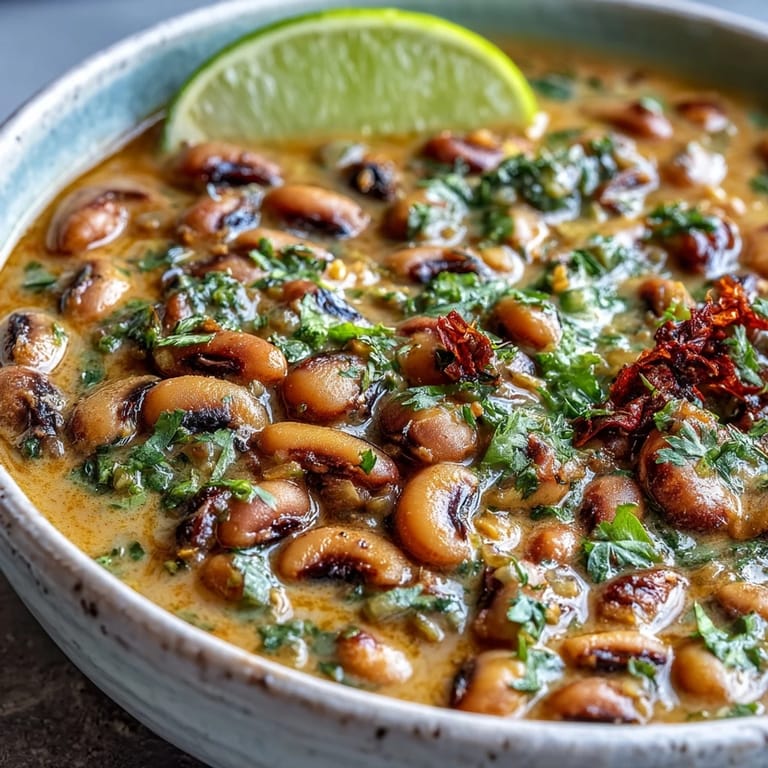
Save This curry became the thing I make when I want to prove to myself that I can cook something nourishing without it feeling like a chore. There's something deeply satisfying about a pot of this simmering on the stove, filling your kitchen with that specific warm spice smell that makes you feel like you're taking care of yourself.
Why This Curry Works
The beauty of this dish is that it respects black-eyed peas rather than trying to hide them under a blanket of cream and spice. The beans stay intact, they soak up flavors without falling apart, and they provide that protein and earthiness that makes this feel like a proper meal rather than a side dish masquerading as dinner. Everything about the technique here is designed to let each element shine while still coming together as something cohesive.
Flexibility and Substitutions
I've made this with chickpeas when I didn't have black-eyed peas, and with kidney beans when I was cleaning out the pantry, and it worked beautifully each time. The spice blend is sturdy enough to carry different legumes without losing its character. If you want to add depth, a cinnamon stick or a handful of curry leaves in step one will give you something even richer without changing the fundamental nature of the dish.
Serving and Storage
This curry tastes even better the next day after the flavors have settled and deepened, so it's worth making extra. It keeps in the refrigerator for about four days and reheats gently on the stove without losing its character.
- Serve over basmati rice, jasmine rice, or with warm naan or roti for soaking up sauce.
- A dollop of plain yogurt on top adds coolness and creaminess if you're not keeping it vegan.
- Any leftover can be thinned with broth and turned into a soup if you're feeling creative.
 Save
Save This is the kind of recipe that proves good food doesn't have to be complicated or take all day. Make it once, and it'll become something you reach for on nights when you want to feel nourished and intentional.
Recipe FAQs
- → Can I use dried black-eyed peas instead of canned?
Yes, soak 1 cup dried black-eyed peas overnight, then cook for 45-60 minutes until tender before adding to the curry. This will extend total preparation time but yields excellent texture and flavor.
- → How spicy is this curry?
The spice level is medium and adjustable. Start with the suggested chili powder amount, then add more if you prefer more heat. You can also omit green chilies for a milder version or increase them for extra kick.
- → What can I serve with black-eyed pea curry?
Basmati rice, jeera rice, or warm naan bread are classic choices. It also pairs well with roti, quinoa, or served over cauliflower rice for a low-carb option.
- → How long does this keep in the refrigerator?
Store in an airtight container for up to 4-5 days. The flavors actually develop and improve after a day. Reheat gently on the stovetop, adding a splash of water or broth if needed.
- → Can I make this curry in advance?
Absolutely. This curry tastes even better made a day ahead as the spices meld. Prepare fully, cool, refrigerate, then reheat before serving. Add fresh cilantro and lime juice just before serving.