 Save
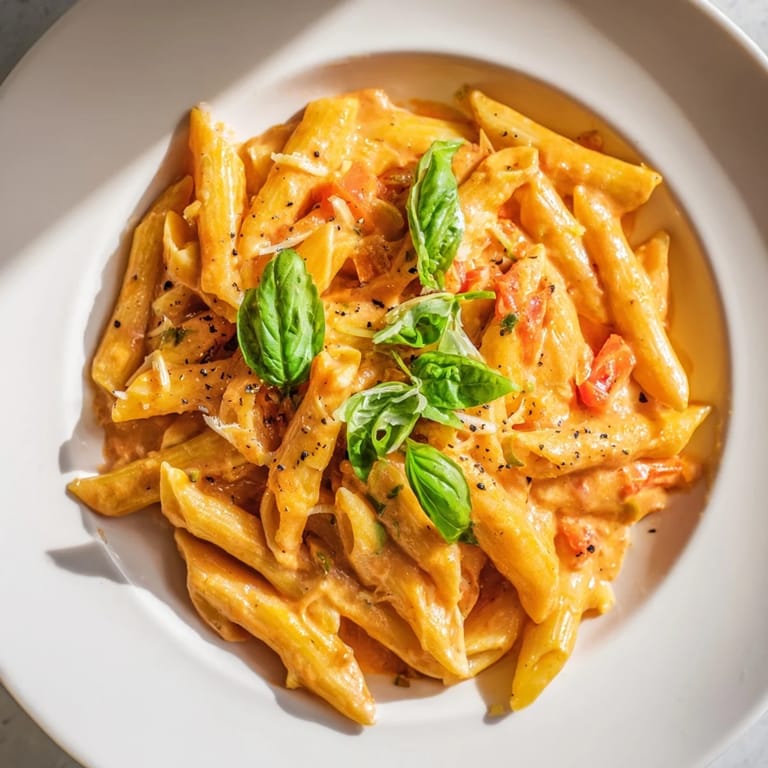
Save There's something magical about opening a can of tomatoes and watching them transform into something golden and luxurious in just half an hour. I discovered this one-pot wonder on a Tuesday evening when I was too tired to juggle multiple pans, and somehow that constraint led to the most satisfying dinner—the kind where everything tastes better because you didn't overthink it, and your sink stayed blessedly empty.
I remember serving this to friends who showed up unannounced on a rainy afternoon, and watching their faces light up when they took that first bite—the kind of reaction that makes you feel like a genius even though you just threw everything in one pot. That's when I realized it wasn't about complexity; it was about how the cream mellows the tomatoes and the garlic becomes almost sweet after simmering together.
Ingredients
- Penne or fusilli pasta (350 g): The ridged shapes catch the creamy sauce better than smooth pasta, and I learned this the hard way after one too many slippery bowls of spaghetti.
- Olive oil (2 tbsp): This is your foundation—good oil makes a noticeable difference, so don't reach for the cheapest bottle.
- Yellow onion, finely chopped (1 medium): Chop it small enough that it practically dissolves into the sauce, adding sweetness without texture.
- Garlic, minced (4 cloves): Fresh garlic is essential here; it becomes the soul of the sauce as it mellows during cooking.
- Red pepper flakes (1/2 tsp, optional): A whisper of heat that you can add or skip depending on who's eating—I use it when I'm cooking for myself.
- Canned crushed tomatoes (800 g): The best shortcut in your pantry; they break down beautifully and won't turn your sauce grainy like fresh tomatoes sometimes do.
- Tomato paste (2 tbsp): This concentrate deepens the flavor and adds a slight richness that lifts the whole dish.
- Sugar (1 tsp): Just enough to balance the acidity of the tomatoes—trust it even if you're skeptical about sweetness in savory dishes.
- Salt and black pepper: Season generously and taste as you go; you can always add more, but you can't take it back.
- Heavy cream (200 ml): The magic ingredient that transforms tomato sauce into something luxurious and velvety.
- Parmesan cheese, freshly grated (60 g): Pre-grated cheese has anti-caking agents that can make your sauce grainy, so take the extra minute to grate it yourself.
- Fresh basil, chopped (1 cup, loosely packed): Add it at the very end so it stays bright and fragrant, not cooked into submission.
- Water or vegetable broth (600 ml): This is what cooks the pasta right in the sauce, so the starch thickens everything into one cohesive dish.
Tired of Takeout? 🥡
Get 10 meals you can make faster than delivery arrives. Seriously.
One email. No spam. Unsubscribe anytime.
Instructions
- Start with warmth:
- Heat your olive oil in a large deep skillet over medium heat until it shimmers slightly. This takes only a minute, but it matters—cold oil won't soften your onions properly.
- Build the base:
- Add your chopped onion and let it cook for 3 to 4 minutes, stirring occasionally, until the pieces become translucent and soft. You'll notice the kitchen smelling almost sweet, which is your signal that you're on the right track.
- Wake up the garlic:
- Stir in your minced garlic and red pepper flakes if using, and cook for just 1 minute. Don't walk away—garlic burns faster than you'd think, and burnt garlic tastes bitter and harsh.
- Add the tomatoes:
- Pour in your crushed tomatoes, tomato paste, sugar, salt, and pepper, stirring everything together until it's well combined. The paste will look stubborn at first, but it dissolves as you stir.
- Introduce the pasta:
- Add your uncooked pasta directly to the pot, then pour in the water or broth, making sure the pasta is covered. It'll look soupy, which is exactly what you want—trust the process.
- Let it simmer:
- Bring everything to a boil, then reduce the heat to medium-low, cover the pot, and let it bubble gently for 12 to 14 minutes. Stir it a few times so the pasta doesn't stick to the bottom, and you'll watch the liquid gradually get absorbed into a creamy sauce.
- Finish with cream:
- Once the pasta is tender and most of the liquid is gone, stir in the heavy cream and grated Parmesan cheese. Cook uncovered for 2 to 3 minutes, letting everything meld into something luxurious and silky.
- Add your green note:
- Remove from heat and fold in your fresh basil. The residual heat will warm it without destroying its bright flavor, and that basil is what makes people ask for your recipe.
 Save
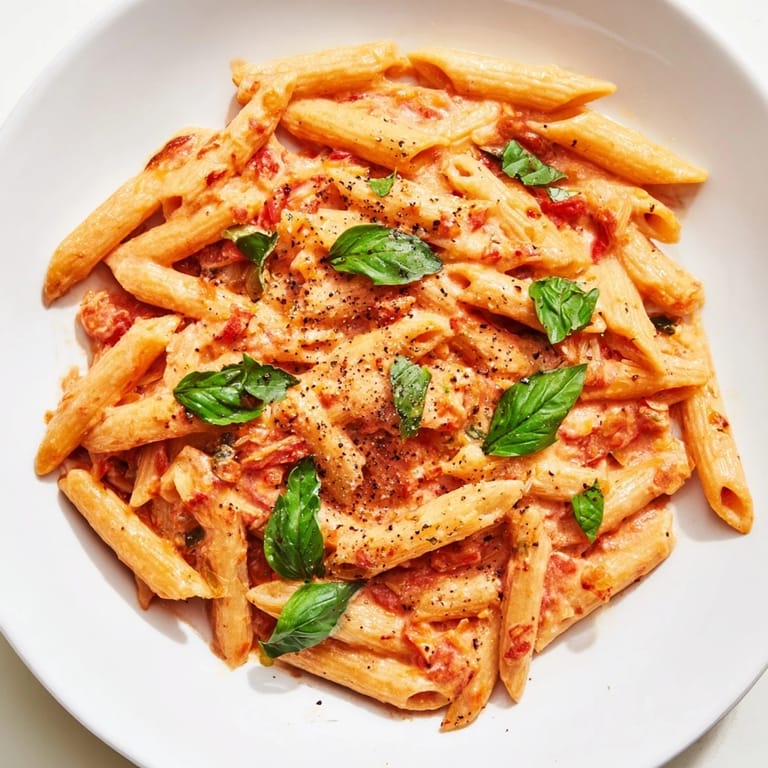
Save There's a moment near the end of cooking when the aroma fills your kitchen so completely that it feels like the dish is already half-made just by smell alone. I stood there once with the pot lid off, steam rising, and realized this was the kind of meal that doesn't need fancy technique or obscure ingredients—just respect for each component and enough time for them to know each other.
Why This Works So Well
One-pot pasta is brilliant because the starch from the pasta thickens the sauce naturally, so you end up with something velvety without needing cream as a safety net. But the cream here isn't a crutch—it's a choice that makes the tomatoes taste rounder and more complex, almost like they've been caramelized for hours. The garlic and onion cook down completely, so you get their sweetness without biting into chunks, and the fresh basil at the end brings everything back to life with a burst of color and freshness.
Making It Your Own
The beauty of this dish is that it leaves room for your own touch without requiring you to follow a script. Some nights I add a handful of chopped spinach in the last minute of cooking, which wilts right into the sauce, or I'll throw in some sautéed mushrooms if I'm feeling earthy. You could add a pinch of dried oregano or thyme if you want more herbaceousness, or leave the red pepper flakes out entirely if heat isn't your thing. The structure stays solid no matter what you add, which is why this recipe has become such a reliable friend in my kitchen.
Serving and Pairing
Serve this hot, straight from the pot if you're eating with people you're comfortable with, or plate it individually if you want to make it feel more deliberate. A generous grind of fresh pepper on top and a scatter of extra basil makes it look like you spent far more effort than you actually did. A simple green salad on the side cuts through the richness, and if you're in the mood for wine, something crisp like a Pinot Grigio or even a light Sauvignon Blanc complements it beautifully without competing for attention.
- Grate your Parmesan fresh, or the sauce will turn grainy and separate.
- If your pasta looks too thick when plating, thin it with a splash of pasta water or a spoonful of cream.
- Leftover sauce keeps for three days in the fridge and actually tastes better the next day when the flavors have deepened.
 Save
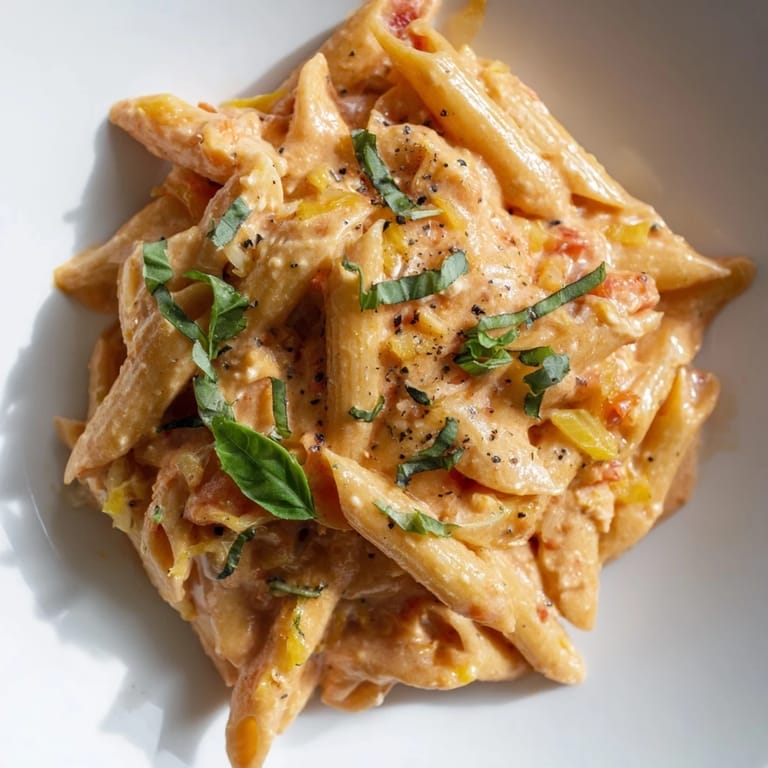
Save This is the kind of pasta that reminds you why you fell in love with cooking in the first place—simple, direct, and surprisingly full of depth. There's something deeply satisfying about watching separate ingredients become something greater than the sum of their parts, all in one pot, in less time than it takes to scroll through your phone.
Recipe FAQs
- → What pasta types work best for this dish?
Short pasta like penne or fusilli hold the creamy sauce well and cook evenly in this one-pot preparation.
- → Can I adjust the spice level in this dish?
Absolutely, you can add or omit red pepper flakes to control the heat to your preference.
- → How do I achieve the creamy texture in the sauce?
Stirring in heavy cream along with freshly grated Parmesan towards the end gives the sauce its rich, smooth consistency.
- → Is fresh basil necessary or can I use dried herbs?
Fresh basil delivers the best vibrant flavor and aroma, but dried basil can be substituted if fresh is unavailable.
- → Can I add vegetables to enhance this dish?
Yes, incorporating sautéed mushrooms, spinach, or roasted veggies adds nutrition and complementary flavors.