 Save
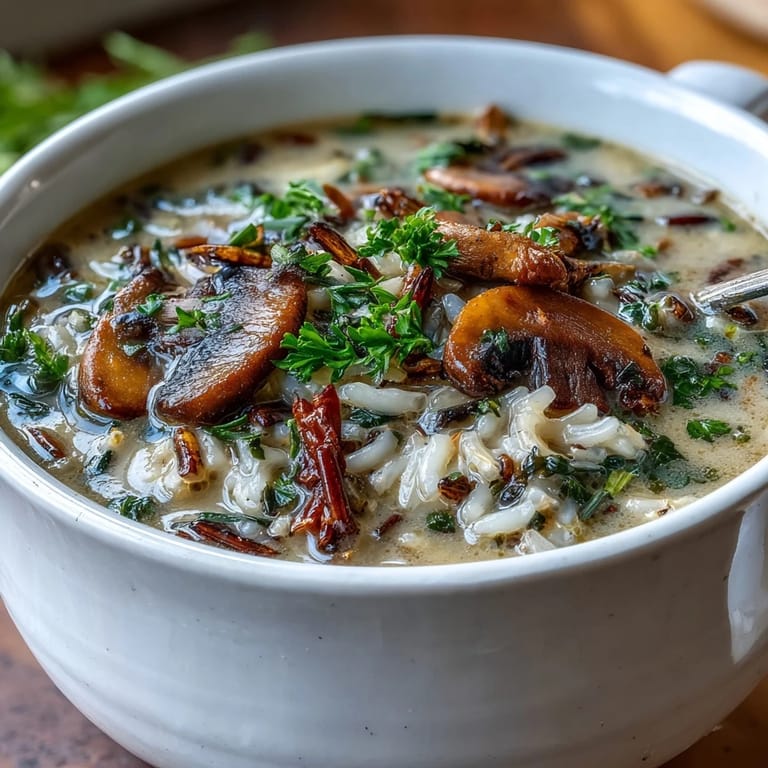
Save There's something about the smell of mushrooms hitting hot oil that stops me mid-thought every time. A few years back, I was cleaning out my pantry on a grey November afternoon and found a bag of wild rice I'd completely forgotten about—the kind with all those dark, chewy grains mixed with lighter ones. That night, I decided to build an entire soup around it, pulling together whatever mushrooms the market had that day. My kitchen filled with this warm, earthy cloud, and I realized I'd accidentally created something I'd want to make over and over again.
I made this soup for my sister on a Sunday when her new apartment felt too quiet and empty. She'd just moved across the city, and I think she needed something warm that tasted like home. She had a bowl, then another, and by the time she left she asked for the recipe—but I told her I'd just make it for her whenever she wanted it instead. That felt better somehow.
Ingredients
- Olive oil: Use a good one here—you'll taste it when it hits the vegetables, and it makes the whole thing feel intentional rather than rushed.
- Yellow onion, celery, and carrots: This trio is your flavor foundation, and the order matters; the onion goes soft first so it can meld with everything coming next.
- Garlic cloves: Fresh is non-negotiable—dried garlic powder will make this taste like something from a packet instead of something you made with your hands.
- Fresh thyme and rosemary: If you can grow these on a windowsill, do it; the flavor is so much brighter than dried, but dried works fine in a pinch (use half the amount).
- Bay leaf: Don't skip it and don't forget to fish it out at the end—it's there to whisper, not to be eaten.
- Fresh parsley: Keep some back for garnish; it looks beautiful and tastes bright when it hits the hot soup.
- Mixed wild mushrooms: Buy whatever looks freshest—cremini, shiitake, oyster, even regular button mushrooms will work, though the mix gives you layers of flavor.
- Wild rice: Rinse it first under cold water; there's sometimes debris hiding in there, and you'll feel the difference in the final texture.
- Vegetable broth: This is where you can make or break the soup—use something you'd actually drink on its own, not something that tastes like salt and regret.
- Heavy cream: Or cashew cream if you're going plant-based; it rounds everything out and makes the soup feel complete.
- All-purpose flour: This thickens the soup gently without making it heavy; stir it in well so you don't get lumps.
- Soy sauce: Just a tablespoon adds umami depth that makes people ask what the secret ingredient is.
- Salt and black pepper: Taste as you go; the final seasoning is always personal.
Tired of Takeout? 🥡
Get 10 meals you can make faster than delivery arrives. Seriously.
One email. No spam. Unsubscribe anytime.
Instructions
- Heat your pot and soften the vegetables:
- Pour olive oil into a large soup pot and let it shimmer over medium heat. Add your chopped onion, celery, and carrots, then sauté for 6 to 8 minutes, stirring every minute or so until the vegetables start to collapse slightly and smell sweet.
- Wake up the aromatics:
- Stir in minced garlic, thyme, rosemary, and the bay leaf, cooking for just 1 minute until your whole kitchen smells like a herb garden. This is the moment where everything starts feeling intentional.
- Cook the mushrooms until golden:
- Add your sliced mushrooms and let them sit for a minute before stirring; this helps them brown instead of steam. Cook for 6 to 8 minutes, stirring occasionally, until they've released their liquid and the pan looks almost dry again.
- Make a simple flour paste:
- Sprinkle the flour over the vegetables and stir for 1 to 2 minutes; this cooks out the raw flour taste and helps thicken the soup later. You're creating the base that will make everything silky.
- Add the broth slowly and carefully:
- Pour the vegetable broth in gradually while stirring constantly, which prevents lumps from forming and keeps everything smooth. Talk to it if you want—this step is all about being present and paying attention.
- Add the rice and let it do its thing:
- Stir in the wild rice and soy sauce, then bring everything to a boil before turning the heat down low. Cover the pot and let it simmer for 40 to 45 minutes, stirring every 10 minutes or so; the rice will slowly soften and the soup will deepen in color.
- Finish with cream and fresh herbs:
- Remove the bay leaf, then stir in the cream and chopped parsley. Simmer uncovered for 2 to 3 minutes just to warm everything through without boiling.
- Taste and adjust:
- Season generously with salt and black pepper, then taste again. If it's too thick, add more broth; if it's too thin, let it simmer a bit longer.
- Serve with intention:
- Ladle into bowls, top with a little extra parsley, and hand it to someone who needs warmth.
 Save
Save There was a moment last winter when my neighbor came over sick with something that wouldn't shake, and I made this soup without asking. She ate it in her kitchen three days in a row, and when she got better, she brought the bowl back with a note saying it tasted like someone cared. That's what this soup does—it says things you might not say out loud.
Why This Soup Feels Special
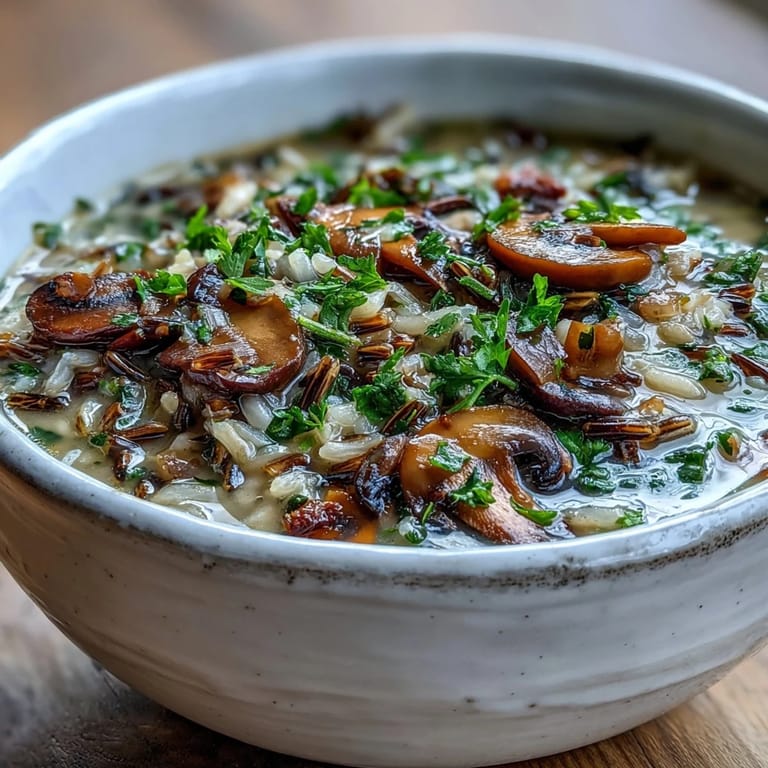
Wild rice has this nutty, almost toasted flavor that regular white rice doesn't have, and when you cook it slowly in a rich broth like this, it absorbs everything around it while still keeping its own personality. The mushrooms add an earthy depth that feels almost meaty, so nobody misses the protein. The cream isn't just for richness—it's there to balance the earthiness and make every spoonful feel luxurious without being heavy.
Making It Your Own
This soup is a foundation, not a rulebook. I've made it with a splash of dry sherry when I had it on hand, and it added this subtle sweetness that lingered on the tongue. Some nights I add a handful of kale or spinach in the last few minutes, which makes it feel more like a meal. You could easily add wild mushroom flavoring with a tiny bit of truffle oil at the end if you wanted to be fancy, or keep it exactly as it is because sometimes simple is the whole point.
Serving and Storage Notes
This soup tastes even better the next day when all the flavors have gotten to know each other. It keeps in the fridge for about four days, and you can freeze it for up to three months if you want to have comfort in your freezer for harder days. Just reheat it gently on the stove with a splash of broth to loosen it back up, because the wild rice will absorb liquid as it sits.
- Serve with crusty bread for soaking up every last bit—that's not optional, that's just how it's supposed to be eaten.
- A small dollop of sour cream or extra parsley on top makes it look like someone who knows what they're doing made it.
- If you're making this for a crowd, double the recipe and let it simmer while you set the table and light a candle.
 Save
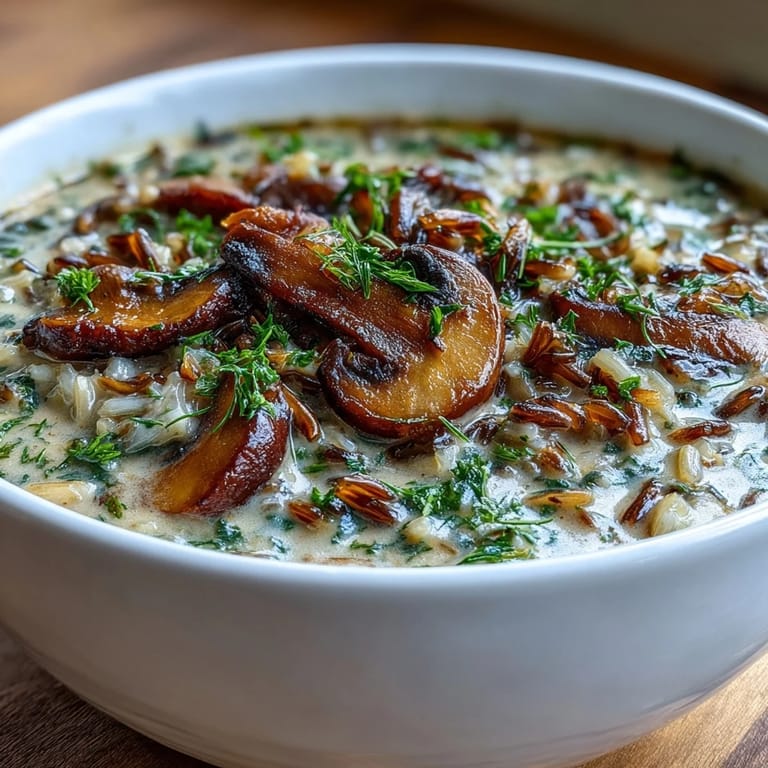
Save This soup has become the thing I make when I want to slow down, when someone needs taking care of, or when I just want my kitchen to smell like autumn and possibility. It's the kind of recipe that gets better every time you make it because you learn where to linger and where to rush.
Recipe FAQs
- → Can I make this soup vegan?
Yes, simply substitute heavy cream with plant-based alternatives like cashew cream or coconut cream. Ensure your flour and soy sauce are certified gluten-free if needed.
- → How long does the soup keep in the refrigerator?
Store in an airtight container for up to 4 days. The rice may absorb more liquid over time, so add extra broth when reheating to reach desired consistency.
- → Can I freeze wild rice mushroom soup?
Freeze without the cream for up to 3 months. Thaw overnight in the refrigerator, reheat, then stir in fresh cream before serving for best texture.
- → What type of mushrooms work best?
Mixed wild mushrooms like cremini, shiitake, and oyster provide excellent flavor variety. Button mushrooms work too, though they're milder in taste.
- → Do I need to cook wild rice before adding?
No, add uncooked wild rice directly to the simmering broth. It cooks slowly in the liquid, becoming tender and absorbing all the savory flavors.
- → How can I make the soup thicker?
The flour base creates natural thickening. For extra body, mash some rice against the pot's side or let it simmer uncovered longer to reduce liquid.