 Save
Save The first time I tasted white asparagus was at a tiny bistro in Lyon, where it arrived on a plate so pristine it almost seemed a shame to eat it. The cook there—a woman who reminded me of someone's grandmother but with the precision of a surgeon—told me the secret wasn't in any fancy technique, but in treating each spear like it mattered. Years later, I recreated that moment at home, and The Silver Birch was born: a dish built on the quiet elegance of pale vegetables and the luxurious whisper of truffle, something that feels more like a memory than a meal.
I made this for a friend who'd just gotten a new job, something that felt like a turning point in her life, and she cried a little when she took the first bite—not because it was perfect, but because someone had taken the time to make something this careful just for her. That's when I realized this dish isn't about impressing; it's about showing up for people with something thoughtful.
Ingredients
- White asparagus, 500 g, trimmed and peeled: These pale stalks are milder and more tender than their green cousins; the peeling matters because it removes the tough outer layer and lets the delicate flavor come through.
- Burrata or buffalo mozzarella, 75 g, drained: The creaminess here is non-negotiable—it melts into the warm asparagus and creates something almost liquid.
- Aged Comté cheese, 75 g, thinly shaved: The nuttiness deepens as it sits on the warm plate, adding complexity that seems out of proportion to how little you're actually using.
- Parmigiano-Reggiano, 50 g, finely grated: This adds salt and umami; don't skip the aging label or it tastes like rubber.
- Fresh black truffle, 15 g (or truffle paste, 1–2 tbsp): If you can source fresh truffle, do it; if not, truffle paste is honest and reliable, and it perfumes the whole plate.
- Extra-virgin olive oil, 2 tbsp: Use something you'd actually taste on its own—this isn't the place to compromise.
- Fresh lemon juice, 1 tbsp: This cuts through the richness and wakes everything up; bottled won't do it.
- Flaky sea salt, 1/2 tsp, and white pepper to taste: White pepper is gentler than black; it doesn't announce itself, just whispers.
- Microgreens or chervil (optional): These add a peppery note and visual lift, but they're truly optional if you don't have them.
Tired of Takeout? 🥡
Get 10 meals you can make faster than delivery arrives. Seriously.
One email. No spam. Unsubscribe anytime.
Instructions
- Bring the water to a gentle simmer:
- Fill a large pot with salted water—it should taste like the sea. The heat should be calm, not aggressive; you want a lazy bubble, not a rolling boil that'll bruise the asparagus.
- Cook the asparagus until just tender:
- Drop the spears in and watch them; in about 8 to 10 minutes, they'll bend slightly but still hold their shape. Immediately scoop them into ice water—this stops the cooking and locks in that pale, delicate color.
- Dry and arrange:
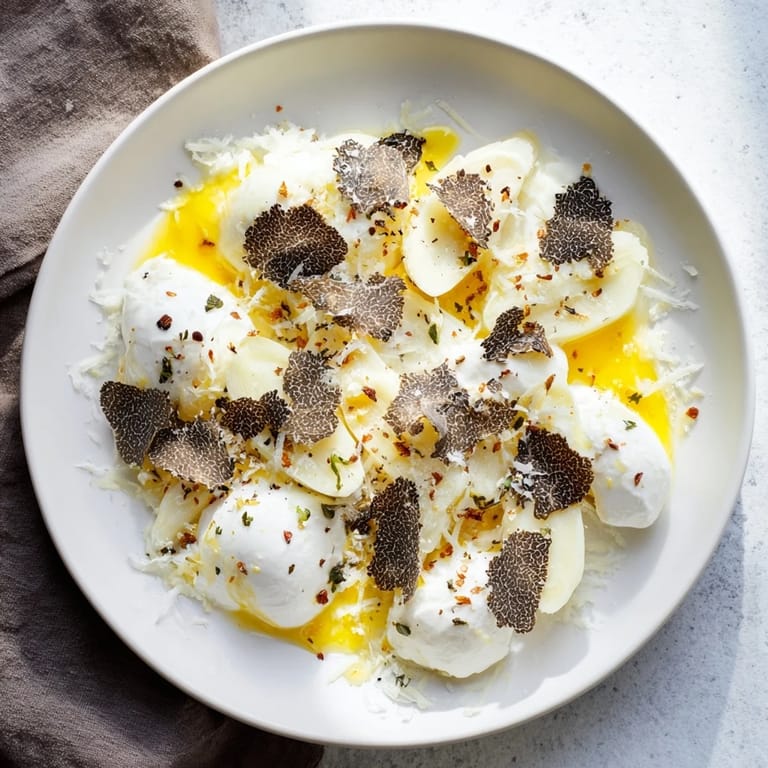
- Pat them very gently on clean towels. Slice lengthwise (this creates those beautiful long surfaces for the cheese and truffle) and lay them on chilled plates.
- Layer the cheeses:
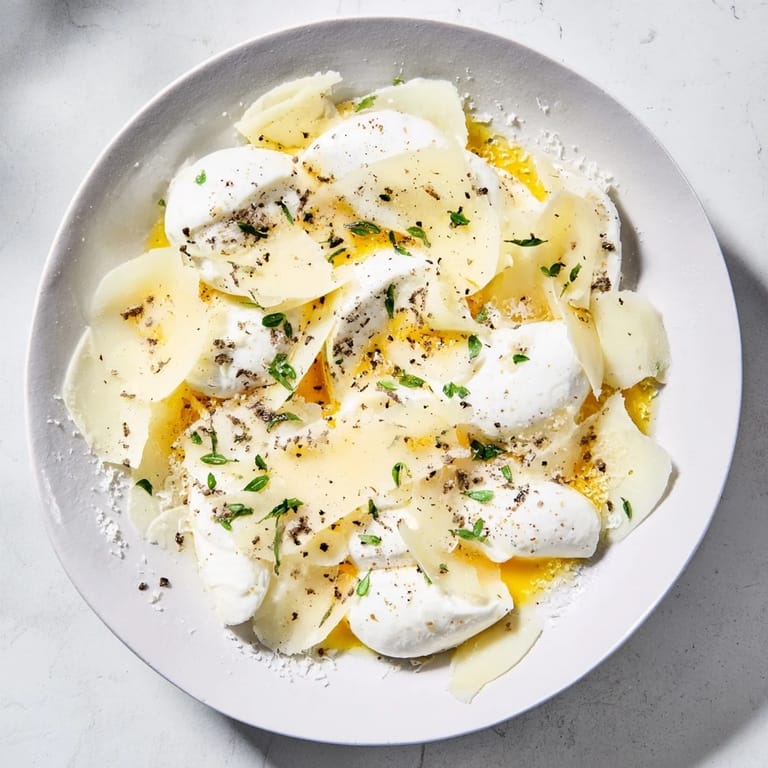
- Tear the burrata into pieces—rough and casual—and scatter them over the warm asparagus. Add the Comté shavings while the spears are still slightly warm; the cheese will soften and settle. Then dust with Parmigiano-Reggiano.
- Shave the truffle:
- If you're using fresh truffle, a light touch with the slicer creates those thin, dark stripes that look like brushstrokes. If truffle paste, a steady hand drizzling thin lines looks just as intentional.
- Make and dress:
- Whisk the oil, lemon juice, salt, and a crack of white pepper in a small bowl until emulsified. Drizzle gently over everything. The warmth of the asparagus will carry the flavors.
- Finish and serve:
- A scatter of microgreens if you have them, then straight to the table. This dish doesn't wait.
 Save
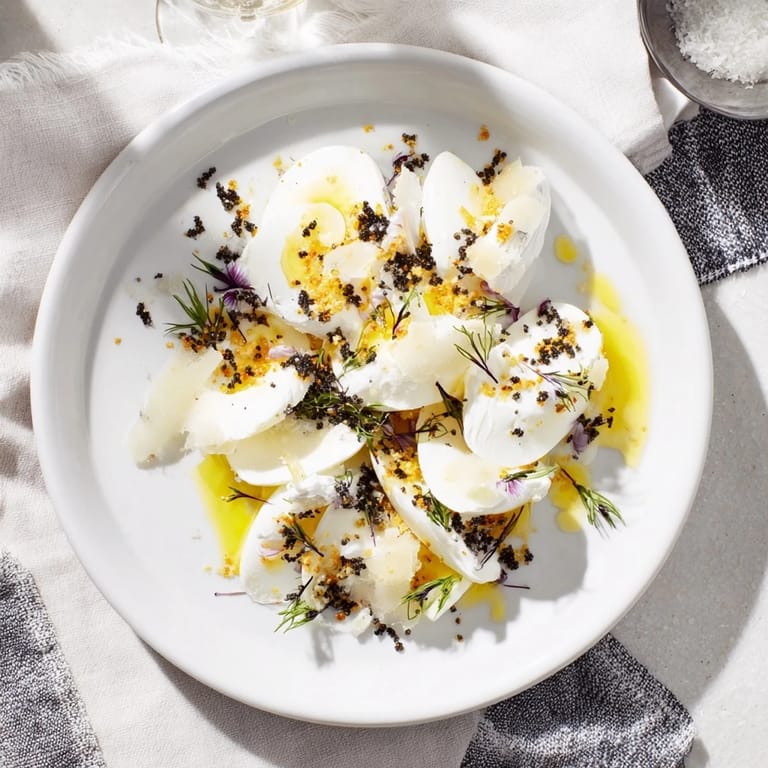
Save There's a moment, just after you've finished plating, when you step back and realize the dish looks like something you saw in a magazine, and that small moment of quiet pride is worth every careful step.
Why White Asparagus
White asparagus grows buried underground, never seeing sunlight, so it stays pale and delicate. It's less assertive than green asparagus, which means it lets the cheese and truffle take center stage. This isn't a vegetable that demands attention; it's one that knows how to share the plate.
The Cheese Conversation
I spent years thinking one good cheese was enough, until I realized that three different ones—each bringing its own texture and flavor—create a conversation instead of a statement. The burrata is creamy and soft, the Comté adds age and depth, and the Parmigiano-Reggiano brings salt and minerality. They don't compete; they complete each other.
Timing and Temperature
This is a dish that doesn't forgive sitting on the counter; it needs to go from plate to mouth while the asparagus is still warm and the cheeses are still soft. Everything is meant to meld slightly, to blur into something more cohesive than its parts. The truffle's aroma also carries better when it's warm.
- Chill your serving plates beforehand so the asparagus stays cool on the outside while staying tender inside.
- If Comté is hard to find, Gruyère or a mild goat cheese will work, though the flavor will shift slightly toward earthiness.
- A dry white wine like Sancerre or Grüner Veltliner pairs beautifully; the acidity cuts through the richness and echoes the lemon in the dressing.
 Save
Save This dish reminds me that elegant doesn't mean complicated—it means respectful. Every ingredient here is treated with care, and that intention shows up on the plate. Make it for someone who matters.
Recipe FAQs
- → How should white asparagus be cooked for this dish?
Simmer white asparagus in salted water for 8-10 minutes until tender yet firm, then quickly cool in an ice bath to preserve texture.
- → Can I substitute the cheeses used here?
Yes, alternatives like Gruyère or mild goat cheese can replace Comté to suit availability or taste preferences.
- → What is the purpose of the lemon juice in the dressing?
Lemon juice adds brightness and balances the richness of the cheeses and truffle, enhancing overall flavor harmony.
- → How should the black truffle be applied?
Thinly shave fresh truffle over the dish or delicately drizzle quality truffle paste to distribute aromatic notes evenly.
- → Are there suggestions for wine pairings?
A dry white wine such as Sancerre or Grüner Veltliner complements the dish’s creamy and earthy flavors well.
- → What garnishes work best with this preparation?
Microgreens or chervil provide a fresh herbal accent and a pleasant color contrast without overpowering the other ingredients.