 Save
Save The first time I assembled a veggie board instead of making an actual meal, I was rushing through a Friday afternoon, honestly just trying to avoid cooking. I threw together whatever was in my fridge, added some cheese I'd been saving, and something clicked—my friends gathered around it like it was the main event, not the backup plan. Now I realize those colorful, casual platters are exactly what people crave: permission to eat what they want, mix flavors however they like, and have a conversation without anyone hunched over a plate.
I made this for my partner's work-from-home lunch break, and instead of eating at their desk like usual, they sat with me for 45 minutes just grazing and talking. That's when I understood the magic of a board—it slows people down, makes eating feel less like a task and more like a moment.
Ingredients
- Baby carrots: Buy pre-cut if you can; they're sweet enough to stand on their own without dip, which matters more than you'd think.
- Cucumber slices: Cut them thick enough to hold dip without getting waterlogged, and eat them within a few hours or they'll weep all over your board.
- Cherry tomatoes: The little flavor bombs that keep people coming back for one more bite, especially if you can find the good ones.
- Bell pepper strips: Use whatever colors are brightest at your market; they're there as much for the visual as the taste.
- Sugar snap peas: These are the gateway vegetable for people who claim they don't like vegetables.
- Hummus: Pick a kind you actually enjoy eating, because you'll definitely try it.
- Ranch or Greek yogurt dip: Ranch is the crowd-pleaser, but Greek yogurt mixed with herbs tastes brighter and feels less heavy.
- Cheddar cheese, cubed: The reliable one that tastes good with everything and won't apologize for it.
- Mozzarella balls: These little guys add a creamy break from the vegetables and are fun to eat whole.
- Gouda or Swiss cheese, sliced: Go with whatever cheese makes you happy; this is your board.
- Whole grain crackers: Get good ones because they anchor the whole experience; those sad, stale crackers will drag the vibe down.
- Roasted nuts: A handful goes a long way; they're there for texture and to make it feel more substantial.
- Olives: The salty anchor that makes you realize the whole board was missing something until you added them.
- Dried fruit: This is the surprise element that makes people pause and say, oh, that's interesting.
Tired of Takeout? 🥡
Get 10 meals you can make faster than delivery arrives. Seriously.
One email. No spam. Unsubscribe anytime.
Instructions
- Start with a clean canvas:
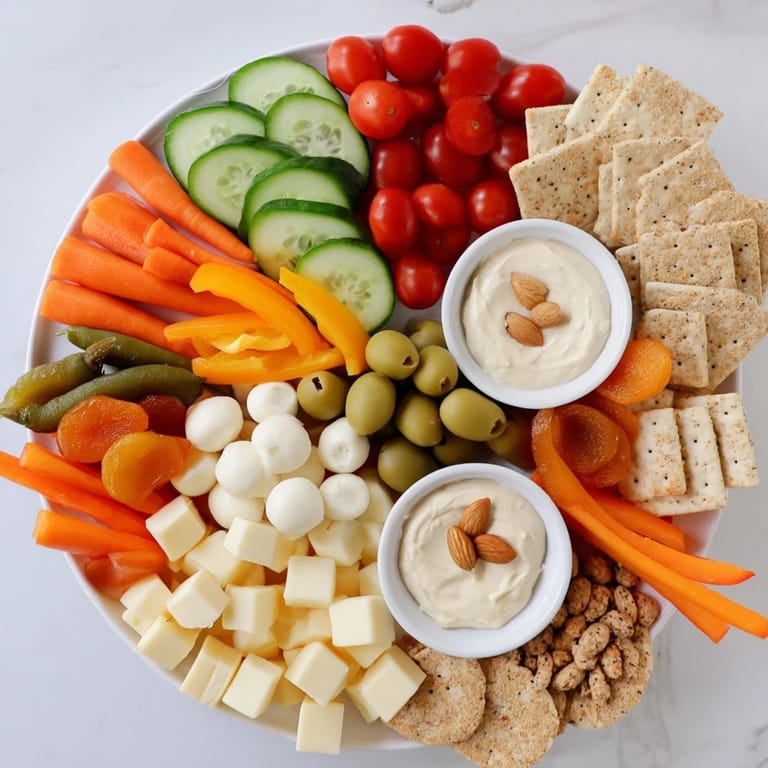
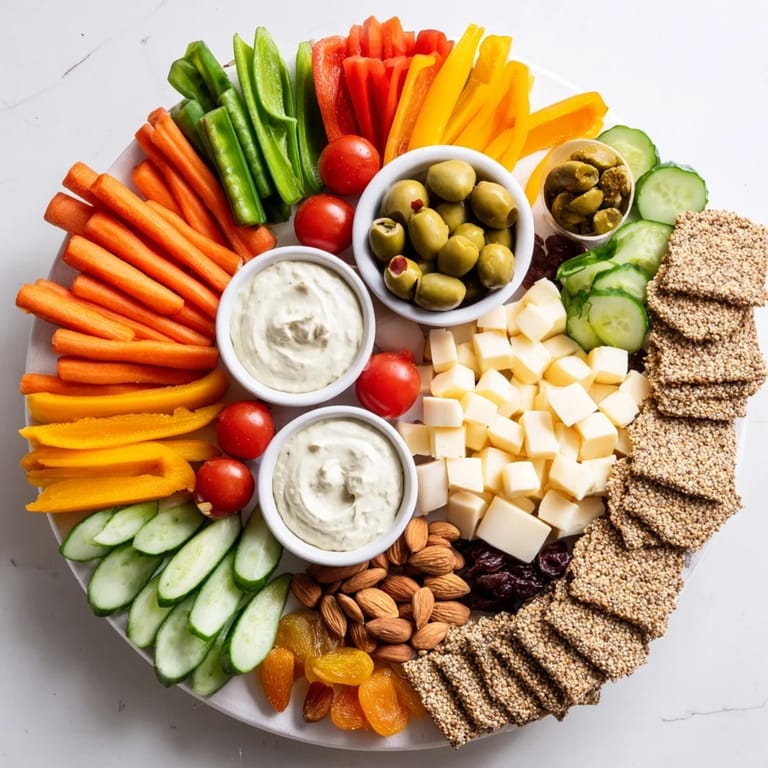
- Wash and thoroughly dry everything; wet vegetables make a sad, soggy board. Slice your cucumbers and peppers while things are still cool, then arrange them in loose sections so colors flow into each other.
- Create natural zones:
- Place vegetables in groups, leaving a little white space so it doesn't look chaotic. Trust that it'll fill in as you go.
- Nestle in the dips:
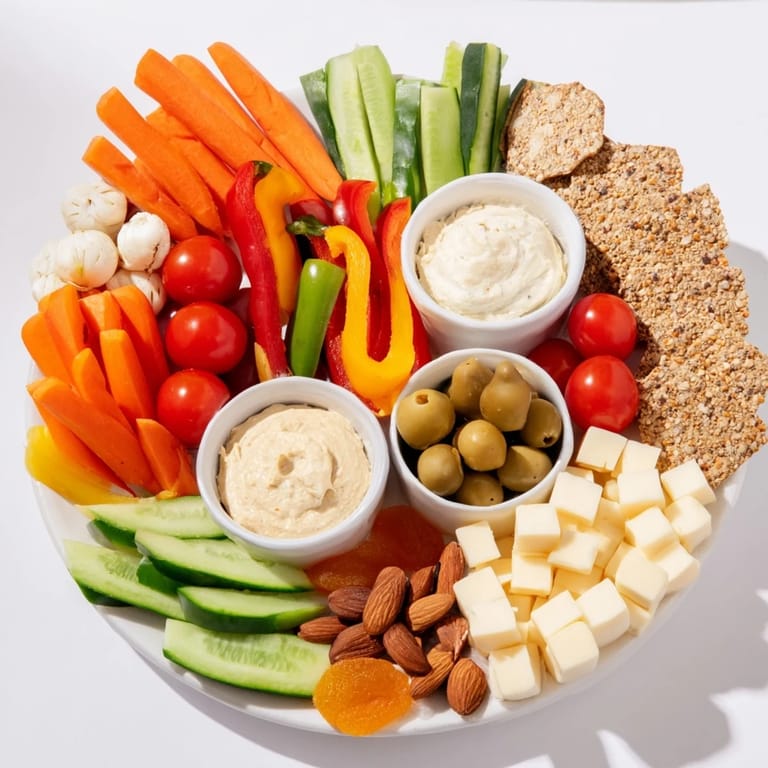
- Put dips in small bowls and position them where they won't tip and where they're easy to reach without reaching over everything else.
- Build with cheese:
- Add cheese in little clusters between vegetables, mixing the textures so someone might grab a piece of sharp cheddar next to a soft mozzarella ball.
- Fill the gaps:
- Scatter crackers, nuts, olives, and dried fruit in the remaining spaces, thinking about flavor pairing as much as visual balance. A dried apricot next to cheddar is not an accident.
- Finish and serve:
- Step back and look at your board like you're seeing it for the first time. If it feels full and bright, you're done. Serve immediately or cover loosely and refrigerate until people show up.
 Save
Save My neighbor came over once and watched me make a board for an impromptu gathering, then asked if I could teach her. I realized then that it's not really a recipe—it's a permission slip to stop overthinking lunch and just put good things together.
The Secret to a Board That Actually Gets Eaten
The boards that disappear fastest aren't the most Instagram-perfect ones; they're the ones where people can actually reach things and where flavors hit different notes. I learned this by watching which pieces got ignored. Nobody wants to dig three layers deep for a cracker, and everyone ignores the sad vegetables that got pushed to the corner. Think about your board like a conversation where every element gets a chance to speak.
Pairing and Flavor Combinations
The magic happens when you taste something unexpected, like how dried fruit suddenly makes sense next to sharp cheddar, or how a piece of mozzarella goes with cherry tomato in a way that feels intentional. I spent way too long trying to plan these pairings before I realized that letting people discover them on their own is the whole point. Your job is just to put complementary things in proximity and let taste buds do the exploring.
When Good Boards Go Great
A board becomes legendary when you've thought about texture contrast, flavor balance, and one or two unexpected elements that make someone pause. The dried fruit shouldn't taste like an afterthought, and the nuts should be roasted, not raw, because that extra step changes everything. One detail I started doing: arrange things so every direction someone reaches, they hit a little flavor journey.
- Toast your nuts lightly if they're not already roasted; the smell alone sells the whole board.
- Keep dips in bowls instead of spread directly on the board so they stay fresh and look intentional.
- Add something briny (olives, capers) and something sweet (dried fruit) because together they make the whole thing more interesting.
 Save
Save A veggie board is honestly the most forgiving thing you can make, which is why it feels so good to share. You're giving people a moment to slow down and choose what they actually want.
Recipe FAQs
- → What vegetables work best for this snack board?
Fresh, crisp vegetables like baby carrots, cucumbers, cherry tomatoes, bell pepper strips, and sugar snap peas add vibrant flavors and textures.
- → Which cheeses complement the veggie selection?
Cheddar cubes, mozzarella balls, and slices of gouda or Swiss cheese offer creamy and mild flavors that pair well with crisp vegetables.
- → Can I customize the dips used on the board?
Absolutely. Popular choices include hummus and ranch or Greek yogurt dips, but plant-based or other flavored dips work wonderfully too.
- → What crunchy elements add texture to the board?
Whole grain crackers and roasted nuts provide satisfying crunch, balancing the fresh vegetables and creamy cheeses.
- → How to store leftovers for later?
Cover and refrigerate the board promptly. Keep dips in separate small bowls to maintain freshness and crispness.