 Save
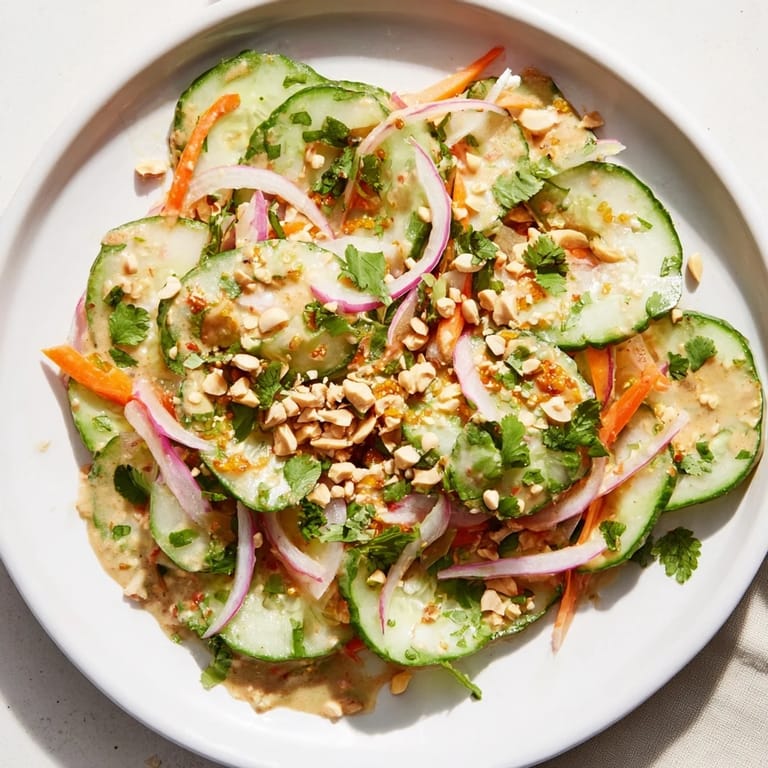
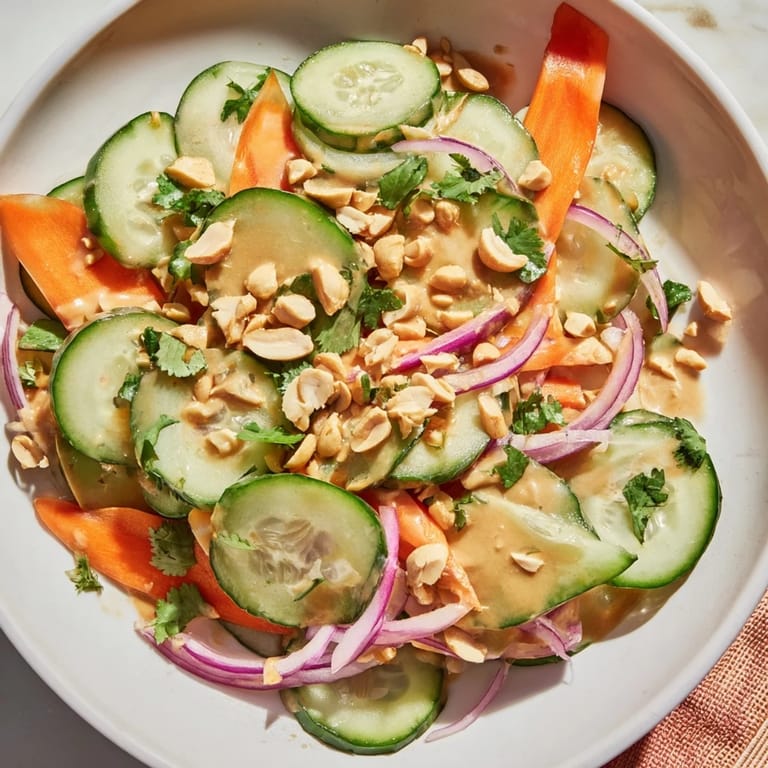
Save I discovered this salad during a sweltering Bangkok summer when my friend's mother handed me a bowl of shimmering cucumber ribbons swimming in a peanut sauce that somehow managed to be both rich and bright. She warned me the ginger would sneak up, then laughed as my eyes watered slightly—but I kept eating. Now whenever I make it at home, I chase that exact balance of cool crunch and creamy warmth, and somehow it always takes me back to that humid afternoon and the way she topped it with crushed peanuts like a final blessing.
I made this for a potluck once and watched people return to that bowl three times, always a little embarrassed, always carrying their plate back for more. Someone asked if it was from a restaurant, and I remember feeling oddly proud that 15 minutes in my kitchen had fooled them so completely.
Ingredients
- Cucumbers (2 large, thinly sliced): The soul of the salad—they stay crisp only if you slice them close to serving, so resist the urge to prep ahead and watch how much brighter they taste when they haven't had time to weep their water.
- Carrot (1 medium, julienned): Brings sweetness and a gentle crunch that plays beautifully against the soft cucumber, almost like adding a friend to balance out the conversation.
- Red onion (1/4 small, thinly sliced): Use a mandoline or your steadiest knife hand because thin is everything here—thick pieces bite too hard and steal the show.
- Fresh cilantro (1/4 cup, roughly chopped): Don't bruise it by chopping too early; those leaves release their best flavor at the last moment, which is oddly poetic for an herb.
- Roasted peanuts (2 tablespoons, chopped): Toasted peanuts always taste better than raw, and chopping them yourself means you control the texture—some people prefer tiny bits, some want chunky surprise bites.
- Sesame seeds (1 tablespoon, optional): They add nothing nutritionally but somehow everything visually and texturally, so I always include them even though I pretend they're optional.
- Peanut butter (1/4 cup, creamy): This is the dressing's foundation, so use something good—the kind where you've actually seen peanuts go through a grinder, not the kind with a mysterious sheen.
- Soy sauce (2 tablespoons): Tamari works if you need gluten-free, but regular soy sauce gives you an umami depth that feels irreplaceable, like the bass line in a song you love.
- Rice vinegar (1 tablespoon): Gentler and sweeter than white vinegar, it whispers instead of shouts, which is exactly what this dressing needs.
- Lime juice (1 tablespoon, freshly squeezed): Bottled lime juice is a tragedy waiting to happen—fresh makes a difference you'll actually taste, and it takes 30 seconds with a citrus reamer.
- Honey or maple syrup (1 tablespoon): Maple syrup makes it vegan-friendly and adds an earthy undertone, but honey gives a rounder sweetness that feels more traditionally Thai.
- Toasted sesame oil (1 teaspoon): A little goes impossibly far—it smells like someone opened a door to another world, so measure carefully or you'll overshadow everything else.
- Garlic clove (1 small, finely minced): Raw garlic in a dressing means it sharpens over time, so if you're not serving immediately, use slightly less than you think you need.
- Fresh ginger (1 teaspoon, grated): Grated ginger releases its essential oils faster than sliced, and the warmth it brings sneaks up on you like my friend's mother warned—that's when you know it's working.
- Warm water (1–2 tablespoons, as needed): The dressing should move across the vegetables like silk, not sit thick like paste, so add water gradually and taste as you go.
- Red pepper flakes or sriracha (1/2 teaspoon, optional): Heat is always optional, but I've learned that even a whisper of it lifts the other flavors instead of punching them, so consider adding it even if you don't think you like spicy food.
Tired of Takeout? 🥡
Get 10 meals you can make faster than delivery arrives. Seriously.
One email. No spam. Unsubscribe anytime.
Instructions
- Gather your vegetables with intention:
- Slice the cucumbers thin enough to bend slightly without breaking—if they're thick, they'll taste watery instead of crisp. Julienne your carrot so it matches the cucumber's delicate size, then slice the red onion so thin you can almost see through it. There's a meditative quality to this prep work when you're not rushing.
- Build the dressing in a separate bowl:
- Start with the peanut butter and soy sauce, whisking them together until they break down and become smooth. Add the rice vinegar, lime juice, honey, sesame oil, garlic, and ginger, whisking constantly so everything blends into something cohesive and gorgeous. Slowly drizzle in warm water while whisking—the dressing will suddenly shift from thick to silky, which is your signal to stop.
- Combine vegetables and dressing with a light hand:
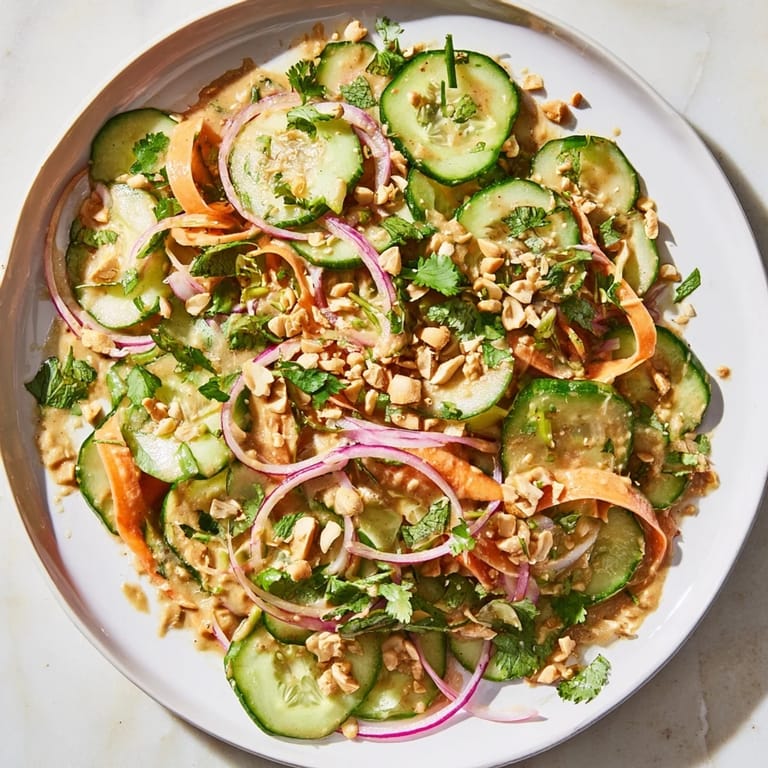
- Put your prepped cucumbers, carrot, onion, and cilantro into your largest bowl, then pour the peanut dressing over top. Use a wooden spoon or your hands to toss gently—you're coating, not bruising, and there's a difference. The vegetables should glisten, not get crushed.
- Finish with texture and serve:
- Scatter the chopped peanuts and sesame seeds over the top, adjusting the heat with red pepper flakes if you're feeling brave. Serve immediately while everything is cold and snappy, or cover and refrigerate for up to 30 minutes if you need breathing room before guests arrive.
 Save
Save I've served this to people who said they didn't like cilantro, and they picked around it politely until someone told them what it was—then suddenly they started eating it, convinced it tasted different because now they knew what they were tasting. Food works in mysterious ways, but mostly it works best when someone cares enough to make it with intention.
When to Serve This Salad
Summer feels like the obvious answer, but I've made this in the middle of winter when everything outside was grey and somehow it brought a piece of warmth and brightness to the table anyway. It works as a side dish for grilled chicken or tofu, stands alone as a light lunch, or becomes the opening act before something more substantial. The beauty is that it doesn't demand much time or attention—which means it shows up exactly when you need it most.
Building Flavor Depth
The magic of this dressing isn't any single ingredient—it's how the salty, the sour, the sweet, and the warm spicy notes all arrive at the same moment on your palate. Rice vinegar could be white vinegar, honey could be sugar, but none of those swaps would taste quite right because each ingredient earned its place through a hundred meals in Bangkok kitchens where nothing was left to chance. You can taste that intention if you use the real things.
Making It Your Own
The framework is solid, but the salad begs for flexibility—add bell pepper for more crunch, toss in a handful of mint if cilantro isn't your thing, drizzle it over warm rice noodles if you want something more substantial. I once made it with thinly sliced green apple because I had one sitting on the counter, and the tartness made something feel new even though I wasn't changing the recipe, just listening to what the ingredients wanted.
- Shredded cabbage adds crunch and substance without overwhelming the delicate vegetable-to-dressing ratio.
- A squeeze of sriracha mixed into the peanut dressing creates heat that builds rather than blasts.
- Serve it within 30 minutes to keep the vegetables crisp, or it becomes something softer and different—which isn't bad, just different.
 Save
Save This salad reminds me that good food doesn't need to be complicated or time-consuming to matter—sometimes the simplest things, made with care and good ingredients, become the meals people remember longest. Serve it cold, serve it now, and watch what happens when brightness shows up at the table.
Recipe FAQs
- → What ingredients add crunch to this salad?
Thinly sliced cucumbers and julienned carrots provide crispness, while roasted peanuts add extra crunch.
- → How can I adjust the dressing's heat level?
You can include or omit red pepper flakes or sriracha to control the spicy kick in the peanut dressing.
- → Can sesame seeds be substituted or omitted?
Sesame seeds are optional; you may leave them out or replace them with toasted nuts for a different texture.
- → What is the best way to serve this salad?
Serve immediately for fresh crunchiness or chill for up to 30 minutes to enhance flavors and enjoy a colder dish.
- → Are there suggested additions for more protein?
Add grilled chicken, tofu, or shrimp to complement the fresh vegetables and peanut dressing for a heartier option.