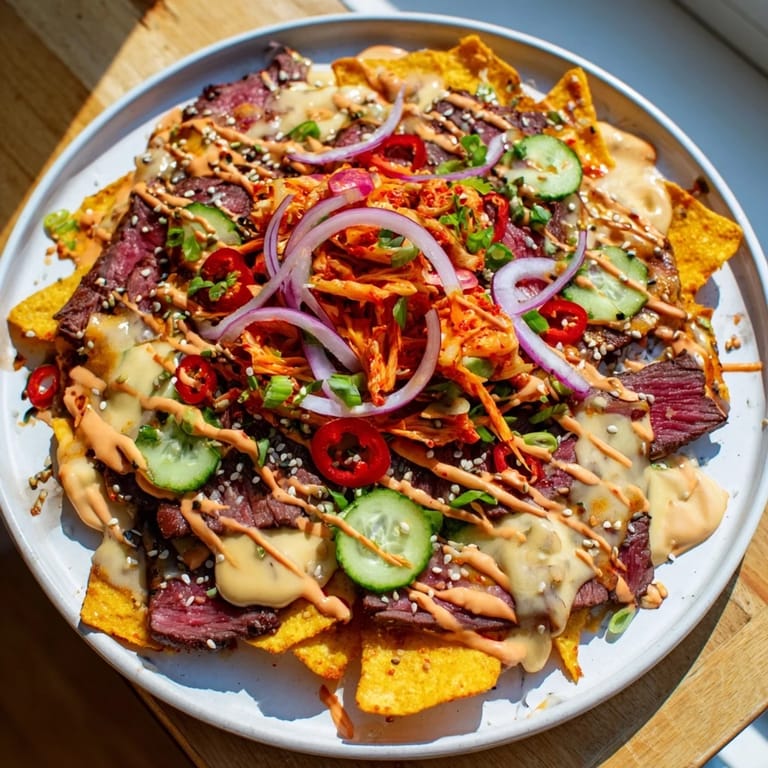
 Save
Save I stumbled onto Korean BBQ nachos completely by accident one Friday night when I had gochujang-marinated beef left over from dinner and a half-eaten bag of tortilla chips sitting on the counter. My roommate was coming over, the fridge was half-empty, and I thought: why not? Twenty minutes later, we were passing around a tray of crispy chips topped with caramelized beef, melted cheese, and bright fresh vegetables, and neither of us could stop reaching for more. It became the dish I make whenever I want to impress without spending hours in the kitchen, because it tastes like I put in way more effort than I actually did.
The first time I made these for a dinner party, I was nervous about whether Korean-American fusion would land, but then I watched everyone's faces light up when they tasted that gochujang-beef-and-melted-cheese moment. My friend Sarah, who claims to dislike spicy food, ate three handfuls before even realizing it. That's when I knew this recipe had staying power.
Ingredients
- Flank or sirloin steak (300g), thinly sliced: Thin slices cook fast and absorb the marinade deeply; freezing the meat for 15 minutes before slicing makes it way easier to cut even pieces.
- Gochujang (2 tbsp): This Korean chili paste is the backbone—it brings heat, umami, and that signature fermented depth that regular hot sauce can't replicate.
- Soy sauce (1 tbsp): Adds saltiness and richness to balance the sweetness and spice in the marinade.
- Brown sugar (1 tbsp): Creates a subtle caramel when seared, which plays beautifully against the chili paste.
- Sesame oil (2 tsp): A little goes a long way; use toasted sesame oil for maximum fragrance and nutty depth.
- Garlic and ginger (2 cloves and 1 tsp): These build layers of flavor that make the beef taste more complex than it actually is.
- Rice vinegar (1 tsp): The acid cuts through the richness and brightens the whole dish.
- Tortilla chips (200g): Choose ones sturdy enough to hold toppings without crumbling; thicker chips are your friend here.
- Mozzarella and Korean cheese blend (200g total): The combo creates a stretch and melt that's more interesting than either cheese alone.
- Red onion, carrot, cucumber, scallions (fresh vegetables): These aren't just garnish—they add crunch and freshness that keeps the dish from feeling heavy.
- Kimchi (2 tbsp), chopped: The funk and fermentation tie everything back to Korean flavors in a way that feels authentic.
- Sesame seeds (1 tbsp), toasted: They add nuttiness and a visual finish that makes the whole plate look intentional.
Tired of Takeout? 🥡
Get 10 meals you can make faster than delivery arrives. Seriously.
One email. No spam. Unsubscribe anytime.
Instructions
- Build your marinade and let the beef get to know it:
- In a bowl, whisk together gochujang, soy sauce, brown sugar, sesame oil, minced garlic, grated ginger, rice vinegar, and black pepper until smooth. Add your sliced beef and stir it around so every piece gets coated, then let it sit for at least 20 minutes (or up to a few hours if you have time—patience here pays off).
- Get your oven ready and heat your skillet:
- Preheat your oven to 200°C (400°F). While that's warming, set a large skillet over medium-high heat and let it get properly hot before you add any beef.
- Sear the beef in batches until it's caramelized:
- Working in batches so you don't crowd the pan, lay the beef pieces in the hot skillet and let them sit undisturbed for about 1 minute before stirring—this is how you get that gorgeous brown crust that smells incredible. Cook for 2–3 minutes total until the beef is cooked through and the edges are crispy.
- Layer your nachos like you mean it:
- Line a baking tray with parchment paper and spread your tortilla chips in a single layer. Sprinkle half of your cheese blend over the chips, scatter the cooked beef on top, then finish with the remaining cheese so it'll melt evenly and hold everything together.
- Bake until the cheese is bubbling and golden:
- Slide the tray into the oven for 6–8 minutes—you're watching for that moment when the cheese is melted and just starting to brown at the edges, which happens faster than you'd expect.
- Add your fresh toppings and finish strong:
- Pull the nachos out of the oven and work quickly while they're still warm. Scatter the red onion, carrot, cucumber, scallions, and red chili over the top, then sprinkle on the toasted sesame seeds. The heat from the cheese will soften the vegetables just slightly while keeping them crisp.
- Dress it with kimchi, herbs, and mayo, then serve:
- Top everything with chopped kimchi and fresh cilantro or shiso leaves, then drizzle with sriracha mayo or gochujang mayo if you're using it (honestly, it's optional but it does push things over the edge). Serve with lime wedges on the side so people can squeeze as much brightness as they want.
 Save
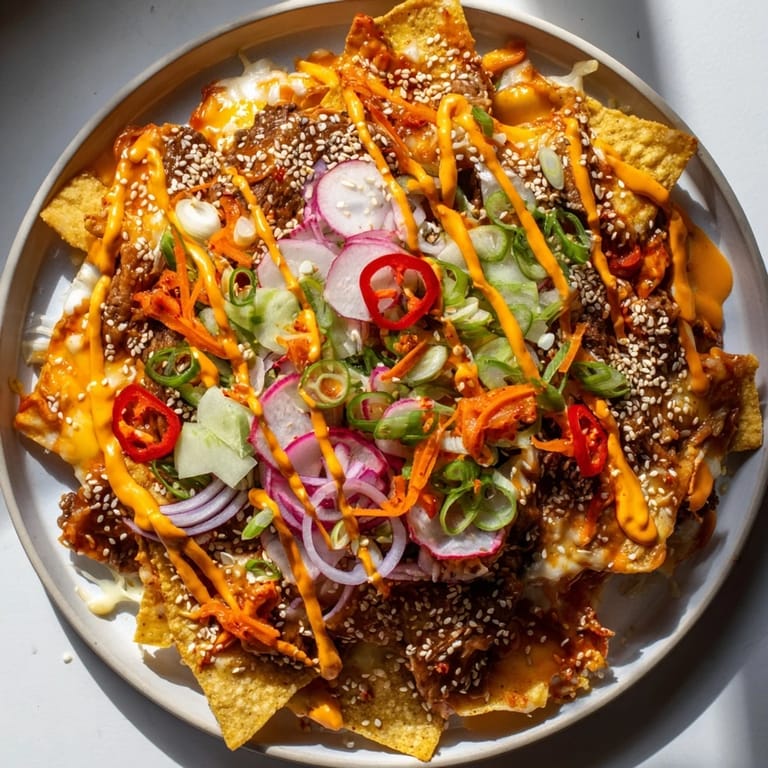
Save I remember standing in my kitchen watching my grandmother try these for the first time, skeptical about the combination of Korean and Mexican flavors. She took one bite and said "interesting," which from her is basically a standing ovation. That's when I realized this dish does something special—it respects both traditions while being completely its own thing.
Playing with Proteins
While the beef is what I make most often, this dish is endlessly adaptable depending on what you have and what you're craving. I've made it with grilled chicken when I wanted something leaner, and the marinade works just as well—just keep the cooking time shorter since chicken dries out faster than beef. Marinated mushrooms are my go-to when vegetarian friends come over, and honestly, they absorb the gochujang flavors so completely that nobody misses the meat.
Building Your Flavor Balance
What makes these nachos feel balanced instead of chaotic is understanding what each component does. The gochujang beef brings heat and savory depth, the melted cheese brings richness and comfort, and then all those fresh vegetables and bright herbs and squeeze of lime bring you back to earth. If you skip any of those fresh toppings, it suddenly feels heavy and one-dimensional, so don't treat them like optional garnish.
Making It Your Own
The architecture of this dish is flexible enough that you can substitute based on what's in your kitchen or what you're in the mood for. I've added crispy fried onions for extra texture, thrown in sliced avocado for creaminess, and once even topped it with a fried egg because why not.
- Try adding pickled jalapeños or radish for an extra pop of acid and crunch.
- A dollop of sour cream or Greek yogurt mixed with gochujang makes an excellent cooling contrast to the heat.
- If you can't find Korean cheese, a mozzarella-and-cheddar blend works fine, or even just good melting cheese you already have.
 Save
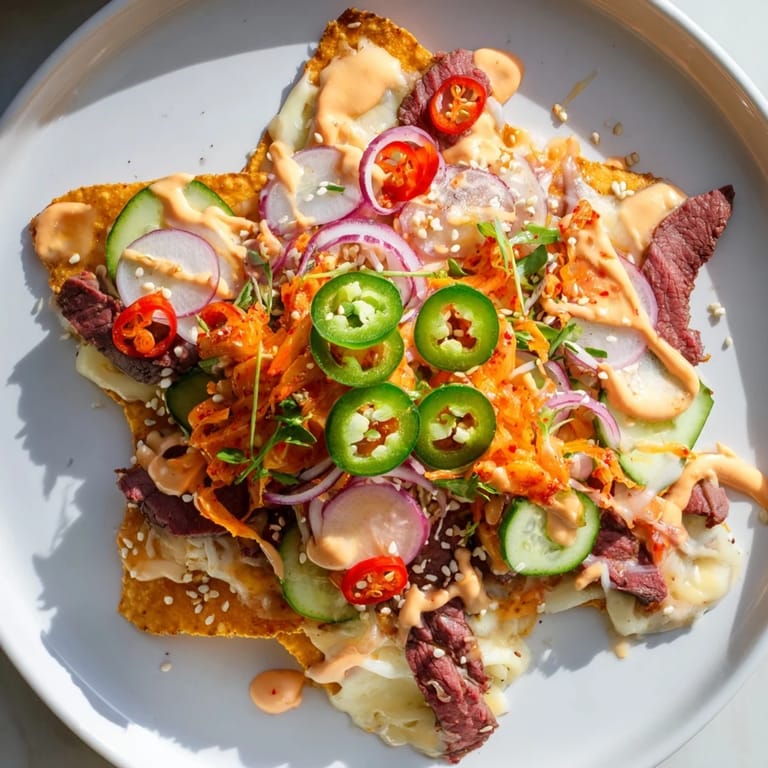
Save These nachos are proof that the best food moments happen when you stop overthinking and just follow your instincts—when you see what's in front of you and trust that it's going to work. They've become my answer to "what should we make tonight" because they're fast, they're beautiful, and they taste like you care.
Recipe FAQs
- → What cut of beef works best for the marinated topping?
Thinly sliced flank steak or sirloin are ideal for quick cooking and absorbing the gochujang marinade well.
- → Can I substitute the beef for a vegetarian option?
Yes, marinated mushrooms or jackfruit provide a delicious and satisfying alternative for a plant-based version.
- → How do I achieve a crispy texture on the chips after baking?
Using sturdy tortilla chips and baking just until the cheese bubbles preserves crispiness while warming the toppings.
- → What cheeses blend best for a melty topping?
A combination of shredded mozzarella and a Korean cheese blend creates rich melt and flavor depth.
- → What fresh vegetables complement the flavors best?
Red onion, cucumber, carrot, scallions, and optional sliced chili add refreshing crunch and a hint of heat.
- → Are there any suggested condiments to finish the dish?
Drizzling sriracha mayo or gochujang mayo adds creamy spice, while freshly chopped cilantro or shiso leaves enhance aroma.