 Save
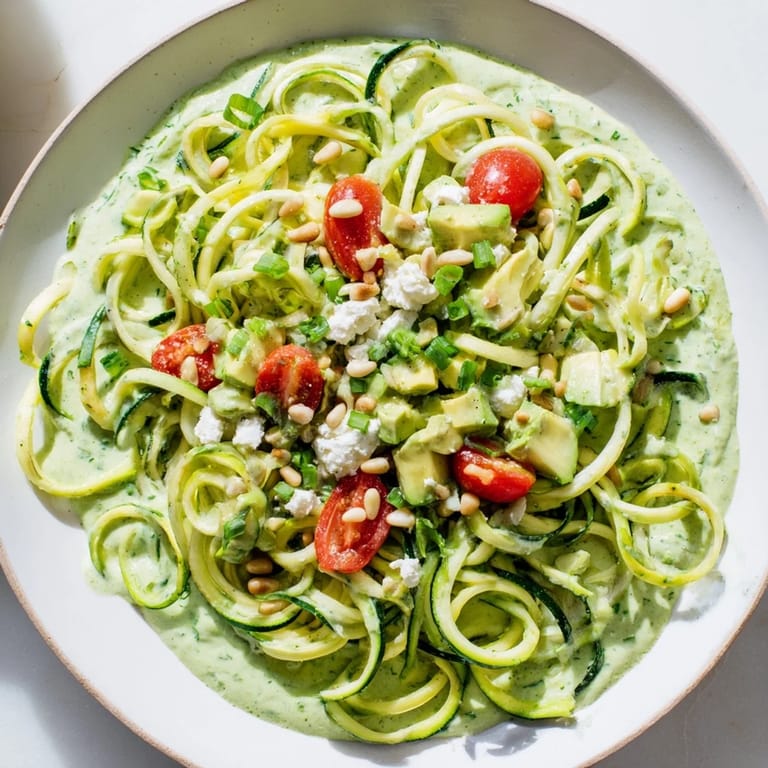
Save I stumbled on this recipe during a particularly humid August when turning on the oven felt like a crime against comfort. My neighbor had dropped off a bag of overgrown zucchini, and I was determined to use them without adding more heat to the kitchen. I'd seen the viral Green Goddess trend everywhere, but it wasn't until I tossed those spiralized ribbons with that bright, herby sauce that I understood the hype. The whole dish came together in less time than it took my pasta water to boil on a normal day, and I ate it straight from the bowl, standing at the counter, wondering why I'd ever bothered with wheat noodles in summer.
The first time I made this for friends, I was nervous they'd miss the real pasta. One of them was a hardcore carb devotee who'd never voluntarily chosen zucchini over penne. But halfway through her bowl, she looked up and said, This is what I want to eat when I'm trying to be good but don't want to suffer. That became the dish's unofficial tagline in my house. I've made it for picnics, quick weeknight dinners, and even a baby shower where someone requested something fresh and not boring. It always disappears fast.
Ingredients
- Zucchini: The star here, and freshness matters. Look for firm, medium-sized ones, they spiralize better and release less water than the giant baseball bats. Pat them dry after spiralizing or your dish will turn into a watery mess.
- Savoy cabbage: I love the tender, crinkled leaves for this. They wilt quickly and add a subtle sweetness that balances the brightness of the sauce without feeling heavy.
- Cherry tomatoes: Halve them so they release a little juice when you toss everything together. It adds pops of acidity and color that make each bite feel complete.
- Avocado: Dice it last and fold it in gently. It adds creaminess and richness, but it bruises easily, so treat it like the delicate friend it is.
- Greek yogurt: The base of the sauce, tangy and thick. If you're going dairy-free, use a good coconut or cashew yogurt, the cheap stuff can taste too sweet or thin.
- Fresh herbs (basil, parsley, chives, tarragon): This is not the time to skimp or use dried. The sauce lives and dies by the freshness of these greens. I buy them at the farmers market when I can, the flavor difference is wild.
- Lemon juice: Freshly squeezed only. Bottled lemon juice tastes flat and won't give you that bright, wake-up-your-mouth zing the sauce needs.
- Garlic: One small clove is enough. Too much and it overpowers the herbs. I learned this the hard way after a particularly aggressive garlic press incident.
- Dijon mustard: Just a teaspoon adds depth and a subtle sharpness that ties everything together. Don't skip it, even if it seems random.
- Feta cheese: Optional, but highly recommended. The salty, creamy crumbles add a little luxury and contrast beautifully with the herby sauce.
- Toasted pine nuts: They add crunch and a buttery richness. Toast them yourself in a dry skillet, store-bought toasted ones never taste as good.
Tired of Takeout? 🥡
Get 10 meals you can make faster than delivery arrives. Seriously.
One email. No spam. Unsubscribe anytime.
Instructions
- Prep the zoodles:
- Spiralize your zucchini and spread them out on a clean kitchen towel or paper towels. Let them sit for a few minutes to release moisture. If you skip this, you'll end up with a soggy, sad pile instead of tender noodles.
- Sauté the vegetables:
- Heat a drizzle of olive oil in a large skillet over medium heat. Add the cabbage first and let it soften for three to four minutes, then toss in the zoodles. Cook them just until they lose their raw crunch, about two to three minutes. Pull them off the heat before they go limp.
- Blend the Green Goddess sauce:
- Toss all your herbs, yogurt, lemon juice, garlic, olive oil, mustard, salt, and pepper into a blender or food processor. Blend until it's smooth, bright green, and utterly irresistible. Taste it and adjust the salt, lemon, or garlic to your liking.
- Toss everything together:
- In a big mixing bowl, combine the warm zoodles and cabbage with the sauce. Use tongs or your hands to coat everything evenly. The warmth of the vegetables will loosen the sauce just enough to cling beautifully.
- Add the fresh toppings:
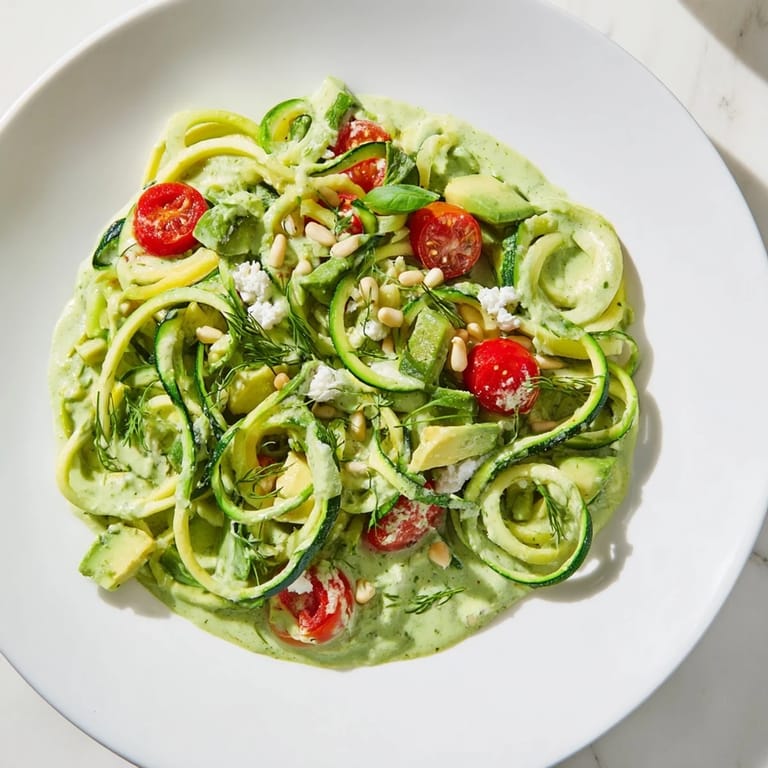
- Gently fold in the halved cherry tomatoes, diced avocado, and sliced scallions. Be gentle so the avocado doesn't turn to mush.
- Serve and garnish:
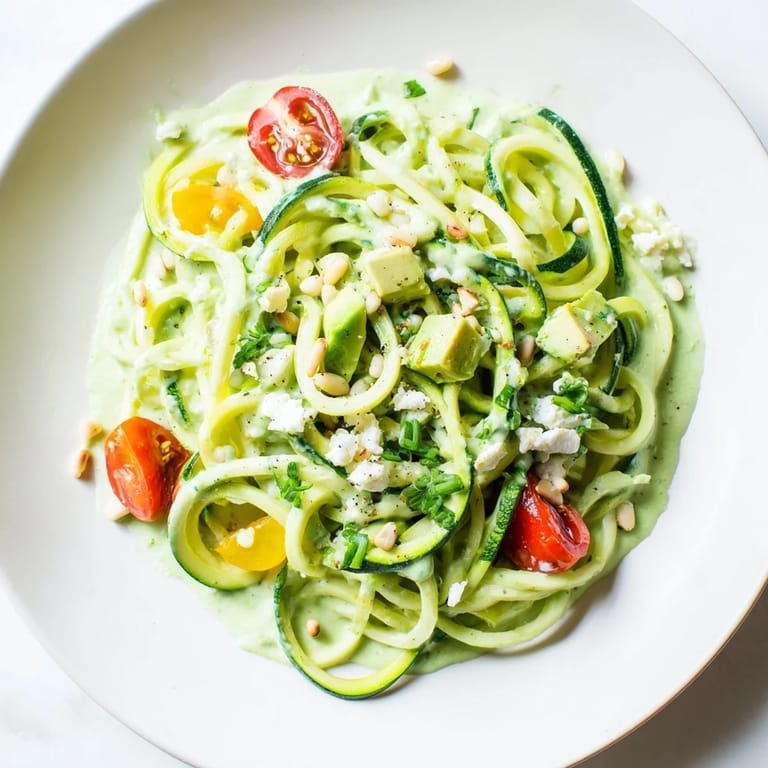
- Divide the pasta among bowls and top with crumbled feta, toasted pine nuts, and a few extra herb leaves. Serve it right away while it's fresh and vibrant.
 Save
Save There was a night last spring when I made this after a long, frustrating day, and I remember sitting outside with a bowl in my lap, listening to the birds settle in for the evening. The sauce tasted like optimism, if that makes sense. It reminded me that sometimes the simplest things, fresh vegetables, bright herbs, a little salt, are exactly what you need to feel human again. I've made it dozens of times since, and it never fails to do that.
Making It Your Own
This recipe is incredibly forgiving and loves improvisation. If tarragon isn't your thing or you can't find it, add more basil or toss in some dill. I've made it with whatever herbs were wilting in my cridge, and it's always been delicious. You can also add protein, grilled chicken, seared shrimp, or roasted chickpeas all work beautifully. One friend swears by adding a handful of arugula for extra peppery bite, and I can't argue with her.
Serving Suggestions
I love this dish because it works hot, warm, or cold, depending on your mood or the weather. In the summer, I'll make it in the morning and let it chill in the fridge, then pack it for lunch or serve it as a cold salad at a picnic. In cooler months, I'll serve it warm with a side of crusty bread and a glass of crisp white wine. It pairs beautifully with Sauvignon Blanc, but I've also served it with sparkling water infused with lemon and mint, which feels just as special.
Storage and Leftovers
Leftovers are tricky because the zoodles release water as they sit, but I've found a workaround. Store the sauce separately from the noodles and vegetables, and toss them together right before eating. The sauce keeps beautifully in the fridge for up to four days and actually deepens in flavor. The zoodles are best fresh, but if you must store them, keep them in an airtight container lined with paper towels to absorb moisture.
- Reheat gently in a skillet over low heat, or enjoy cold straight from the fridge.
- If the sauce thickens too much in the fridge, whisk in a tablespoon of water or lemon juice to loosen it.
- Use leftover sauce as a dip for raw veggies, a spread for sandwiches, or a dressing for grain bowls.
 Save
Save This dish has become my go-to when I want to feel nourished without feeling weighed down, and I hope it does the same for you. It's proof that eating well doesn't have to be complicated or bland, just fresh, intentional, and full of flavor.
Recipe FAQs
- → Can I use a dairy-free alternative for the sauce?
Yes, substituting Greek yogurt with a dairy-free alternative maintains creaminess and suits vegan or dairy-sensitive needs.
- → How do I prevent zucchini noodles from becoming soggy?
After spiralizing, place zucchini noodles on a paper towel to absorb excess moisture and avoid sogginess when sautéing.
- → What herbs are in the Green Goddess sauce?
The sauce includes fresh basil, parsley, chives, tarragon, combined with lemon juice, garlic, and Dijon mustard for a bright, herby flavor.
- → Can this dish be served warm or cold?
Both options work well: serve warm as a cozy meal or chilled for a refreshing salad experience.
- → What toppings enhance this dish?
Crumbled feta cheese, toasted pine nuts, and additional fresh herbs add texture and flavor contrast to the zoodles.