 Save
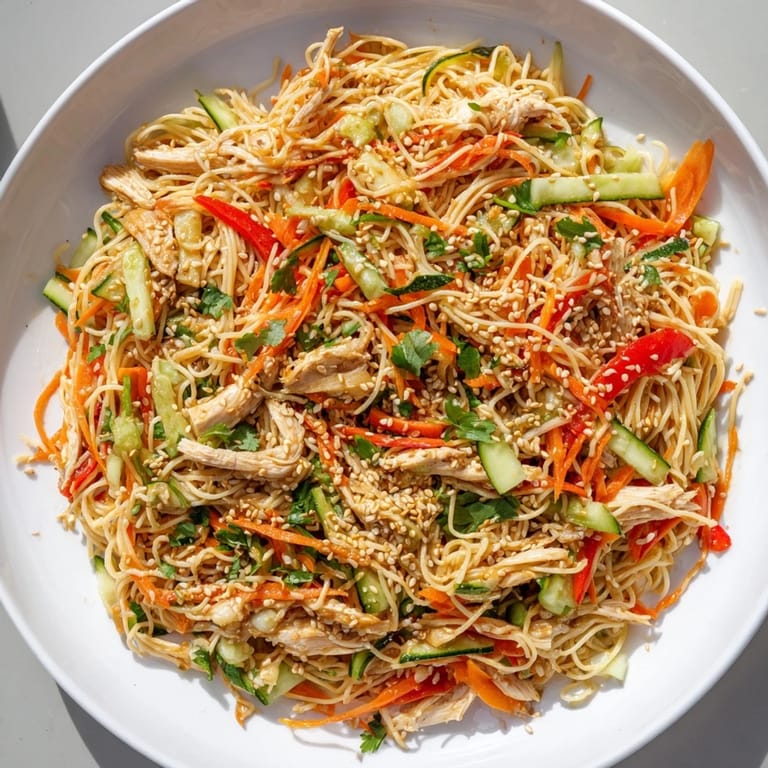
Save There's something about the first warm day of the season that makes you crave something cold and alive on your plate. I discovered this chicken noodle salad one afternoon when my fridge felt too full and my appetite felt too light—I had leftover rotisserie chicken, some vegetables that needed rescuing, and a jar of sesame oil I kept meaning to use. The result was so good that I've made it dozens of times since, each version slightly different depending on what's in season or what I'm in the mood for.
I made this for a picnic last summer and brought it in a glass container, worried it would wilt or separate during the drive. When I opened it on a blanket by the water, the noodles had soaked up just enough dressing to taste even better than when I'd made it that morning, and everyone reached for seconds before I'd even finished plating.
Ingredients
- Thin egg noodles or rice noodles, 250 g: The thinner varieties let the dressing coat every strand and cool quickly—I prefer rice noodles when I want it gluten-free, egg noodles when I want a bit more texture.
- Cooked chicken breasts, shredded, about 300 g: Two medium breasts give you enough protein without overwhelming the vegetables; shredding by hand (rather than chopping) keeps the pieces tender.
- Medium carrot, julienned: Julienning takes a minute longer than slicing but makes each bite feel intentional and catches the dressing beautifully.
- Red bell pepper, thinly sliced: The sweetness balances the sesame and soy—red ones are slightly sweeter than yellow or orange if you're being particular.
- Cucumber, deseeded and julienned: Removing the seeds prevents excess liquid from pooling at the bottom of the bowl and watering down your dressing.
- Spring onions, sliced: The white and light green parts give a gentle bite; save some of the dark green tops for a pop of color at the end.
- Fresh cilantro, chopped, 2 tbsp: I learned to add this fresh, not mixed into the cold salad ahead of time, so it doesn't bruise or darken.
- Toasted sesame oil, 3 tbsp: This is non-negotiable—regular sesame oil tastes thin and plain by comparison, and a little goes far because the flavor is so concentrated.
- Soy sauce, 2 tbsp: Use a good quality one if you can; the depth makes a real difference in how the whole thing tastes.
- Rice vinegar, 2 tbsp: The acidity brightens everything without being harsh like regular vinegar would be.
- Honey or maple syrup, 1 tbsp: Just enough to round out the flavors and balance the salt and acid.
- Smooth peanut butter or tahini, 1 tbsp: This creates a creamy base for the dressing; tahini is nuttier and more subtle if peanut isn't your thing.
- Fresh ginger, grated, 1 tsp: Freshly grated has a brightness that ground ginger can't match—microplane it directly over the dressing bowl.
- Garlic clove, minced: One clove is enough to be present without dominating; if you love garlic, mince it fine so it disperses evenly.
- Chili flakes, 1 tsp (optional): A whisper of heat that makes you realize you're tasting something more complex than you expected.
- Toasted sesame seeds, 2 tbsp: Toast them yourself if possible—the difference between raw and toasted is night and day in terms of flavor and aroma.
- Lime wedges (optional): A squeeze of fresh lime at the end adds a brightness that makes the whole dish come alive.
Tired of Takeout? 🥡
Get 10 meals you can make faster than delivery arrives. Seriously.
One email. No spam. Unsubscribe anytime.
Instructions
- Prepare the noodles with intention:
- Bring a large pot of water to a rolling boil, then add your noodles and cook according to the package timing—they should be tender but still have a slight resistance when you bite them. As soon they're done, drain and rinse under cold water while gently tossing them with your hands so they cool evenly and don't stick together.
- Build your salad base:
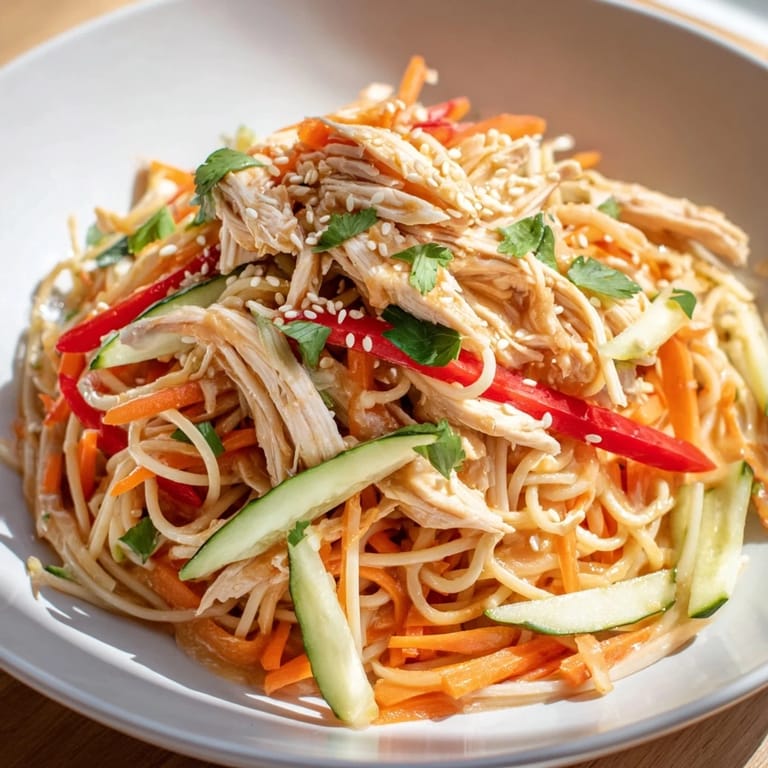
- Pour the cooled noodles into a large bowl and arrange your shredded chicken, julienned carrot, sliced bell pepper, cucumber, spring onions, and fresh cilantro on top, mixing gently so the delicate vegetables don't bruise. Take a moment to look at it—good cooking starts with beautiful ingredients.
- Whisk the dressing to silky perfection:
- In a small bowl, combine the sesame oil, soy sauce, rice vinegar, honey, peanut butter, ginger, and minced garlic. Whisk until the dressing comes together into something smooth and unified, then taste it and adjust—if it feels too salty, add a touch more vinegar; if it's too sharp, a drizzle more honey rounds it out.
- Marry the flavors:
- Pour the dressing over everything and use two spoons or salad tongs to toss gently but thoroughly, making sure every noodle and vegetable gets coated. You'll feel when it's right—the dressing should cling to the noodles rather than sitting at the bottom of the bowl.
- Finish with garnish and brightness:
- Transfer to a serving platter or individual bowls, sprinkle with toasted sesame seeds, and set out lime wedges on the side. The seeds add both crunch and a toasted depth that makes everything taste more intentional.
- Serve or chill as the moment calls for:
- Eat it right away if you want the vegetables to have maximum crunch, or chill it for up to two hours if you're making it ahead—the flavors actually deepen as it sits, and everything becomes even more cohesive.
 Save
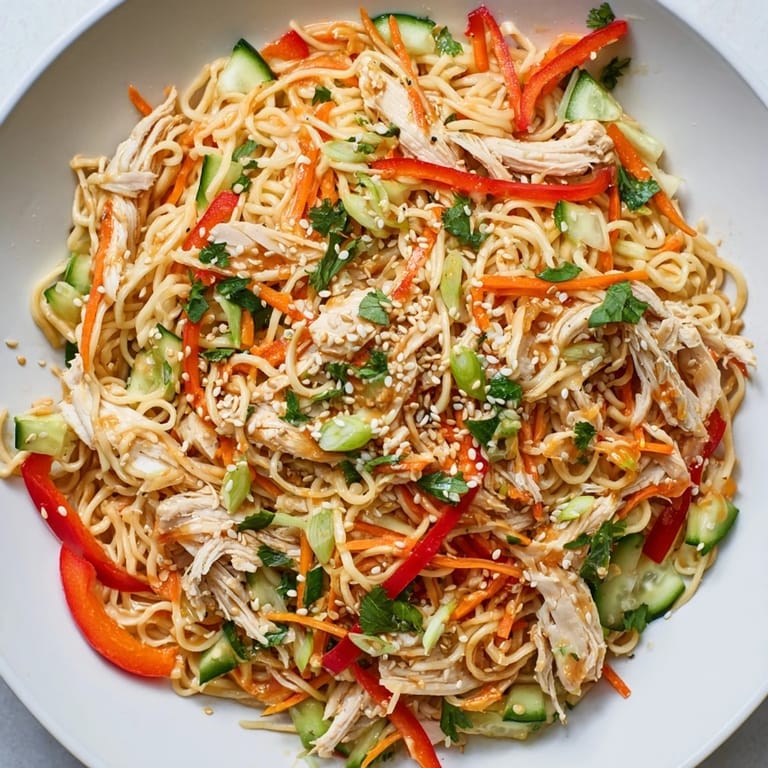
Save I realized one afternoon that this dish became something more than lunch when a friend who usually eats very simply asked for the recipe, made it at home, and texted me a photo of it arranged on her best plate. That's when I knew it had moved from being a practical solution to something that actually brought her joy.
Why This Works as a Light Meal
The beauty of this salad is that it's substantial enough to be a complete meal—the chicken and noodles provide real protein and carbohydrates—but it never feels heavy or exhausting to eat. The vegetables add volume and nutrients without adding calories, and the sesame dressing is rich enough to feel indulgent while being fundamentally light. I've served this to people who are watching what they eat and to people who simply love good food, and everyone leaves satisfied.
Adaptations That Actually Work
One of my favorite things about this recipe is how gracefully it accepts substitutions. I've made it with shredded tofu for vegetarian friends and it's genuinely good, not a compromise version. I've added edamame, snap peas, shredded beets, and even thinly sliced radishes depending on the season or what was in my crisper drawer. The dressing is forgiving enough that as long as you respect the basic ratio of oil to acid to salt, you can play with it—I've used lime juice instead of rice vinegar, or added a touch of miso for deeper umami.
Make It Your Own
The magic of cooking is knowing when to follow a recipe exactly and when to let your instincts take over. This salad is flexible enough to be made exactly as written or reimagined based on what you have and what you're craving, and both versions will be delicious. Trust yourself to taste as you go, to add more of what you love, and to make it feel like yours rather than something you're copying from a page.
- If you're making this ahead for a gathering, assemble everything except the cilantro and sesame seeds, cover it, and finish it just before serving so the fresh elements stay bright.
- Leftover dressing keeps refrigerated for about a week and is wonderful on steamed vegetables, grilled fish, or even as a dip for rice crackers.
- This salad travels beautifully in a covered container and actually tastes better the next day as the flavors meld, making it perfect for meal prep or taking to work.
 Save
Save This is the kind of dish that becomes part of your regular cooking rotation because it's so easy and so good that you find yourself making it without thinking about it. I hope it brings you the same quiet satisfaction it's brought me.
Recipe FAQs
- → What type of noodles work best?
Thin egg noodles or rice noodles both work well, providing a tender base that soaks up the dressing without becoming mushy.
- → Can this dish be prepared in advance?
Yes, it can be chilled for up to 2 hours before serving, allowing flavors to meld and ingredients to stay crisp.
- → Is there a vegetarian alternative?
Substitute shredded tofu for chicken and add edamame or snap peas to enhance protein and texture while keeping it plant-based.
- → How can the dressing be customized?
Adjust the balance of honey and vinegar for sweetness or tang, and add chili flakes to introduce mild heat if desired.
- → What garnishes complement the dish?
Toasted sesame seeds add a nutty crunch and lime wedges brighten the flavors when squeezed over before serving.