 Save
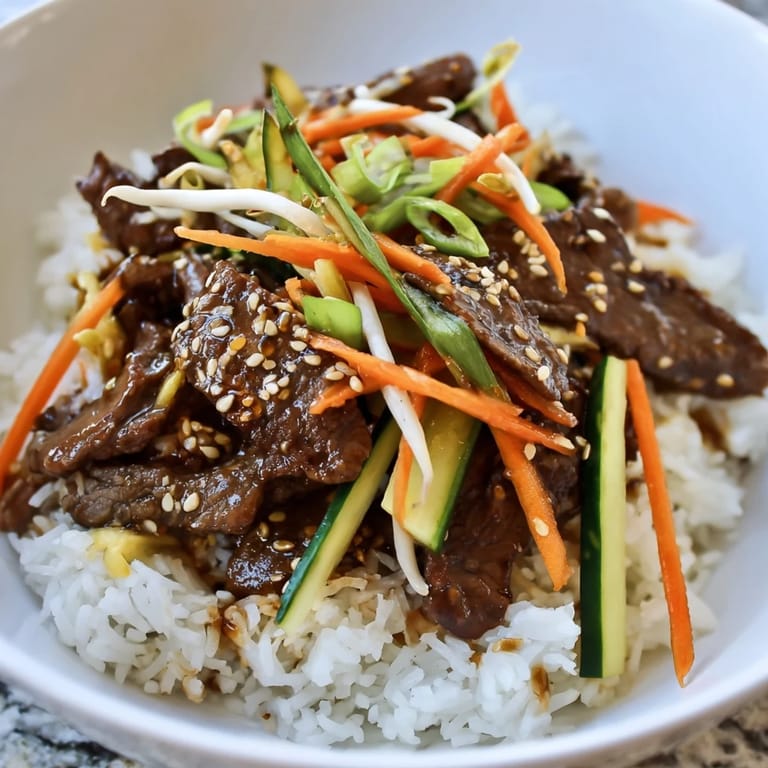
Save The first time I made bulgogi at home, I was chasing that specific smell that always pulled me toward the Korean restaurant down the street—that caramelized, ginger-forward aroma that seemed impossible to recreate in my own kitchen. Turns out, the secret wasn't some mysterious technique but rather trusting a simple marinade and high heat to do the heavy lifting. I've since made this bowl dozens of times, and it never fails to deliver that same satisfaction in about thirty minutes, right from my own stovetop.
I remember cooking this for my roommate on a random Tuesday when she'd had a rough day at work—nothing fancy, just rice bowls with all the colorful toppings spread out so she could build her own. Watching her load up her bowl and then pause to actually taste it instead of just eat it was one of those quiet kitchen moments that reminded me why I love cooking for people in the first place.
Ingredients
- Beef sirloin or ribeye, thinly sliced: The thinner you slice it, the faster it cooks and the better it absorbs the marinade—a sharp knife or asking your butcher to slice it for you makes this effortless.
- Soy sauce: This is your umami foundation, so don't skip it, and if you're gluten-free, tamari works beautifully as a swap.
- Brown sugar: It dissolves into the marinade and creates that subtle caramelization when the beef hits the hot pan.
- Sesame oil: A little goes a long way here—it's the ingredient that actually makes this taste like bulgogi and not just soy-marinated beef.
- Rice vinegar: This brightens everything up and keeps the marinade from feeling too heavy or cloying.
- Garlic and ginger: Mince and grate these fresh—pre-made versions won't give you that punch of flavor you're after.
- Pear or apple: An Asian pear is ideal, but I've used ripe Fuji apples when that's what I had, and it works just as well.
- Gochujang: Optional, but if you want a subtle kick of heat without overpowering the dish, add it sparingly.
- Jasmine or short-grain rice: The slightly sticky texture holds up beautifully under the saucy beef and toppings.
- Fresh vegetables for assembly: Julienne the carrots thin enough to feel delicate, slice cucumbers into matchsticks so they have the same texture, and blanch the sprouts just until they lose their raw edge.
Tired of Takeout? 🥡
Get 10 meals you can make faster than delivery arrives. Seriously.
One email. No spam. Unsubscribe anytime.
Instructions
- Build your marinade base:
- Whisk together the soy sauce, brown sugar, sesame oil, and rice vinegar in a large bowl until the sugar dissolves, then stir in the garlic, ginger, grated pear, and any gochujang you're using. This should smell instantly aromatic—if it doesn't, taste it and adjust before adding the beef.
- Coat the beef:
- Add your sliced beef directly to the marinade and toss gently to coat every piece, then cover and let it sit for at least 15 minutes while you prep your vegetables and cook your rice. An hour is even better if you have the time, but don't go longer than that or the meat will start to break down too much.
- Get your pan screaming hot:
- Place a large skillet or wok over high heat and let it get genuinely hot—you want to hear that sizzle the moment the beef hits the surface. Work in batches if needed so you're not crowding the pan, which is the fastest way to steam your beef instead of caramelize it.
- Stir-fry with intention:
- Add the beef with some of the marinade and keep moving it around for 2 to 3 minutes until it's just cooked through and the edges are catching color. You're looking for that slightly sticky, caramelized look, not gray and overcooked.
- Assemble with care:
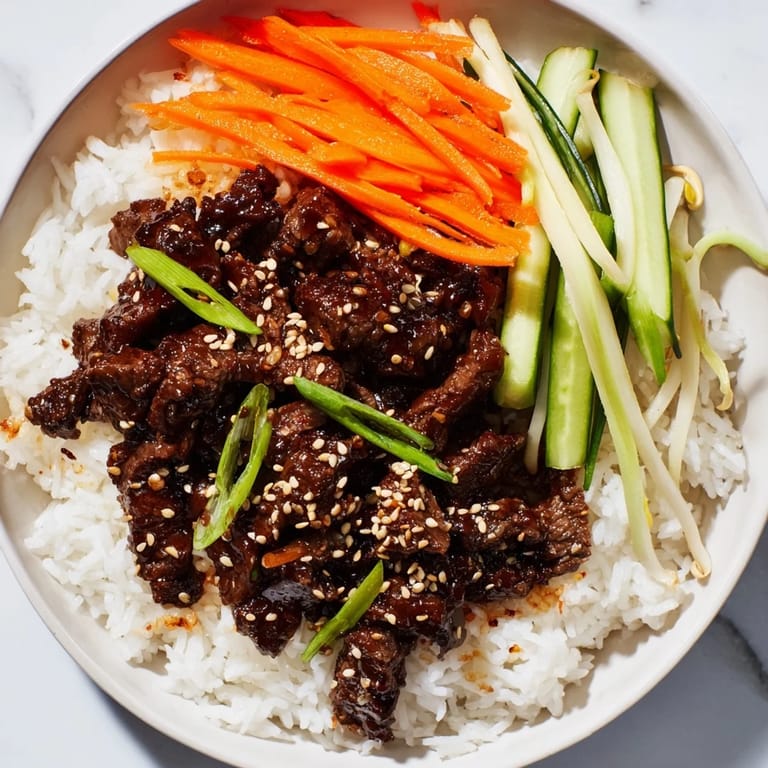
- Divide the rice among your bowls, then arrange the beef, carrots, cucumber, sprouts, and kimchi (if using) in neat little sections on top. The visual appeal is half the fun here, so take a second to make it look intentional.
- Finish and serve:
- Scatter extra sesame seeds and scallions over the top and bring it straight to the table while everything's still warm.
 Save
Save There's something deeply satisfying about building your own bowl and watching all those textures and colors come together—the warm beef, the cool crisp vegetables, the nutty sesame seeds. It's the kind of meal that feels both restaurant-quality and intimately yours.
The Pear Secret
I learned about adding pear to bulgogi marinade almost by accident when I ran out of the traditional ingredients and grabbed whatever sweet fruit was in my crisper drawer. The enzymes in pear and apple don't just add subtle sweetness—they actually break down the muscle fibers in the beef, which is why even thin slices stay tender instead of turning chewy. Now I always keep a pear around specifically for this, and I've started experimenting with the technique on other marinated meats with genuinely great results.
Beyond the Basic Bowl
Once you master the beef and rice base, this recipe becomes endlessly customizable depending on what's in your fridge or what your mood calls for. I've made versions with cauliflower rice when I'm being more mindful, topped it with a fried egg for brunch, and even spread it in a wrap when I needed something portable. The marinade is what actually makes this bulgogi, so as long as that stays consistent, you're free to build around it however makes sense for your day.
Making It Your Own
The beauty of a bowl like this is that it invites personalization without demanding it—you can make it exactly as written and have a perfect meal, or you can start treating it as a template for whatever vegetables look good at your market or whatever proteins you want to experiment with. I've learned to taste as I go, adjusting the soy sauce or gochujang depending on the mood I'm in that particular day, because food tastes better when it feels intentional.
- If you want extra richness without dairy, a soft-cooked or fried egg on top transforms this from lunch into something more substantial.
- Kimchi isn't required, but a handful adds a fermented funk that makes everything taste more interesting and alive.
- Keep any leftover marinade in a jar in the fridge for up to a week—it works on chicken, tofu, or even roasted vegetables when you need something quick.
 Save
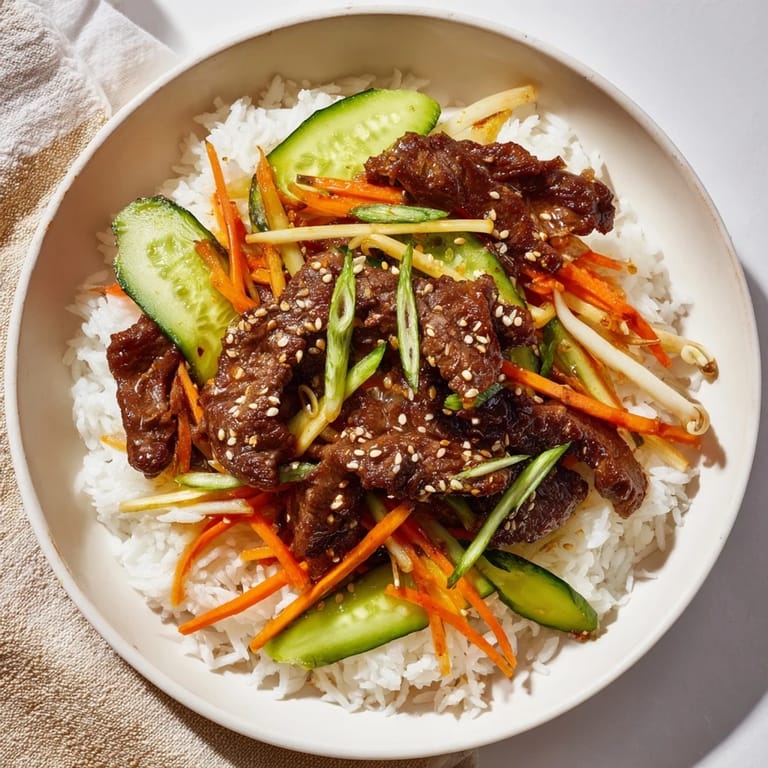
Save This is the kind of recipe that becomes a weeknight workhorse once you've made it once—quick enough for busy nights, impressive enough to serve to guests, and genuinely delicious every single time. It's become one of those meals I make without thinking because my hands just know the steps by now.
Recipe FAQs
- → What cut of beef works best for this dish?
Thinly sliced sirloin or ribeye are ideal for tender, quick cooking and rich flavor.
- → Can I make this gluten-free?
Yes, use gluten-free tamari soy sauce and ensure gochujang is gluten-free to avoid gluten ingredients.
- → How long should the beef marinate?
Marinate the beef for at least 15 minutes; up to an hour enhances the flavor further.
- → Is it possible to make a low-carb version?
Substitute steamed rice with cauliflower rice for a low-carb alternative.
- → What vegetables are best for topping the bowl?
Julienned carrot, sliced cucumber, bean sprouts, and optionally kimchi provide fresh textures and flavors.
- → Can I adjust the spice level?
Yes, adding or omitting gochujang allows control over the level of heat in the dish.